
October | November are THE Most Important Months of the Year, But What Are You Doing About It?

October and November are the two most important months of the year for sales teams and yet far too many sales people and managers just don’t change pace and then roll into Christmas and January and wonder why they miss target.

Worse still, they start Q1 of the new calendar year playing catch up.

Thank goodness this doesn’t happen in your organisation

Whenever we ask a B2B client how was your December & January the reply is always “not that good”
When we ask why the person (probably correctly) looks at us like we are idiots
“Because of Xmas (idiot)”
“Is that a one off or does it happen every year?”
Now they really are convinced we are idiots!

Hope Is Not a Sales Strategy! So if it is every year what are YOU doing to change your results, starting in October?

There are more organisations open for business and back to work in January than ever before
We might slow down but nowadays less companies actually shut down.

So how well are you implementing the key Sales Pipeline principle of Managing the Lead Time between Sales Activity and Sales Results

If it takes you an average of 2 to 3 months to convert a new opportunity, or win a new client, or fill an order book in a quiet month, then 2 to 3 months prior to January is October and November.

How are you changing your sales activity in those months?

Or are you just sitting back saying “January has always been quiet for us”.

Now this isn’t the latest academic theory from some intellectual from Harvard who has never made a sales call in their life.

This is real life Sales In Action and successful sales organisations around the world live and breathe it.

KONA is a real life case study.

For 19 January’s out of the last 19 years in business KONA has had huge January’s– because our clients pre-book us for:

However, in the months of October and November we increase our client facing activity and lead generation.

A bad start to the New Calendar Year is hard to claw back so here are THREE PROVEN tactics to kick start your New Year and not start behind target.

1. Introduce Weekly or Fortnightly Power Hours

In a Customised Sales Training workshop, we generated a massive ROI for a client and gathered all of their 36 Sales People, Sales Support and Sales Managers into a room.

Each participant had to arrive with a target list of 50 contacts – existing, lapsed and prospects.

We then ran 2 hours of Power Hour Training then made everyone put the training immediately into practise

Outcome:

The group BOOKED 546 FACE TO FACE MEETINGS IN ONE HOUR – More than 15 appointments per person!

Their conversion ratio at that time was 34% of meetings to orders and they had a HUGE January and start to the New Year.

2. Incentivise Face 2 Face Meetings

All sales teams are under pressure to hit target however Activity Drives Results so focusing on the Daily Sales Figures rather that the Daily Sales Activity has you running your sales through the rear view mirror – too late to change.

So set a target for Face to Face meetings, new proposals/quotes and/or New Clients and put an incentive in place to focus yourself/your team on the Activity Targets that Drive Results.

3. Run A Client/Customer Incentive

Everyone knows about the January sales, yet as an organisation, are you sitting back saying that is only for Retailers?

What incentive can you run to your clients/customers for business booked in January?

For example, KONA are currently running a campaign where any organisation that pre-books:

We are all under pressure to achieve results and yet there is almost always a delay between the activity put in and the results achieved.

And yet if you aren’t managing that your Sales Pipeline or Sales Lead Time between your Activity and Results then you are not managing your business, team and/or customers properly.

If you are looking to increase the effectiveness and results of your organisation, contact KONA today on 1300 611 288 or email info@kona.com.au to discuss how we can help you to improve your organisation’s results.

The KONA Group is Australia’s Leading Sales Training and Sales Management Training and Coaching company and provide Customised Training programs that include:  Sales Training & CoachingSales Pipeline TrainingKey Account Management TrainingCall Centre Training & coachingNegotiation Skills Training & CoachingMotivational SpeakersHR ConsultingStorytelling For Sales; DISC and MBTI, and more.
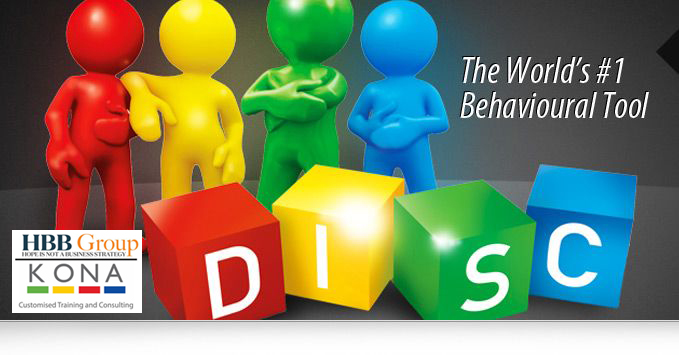
DISC Profile in Sales Training

disc profile training and facilitation DISC PROFILE in SALES TRAINING | KEY ACCOUNT MANAGEMENT People tend to trust people who are similar to them. The most effective way to gain the commitment and cooperation of others is to “get into their world” and “blend” with their behavioural style. DISC helps a sales force by helping them understand their natural approach to the sales process, and how to adapt their approach to different prospects. KONA Training use DISC Sales Profiles coupled with focused facilitation to enhance communication between your sales team and to also profile clients, so communication styles are better understood for stronger lasting relationships. Our Team Report provides a detailed breakdown of a team’s DISC data (up to 100 people) through a variety of charts, diagrams, and comparison pages. This is a great tool to get a high-level snapshot of the team’s composition, contrast their similarities, differences, strengths, potential areas for conflict, and generally make sense of a large amount of group assessment scores through easy-to-understand visuals. To learn more about DISC and how we can help your client facing team, please call 1300 611 288 or email info@hbbausgroup.com.au Download our sample Sales DISC Profile or DISC Team Report:  

SALES EXCUSE 2: THERE’S NOT ENOUGH TIME IN THE DAY

Let’s start by saying that busy doesn’t necessarily mean effective.

One of the most common complaints from sales teams doing poorly is that there’s not enough hours in the day to make phone calls, follow up leads, source new leads, or create effective pitches.

In our experience, more often than not, this is just an excuse masking laziness and poor time management.

The difference between success and failure can be influenced by how effectively time is used. We all get the same 24 hours, so if your sales people are telling you that there’s not enough time then it’s time to identify the real issues and sift through the drainers within the team.

Time management

In contrast, people with poor time management skills waste time on the unimportant things that ultimately will not contribute to converting a lead. These same people are prone to procrastination – a killer of performance. Charles Dickens and David Copperfield summed it up by saying  “Procrastination is the thief of time, collar him”.

So, if a member of your sales team complains that they don’t have enough time to convert their leads into sales, “collar them” – look at how they are utilising their time and if the business is actually benefiting, or is simply being drained by a dead resource. Chances are that there are bigger underlying issues that need to be addressed.

Sharpen the focus

There are so many distractions floating around that it can be hard to sit down and focus, and importantly keep your team focused. However, this is not an excuse for deflated sales results. The great sales performers and leaders focus on the target and concentrate on how best to achieve it.

How long does it take your team to perform their daily admin tasks? Are they focused on the end goal or distracted by surrounding interferences?

Ongoing evaluation and reinforcement of daily targets should be established to keep the team on track.

Priorities and delegation

Are your sales people typing reports, filing, responding to unnecessary emails and taking long meetings rather than being on the phone following up leads? The number one priority for the sales team is to generate leads and convert them to sales.

Other tasks can be delegated to the administration or management team so the sales team can focus on what they are there to do – sell!

Sales management training and coaching

At the end of the day, when sales teams blame poor sales on not having enough time in the day, it is usually a case of lacking focus, poor sales management or poor time management, or perhaps they are just not the right person for the role.

Focused, driven and passionate salespeople achieve goals. Time is money so don’t let it be drained by underperforming team members.

KONA Group specialises in a wide range of services that address sales performance and sales management, executive and leadership coaching, and performance and time management. These customised training and coaching programs drill down to the core of the issue and drive solutions through proven methodologies.

For more information, please email info@kona.com.au or call 1300 611 288.

3 Simple but Overlooked Tactics to Generate More Business

It’s not unusual for Business Leaders and Managers to review their successes and failures, shortcomings and opportunities at the end of the financial and calendar years as even if an organisation is performing well, there is usually an opportunity to get better.

With the speed of change in business today, in many organisations the new financial and calendar years drives new technological advancements and new strategies to improve results on the previous year.

However even though this might be the time to contemplate how you can execute new initiatives to develop your business, stay in front of your rivals, and expand your client base, don’t lose sight of the 3 current marketing strategies that many organisations just aren’t maintaining consistently and effectively.

For you to take your business further, consider these 3 marketing strategies this year to help you convert more potential clients and increase sales and profits.

Quantify Marketing Results and ROI

The huge mistake that most companies made in 2013/14 is failure to quantify their marketing results. For you to have a better marketing strategy, you will need to track your marketing efforts to know how you are performing at the moment.

Setting up a page on a social media site like Facebook is a good start however you must analyze the data based on likes, shares and comments. This will enable you to know what to do or not to do and how to capitalize what your client’s opinions and feedback

Social media sites open the door to customer feedback which must be constantly reviewed.

Compliments should be accepted and leveraged while complaints must be addressed (professionally) and considered as a ‘gift’

As a client found recently when we reviewed their social media site, the online customer feedback was scathing however the client had no idea as they weren’t monitoring their site!

Feed the Animal

Having created your website to help market your products or services is just not enough.

These days technology has grown immensely and it is the primary source of information for people looking to buy products and services, however it is crucial that you don’t have a ‘set and forget’ website

A decently designed site with important data like what you do, what you sell, who you are, and who you do business with is only as good as the quality and quantity of new information you load up on to your site.

Your online and digital marketing strategy should include uploading regular blogs, articles, videos, testimonials, downloads, images etc, the list goes on

By regularly ‘feeding the animal’ Google sees your site as being active and therefore ranks you higher than your competitors more static website

And if your excuse is you don’t have time, just ask each of your employees to write an article or blog, then post the best ones onto your website

Mobile Management

Smart businesses have realised that employees and customers are not office bound any more.

They are now able to work in places outside their offices and at varying times of the day and night.

A suitable strategy should encompass this evolving reality, permitting employees and customers to get information at any particular time they require so as maintaining competition at the market.

Amazingly we spoke with one organisation recently who wouldn’t give prospective customers access to any pages on their website until they had completed a form to gain a login!

And they couldn’t understand why no-one was reading the content, never mind generating leads

There are many lessons to be learnt from last year but one of the most important ones is that customers are looking to engage with suppliers more than ever before so if you don’t keep up to date with ‘how’ they are looking for you and ‘what’ they are looking for, you are giving your competition a free kick

If your business is are not making the sales and profits you need, bring in the specialists in Strategic Marketing and Australian Sales Training from the KONA Group and provide your business with the expertise and tools to turn your results round

Go to https://kona.com.au/Hearts-and-Minds-Sales-Training or https://kona.com.au/Marketing-Strategy  Or call 1300 611 288, or email Glenn@KONA.com.au

Are ‘Oxygen Thieves’ Killing your Business Performance?

Coffee break ended ten minutes ago – and they’re still stirring their spoons and gossiping.

You walk past their desk and they spring to life, typing, filing, pushing paper and looking like they are under the pump. But turn the corner and they’re back flicking through Facebook or on their personal phones.

Oxygen thieves, deadwood, time wasters. Whichever definition you prefer, just about every workplace has them: time wasting, aimless, directionless employees who suck up valuable time, money and resources, and produce very little value in return.

But whether you’re driving a project or just taking care of everyday business, as the leader and decision maker, the buck stops with you.

It’s Time to Make Some Changes

Change Your Working Culture

Some workplace cultures are relaxed, yet focused, while others can be hard driving and competitive.

But while you’re negotiating the next deal, or perhaps focusing on other areas of the business from behind your desk, oxygen thieves slip under the radar, taking advantage of blind spots – your work culture may be so relaxed that they put their feet up too much or so hard that you drive them out.

First Consider Your Role as the Leader.

Before you look too hard at the team, let’s first consider your role as the leader.

  • Are your expectations for workplace duties clearly communicated?
  • Are benchmarks for sales targets enforced and defined by you and other team members?
  • Do you have the skills and experience to adequately coach your team?

To be blunt, oxygen thieves get away with it because we let them. So stop them in their tracks by making sure your workplace holds everyone accountable.

Performance Management

One of the best ways to improve your workplace culture is to introduce a performance management program.

In some cases, the term ‘performance management’ comes with a negative connotation, however it does not need to be like this. Evaluate your employees on their workplace performance, showing where they are doing well and where they need to improve.

Jack Welch, the famously gruff leader of General Electric, used annual performance reviews to rank his workforce and then sack the bottom 10%! (Source: https://www.bbc.com/news/business-33984961). It was controversial, it was harsh, but it got results.

Coach Your Team

All great business leaders have had at least one good coach or mentor to help them develop to their full potential. Unfortunately, in this day of ‘lean organisations’ and hectic schedules, many professionals cannot get the level of coaching and mentoring they need to meet their own developmental goals.

Research has proven that coaching develops the capability and skills your people must possess in order to be successful in their role and critical to future business success.

It is all well and good to implement performance management, however ongoing team coaching is prudent to ensure that team morale and motivation remains high and the implementation of training outcomes are consistent for full productivity.

Constant Feedback

These days, leading technology companies like Amazon, Adobe and Google evaluate and rank their teams regularly (rather than just annually), ensuring that feedback and progress on employee’s Key Performance Indicators (KPIs) is constantly provided.

Employees have a real time picture of how they are doing and what can be done to improve things before the issue escalates.

This process ensures that underperformers have nowhere to hide. They can’t sit back, relax and wait for the annual review to jump up and actually start doing their job.

Next Steps

It’s tempting to give underperforming employees a swift kick up the bum or a push right out the door, but if the core of the problem is not identified and fixed, then the issue will continue. With the right kind of performance management and coaching, they can become an employee who you’ll trust to deliver for the business.

KONA Group offers customised executive and leadership coaching programs that have proven successful for several Australian and New Zealand companies.

Call KONA Group on 1300 611 288 or email info@kona.com.au for more information and to discuss customised training and coaching programs suitable for your organisation.

Board or Leadership Alignment Session

Are your Board of Directors Aligned? Is there Conflict or Misunderstanding? Are your Senior Managers pulling in the same direction? HERE ARE SOME INDICATORS THAT A BOARD OR LEADERSHIP TEAM WILL BENEFIT FROM AN ALIGNMENT SESSION: When a board has refreshed and/or augmented with one or more new members there is a need to proactively ensure that everyone is in alignment on critical issues, strategy, strategic priorities and/or challenges that aren’t being resolved and/or can’t be fully addressed during regularly scheduled board meetings. When there is a feeling of “us versus them” limiting the effectiveness of the leaders and/or the CEO/Executive Director. When there is a division between directors who are in support of the CEO/Executive Director and others who are not– some believing the leader is effective while others don’t. When a new leader or decision maker is new and selected people resist leadership from an “outsider,” allowing their decisions to be biased in favour of past norms rather than considering current and future strategic direction. When the leaders have not adopted a clear set of decision-making processes, has not been consistent with its oversight role and/or has not been engaged in ensuring that all key stake holders are addressing their top priorities. When the board has a new member who has not been elected through proper succession planning. When the board is divided about strategy, strategic priorities, the leadership of the organisation or about any event that had negative ramifications for the organisation internally or externally in the past year. When the board needs an objective and trusted third party to get realigned because internal preconceived judgments and expectations are impeding a fresh perspective. The situations in which a board might pursue having an alignment session are not limited to the circumstances listed above, and having an alignment session is not an indicator that a board is dysfunctional! Boards should strive to be healthy. The importance of good board dynamics and good governance can’t be underestimated and require vigilance. The ultimate goal of a board alignment session is to inspire and enlist all directors to work together for the ultimate success of the organization they all serve. In every session that we have led, participants consistently agree that they have gained clarity about more than they could have envisioned and they all wish they had held a session sooner. If you’d like to discuss your situation  in more detail, please call us today for a confidential no obligation consultation. 1300 833 574 info@hbbausgroup.com.au www.hbbausgroup.com.au

W.I.I.F.T. – What’s in it for them: Putting Consumers’ Shoe into New Perspective

Every salesperson is aware of the “What’s in it for me” (W.I.I.F.M) as something that can benefit their company by focusing on the How, Why, and What they are selling, which matters to prospective clients they are trying to close a deal with.

Today, most salespeople are introduced to shifting with What’s in it for them (W.I.I.F.T).

W.I.I.F.T takes a massive shift for marketers who are now exposed to the different behaviours and seasonal needs of their consumers. It is more prominent in the market that most consumers are focusing on how businesses are keeping up their expertise with emotional intelligence, and shifting to WIIFT is one of the ways of helping startup businesses that are looking for potential target customers.

In this infographic, we will discuss the different areas where you can integrate W.I.I.F.T to your consumers.

But first, let us look into identifying consumer needs that today’s companies should consider.

Ways on how to quickly hit your fiscal year sales numbers.
KONA Infographic on W.I.I.F.T.

Value-Based Selling: 7 Ways to Sell Value this 2019 – Infographic

Value-based selling is the process of reinforcing to the mind of the customers the particular “value” that your product, service, or business delivers.  Understanding this selling method can increase the likelihood of closing a sales transaction as well as build a positive image into your target market’s mind. Most companies today are focusing their value on developing their sales opportunity out in the modern market. The market today is no doubt intimidating in terms of standing out in the sea of the different successful brand; that is why most companies today are emphasizing their unique in value and not sticking with the status quo. In this infographic, we will discuss the different ways on how you can improve your value-based selling this 2019. But first, let us consider the four phases of successful selling in today’s market: value based selling 7 ways to sell value this 2019

The World Looks Better When Your Team’s Conversion Rate Is Good

They say that all men are born equal, but what about salespeople?

Some salespeople excel more than others, and one of the criteria that influence the well-being of their careers is: success.

Salespeople are exposed to an industry of companies wherein conversion with success and what does not work exists.

A poor conversion rate of one or two salespeople in a team can be lived with if the rest are pulling their weight. The problem is however, when all or most members are struggling to convert leads or hit a target.

It was precisely for this issue a client recently approached us, as their sales team was generating enough leads— but not enough new customers.

What happens when this is the issue?

It would be a mistake to think that falling sales is the only outcome of such a situation. No doubt, the bottom line will suffer when the majority is missing their target, but it may not be the only problem. Here are some of the issues that salespeople experience during conversion:

  • Low Self Esteem – A sales person’s worth is governed by the sales they generate. If their contribution to the company’s total business is below par, their self-esteem is bound to decrease, which often, drags down their performance further. This then becomes a vicious circle.
  • Lack of Team Cohesion – The outcome of only a few sales people meeting their targets is the business becomes too dependent on them. High performing salespeople, then, start feeling that they are doing their work, as well as what others should be doing. The team eventually but inevitably becomes divided—those who meet the target and those who don’t—with each group resenting the other.

Such an atmosphere hinders successful implementation of corrective measures, so should be dealt with quickly and firmly. If your managers are not equipped to handle this, bring in the experts or ask your managers to undergo relevant sales management training and coaching

  • High Attrition Rate – When the team becomes divided, the manager often gets stricter and more demanding with salespeople missing their targets. Too many managers often tell their salespeople to improve their sales skills and, by extension, their sales conversion rates yet, such attempts do not yield significant results because of lack of sales training and coaching expertise of the manager. This, in turn, can lead to a further drop in morale resulting, in the present economy, in people resigning and going elsewhere.

How to solve the issue?

Salespeople are made, not born, and the skills of the trade are learned in classroom training then perfected in the field through coaching. Learning new or polishing existent skills will act as a remedy to the problem, and customised sales training courses to give your sales people an opportunity to grow in perspective and sales.

If your salespeople are missing the target or have a low conversion rate, seek the help of a sales training expert. Contact KONA Customised Training and Consulting today to learn more about the different services that can help your company acquire more sales.

The 4 Most Impactful Sales Enablement Trends for 2019

The modern age is now adding a new flavour in the business industry. Considering how the new generation of consumers is reshaping the way companies promote their business, products, and services, acquiring sales seem to be in a clearer perspective this 2019, especially for sales enablement leaders. As heads of a growing function, sales enablement leaders are learning more about how to succeed in their roles with each passing year. Sales organisations have come to appreciate the value that sales enablement solutions can offer, particularly in shortening the length of the sales cycle and increasing pipeline opportunities. In this article, we will discuss the most impactful sales enablement techniques that you should utilise in your business. To start with, here are the four sales enablement trends that you should watch out for this 2019:

1. Sales Coaching and Learning

Gone were the days when salespeople gain all the knowledge and techniques they have to use on the field. Today, most companies are giving time and effort in nurturing their sales team before deploying them on the field. In 2019, most companies will further demand and expect deeper integration of learning and coaching tools into their existing sales enablement platforms. Doing so will help these companies avoid increased turnover, slower ramp time, and fewer sales. Sales coaching is now the common ground of most sales representatives since this enables them to move fluidly in the market.

2. Customer Relationship Management

CRM is the single greatest spend on your sales stack. If your enablement strategy isn’t anchored to it, then you need to rethink your CRM. To fully apply effective CRM, you should weaponise your core sales management with its essential requirements. Start from prompting necessary information on a prospect to connecting with prospects via social media platforms.

3. Generation Z

While Millennials is still a driving force that marketers and salespeople must focus on, there is a new generation emerging that both marketers and salespeople need to be aware of as well: Generation Z. This generation is entirely different from previous generations, at least in some aspects. For example, they were born with access to incredible technology and grew up using social media, smartphones, online shopping and all kinds of other techniques daily. They also care a lot about global issues and their impact on the world, particularly when it comes to environmental issues.

4. Artificial Intelligence

Artificial intelligence has the potential to make a significant effect on sales teams, which is why it should be on your list of sales enablement. The time savings are inarguable, but the rise of AI has other effects as well. AI increases the value of human skills that can’t be replicated by traditional sale management tools. In 2019, expect that AI-powered roleplay tools will analyse facial expressions to provide insight into the real emotional responses of an audience. Contact us if you are interested to know more about how our Sales Training program can help your sales department create a meaningful sales enablement for your business today.