This is one of the most profound statements I have ever heard.
It is in one of my favourite books – The Art of Racing in the Rain by Garth Stein.
Such a simple concept, yet so true: “That which we manifest is before us”; we are the creators of our own destiny.
Be it through intention or ignorance, our successes and our failures have been brought on by none other than ourselves.
I think this is wonderful … and yet scary at the same time.
So all my successes I created? Fabulous! But wait a minute – if I’m not as successful as I want to be, then I created that too? Horrors! And my absolute failures, I created those too? That’s a worry.
But let’s look at the positive. We can create our own future. It’s like The Secret. “What you think about and thank about, you bring about.” And other smart sayings: “If it’s to be, it’s up to me.” And the classic Michael Jackson line “I’m starting with the man in the mirror…take a look at yourself, and then make a change.”
We all have that potential to be M.A.D. (to make a Difference). It starts with deciding what you want, what will make you happy, what’s important to you – and then writing it down.
So that’s Step 1: Write it down, record it, post it, tell someone about your plans. Commit your dreams to paper (or the world-wide web) and it will become reality.
Step 2: Create stepping stones to get you over the troubled waters and to the other side – break it down into bite-sized pieces, so that you can achieve (and celebrate) small goals along the way. Measure the steps that you are taking. I love To-Do lists where I can tick off the things that I have accomplished each day.
Step 3: Ensure that you make your dreams ARE achievable. After all, you DO want to be able to applaud your effort and not finding that you are depressed by every little obstacle in the river of life that may come your way.
Step 4: Is it possible to be CEO of a company that you just started with within a year? Probably not! (Although for some Gen Y and Gen Xs that’s exactly what they want … and expect. But that’s another conversation altogether!) Be realistic about your wants and needs.
Step 5: Put a date on your dreams. Goals are dreams with a timeline.
Hmmm, seems like I’ve just written down S.M.A.R.T. goal-setting. Specific, Measurable, Achievable, Realistic and Timely.
Despite the urge to act now to avoid the “use it or lose it” budget spending, it’s vital to think strategically about your organisation’s future objectives before moving forward. Be wise when considering your End Of Financial Year (EOFY) spending, but don’t be complacent.
Notably, your actions right now could positively impact other areas of your business. That is, investing in professional development now could result in bolstering employee morale as well as helping you get ahead on your KPIs for the upcoming quarter.
Ultimately, with the right investment you will have more than a budget increase to look forward to next year.
INVEST IN VALUE
So use your budget now and we will hold delivery dates for when you are ready to use them in the next 12 months. Consider being part of the KONA Credit Benefits (KCB) Program.
With this in mind, here is how to get the most value for your organisation by spending your budget before the end of the financial year. Put simply, there has never been a better time to upskill your team.
To Get Your KONA CREDIT BENEFITS > Before the End of the Financial Year > to Use over 12 Months
Top 4 EOFY Budget Spending Ideas
1. Learning tools to Streamline Processes
Investing in sharpening the tools of your team while you are able to is a wise business move. Basically, it ensures your employees are well equipped to start bolstering the budget for the remainder of the year.
The end of the financial year is a great time to take inventory of your team’s current skill level. Also, it’s a wise time to identify any gaps in your learning processes that cause pain for productivity.
Even though educational needs vary from person to person and department to department, consider the value of uniform learning. That is, embedding a uniform teaching methodology across your entire business. By doing so, you are creating ONE language everyone can both speak and understand.
For example, the valuable profiling tool of DISC teaches all employees across all levels how to understand human behaviour. By instilling the language of DISC in your workplace you ensure everyone is operating form the same manual. Ultimately, it guarantees solidarity and strength in the eyes of your customers.
2. Recognise Employees
Everyone enjoys feeling appreciated. If your company enjoyed a successful year or your team has gone above and beyond, why not use the budget money to reward your employees?
Recognition takes many different forms, which can fit almost any budget imaginable. Moreover, employee recognition is best when there is a measurable result that comes from it. Consequently, it is worth considering investing in team-building activities. Ultimately, it strengthens trust, encourages communication, resolves conflict, and increases collaboration between employees. Additionally, effective team-building activities produce more engaged employees. And as a result, contributes to a healthy work culture while at the same time boosting your ROI.
Treat your employees to fun and dynamic team building sessions! The best team-building activities don’t feel like the typical day at the office. Or in recent times, another virtual meeting! Try one of KONA’s energy high knowledge rich Virtual and F2F Team Building Workshops! SO many belly laughs and so much employee satisfaction.
3. Invest in EduTainment
Budget surpluses also provides ways to invest in education opportunities that can keep employees up to date with industry standards. Workforce statistics reveal that companies with engaged employees make 2.5 times the revenue. Additionally, those highly engaged employees are also 87% less likely to leave their jobs.
There are some interesting ways to impart dynamic as well as educational information on to your employees. And these do not necessarily involve state-of-the-art technologies. Ultimately, by being engaging you ensure what they are learning will stick. We call it EDUTAINMENT! That is an investment that keeps on giving!
KONA Group DISC & Sales Workshop
Edutainment makes sure you get your money’s worth, by adding a level of entertainment and education to your team’s learnings. In fact you are embedding the learning in a way they can retrieve the information on a daily basis. Consequently, this ensures they don’t return to their old habits. And the bonus? You have up skilled your employees, entertained them and skyrocketed mojo to produce more work!
4. Assign Resources to Professional Development efforts
There never seems to be enough time or resources to complete every goal, project, or assignment that comes our way. Especially when it comes to professional development.
Admittedly, the reasons are often simple enough. That is because in most situations we are limited to budget constraints. But, when we are able to assign End of Financial Year funds to professional development, we are effectively making an investment in the year ahead.
Importantly, you should provide your people with core learningareasand ask them what they need upskilling in the most. Remember – we don’t know what we don’t know!
Workshops Can all be Delivered onsite or virtually, and Include Core Learning Areas in:
Don’t forget, June 30 is just around the corner. These are just four of the ways that you can spend what remains of your budget with the intention to boosting your ROI.
Use your budget now and we will hold delivery dates for when you are ready to use them in the next 12 months. Consider being part of the KONA Credit Benefits (KCB) Program.
Why?
Cost-effective, simple and efficient – the perfect way to spend your leftover budget.
Purchasing Professional Development KCB Points in advance is hassle-free.
With the KCB Points there is no need to conduct formal tenders on a project-by-project basis. This will save you time and money!
There is no spend limit – no matter how detailed the customised content is for your training or how many people you want to upskill, there will be no additional paperwork or costs.
We make the transaction simple, with one set of agreed terms and conditions.
You can be confident that all your people’s Professional Development obligations are met.
You are guaranteed transparency and clarity throughout your entire KONA Credit BenefitsProgram
As an Australian-owned and operated organisation, nobody understands the requirements of Australian business and employee training like the KONA Group.
The more KCB Points you build the wider access to our range of holistic business services.
KCB Points are only offered to the first 50 applicants before June 30, 2021.
KCB Points can be used across ALL our holistic business services! Restriction Free.
We’re committed to providing the highest quality training solutions to your team, especially through the latest round of pandemic restrictions. Additionally, we ensure your business and people will be guided through an engaging and enriching learning experience.
For more information about how you can secure your KONA Credit Benefits, contact us to invest in your KCB Points, on 1300 611 288 for a confidential conversation, or email info@kona.com.au anytime.
As one of Australia’s largest corporate DISC Facilitators and DISC Profile suppliers, we wanted to learn more about how each behavioural style has been reacting to our current global COVID-19 pandemic to better understand our clients and their needs.
One of our senior corporate partners interviewed people in their network who fitted into the D, I, S, and C behavioural styles. Here are their reactions, actions, and results from their initial weeks of remote working in the wake of the current global pandemic.
D – Dominance
Fast Paced, Task-Oriented, Results Driven
Initial Reaction: Fight or Flight
If you have a high D score, your initial reaction was probably one of stark realisation. This might have triggered you into a ‘fight or flight’ response, feeling like you needed to defend yourself and your loved ones, or flee.
Focused Reaction: Innovation
After the initial shock wore off, our High Ds made a plan. “We work with people,” they said. “We have some of the best tools to leverage how best to deal with people during this crisis, so let’s pull together a package that can appeal to the masses in being better able to lead their talent from a bad situation to a more positive outcome.”
Personal Practices
Our advice for high D scores? Slow down at home. Your housemates, loved ones and families probably have different scores than you, and they might be hesitating to react as quickly as you are inclined to. It’s ok to take a breath!
Rely on others who are more structured than you. Some of our Ds partners are a High S, and they are letting them take the lead on household procedures. They found themselves grateful for the structure in such an uncertain time.
Business Best Practices
If you have a high D score, you are a trailblazer and an innovator. That’s exactly what businesses need right now! “Innovation happens during interesting times,” said our High Ds. “This is certainly an interesting time that we plan to optimise and have a positive impact on our clients.”
Help your clients focus on a bigger picture for their business without emphasising the ‘doom and gloom’. Don’t be insensitive, but a lot of people are looking for inspiration right now, and you’re a natural leader.
Next Step for High Ds
What’s your next step? A great idea for High Ds is to connect with others and seek out their points of view. Your willingness to charge forward is a great strength, but make sure you have all the facts before you do.
I – Influence
Engaging, Flexible, Optimistic
Initial Reaction: Loss of Connection
The high Is were initially very concerned with how the pandemic would affect their connections with others. Since they are people-oriented and fuelled by interaction, they were concerned about social distancing and restriction.
Focused Reaction: People-First Support
People with high I scores are excellent influencers. They can use that talent in difficult times to help others come around to necessary changes. If you’re a high I, your great attitude and ability to talk through issues will be a huge benefit for you in this time.
Personal Practices
Our high Is where having a hard time adapting to our new social norms, so they are focusing on keeping spirits high. Inspirational content is a great source of comfort for them, so they are enjoying favourite quotes and seeking out inspiration on social media.
Try keeping a ‘victory file’: a collection of notes, cards and messages you’ve received over the years. That way, you can be reminded of the good you have done over time to get inspired for the good you will do!
Business Best Practices
You know putting people first is the best way forward. Do this by providing exceptional service to reduce waste and reserve profits. It might be hard to adapt without the in-person interaction that a high I prefer but make face-to-face time a priority with tools like Zoom and Teams. Your role in this time is one of support and guidance for your clients. That means you might not be in the spotlight where you thrive, but you can do a lot of good.
Next Step for High Is
Make sure you’re making future plans. Daydreaming about everything you want to do after the quarantine isn’t a bad idea — it can help you appreciate your loved ones and favourite activities.
S – Steadiness
Stability, Patience, Great Listening Skills
Initial Reaction: Awareness, Not Panic
Our High Ss took the changes in stride and noted that it didn’t really affect their day-to-day as much as it might have affected others. The Steadiness that is their hallmark trait became very useful in this confusing time.
Focused Reaction: Sustain Business, Don’t Grow It
This High Ss are already prepared to do business from anywhere, remote work included. Their goal is to continue to provide dependable, predictable service while they wait for changes in direction. This reliability is a great comfort to clients.
“Great things will come out of this and make all of us more aware of things,” they said. There was no evident sense of urgency when interviewing the Ss, just confident awareness that this too shall pass.
Personal Practices
While you might have the benefit of big picture thinking and a cool head, others are panicking. Their reactions are not less valid than yours, even if they are less logical. Work hard in this time to acknowledge others’ points of view and shift your own communication style to reflect their urgency when appropriate.
The Ss ran into a challenge when trying to express the seriousness of the situation to their offsprings. Since they were calm and prepared, their children weren’t fully understanding the gravity of sheltering in place and the importance of social distancing. Shifting communication to match his style helped the Ss break through.
Business Best Practices
While your levelness and approach of a process is crucially important to your clients, you need to be careful in this time not to withdraw. It can feel easy for you to carry on, business as usual, but if you aren’t working outside of your comfort zone, you might fall behind your competition.
Push yourself to try new challenges! Your patience and awareness are great tools as you pursue new goals.
Next Step for High Ss
Make sure you don’t withdraw! A challenge that High Ss often face is fear of conflict or challenging situations and working remotely presents lots of opportunities to shrink away from both. Make sure you’re setting goals outside of your comfort zone to keep up with your competition!
C – Compliance
Data Driven, Methodical, Risk Averse
Initial Reaction: Social Distancing? No Problem!
Our High Cs started the conversation by noting that High Ds and High Is were probably already missing interaction, while they were welcoming the distance. Their task-oriented nature made the shift to virtual much easier than it had been for their peers.
Focused Reaction: New Opportunities for Engagement
High Cs are at risk of withdrawing, especially with an isolated environment. This High C recognized a need to engage deeper on new platforms and put in high amounts of effort to connect with others virtually. The risk of disconnect is high, but many businesses might stick with a virtual model when the pandemic is resolved. High Cs can help their clients adapt to new protocol and procedures, but the relationship needs to be there.
Personal Practices
Focus on what you can actually control. A global pandemic is an unprecedented situation, so you need to be kind to yourself and think hard about ways you can realistically improve your situation and acknowledge the ways you simply can’t.
Losing your in-person brainstorming in a team has a large effect on people with High C scores. It’s worth it to put in effort to over communicate, rather than under communicate with your team. While the dynamics are different, virtual meetings just to connect and bounce ideas off each other are still very valuable.
Business Best Practices
Your clear head as a High C is great for your customers right now— you are well positioned to help them figure out the logistics of working virtually. Help your clients focus on the positive aspects of working remotely, like saved money and resources, and help them re-evaluate their business structure to come out of this crisis in the best position possible for them.
Next Step for High Cs
You might not be used to helping others look on the bright side, but your ability to see the advantages of our current state of business is crucial right now. Use your reasoning skills to help others!
Move Forward with Awareness
The one thing that you can be certain of is that the state of the world and businesses are changing every day. Hopefully, you can become more aware of your own behaviour by learning from our high D, I, S, and Cs.
If you’re looking for a next step, try The Free Working from Home Report. This free assessment offers quick tips to communicate with every DISC style as well as personalised remote work options for you.
Here’s the link or click on the image. https://www.ttisi.com/wfh
If you would like to explore DISC in more detail including our suite of Corporate DISC Profiles or have your team undertake one of our facilitated workshops by an accredited Behaviour Analyst (CPBA), please contact KONA Training today on 1300 833 574 or email info@kona.com.au to organise a free discovery session.
DISC Profiles available include – Sales, Management/Staff and Executive Profiles
Coffee break ended ten minutes ago – and they’re still stirring their spoons and gossiping.
You walk past their desk and they spring to life, typing, filing, pushing paper and looking like they are under the pump. But turn the corner and they’re back flicking through Facebook or on their personal phones.
Oxygen thieves, deadwood, time wasters. Whichever definition you prefer, just about every workplace has them: time wasting, aimless, directionless employees who suck up valuable time, money and resources, and produce very little value in return.
But whether you’re driving a project or just taking care of everyday business, as the leader and decision maker, the buck stops with you.
It’s Time to Make Some Changes
Change Your Working Culture
Some workplace cultures are relaxed, yet focused, while others can be hard driving and competitive.
But while you’re negotiating the next deal, or perhaps focusing on other areas of the business from behind your desk, oxygen thieves slip under the radar, taking advantage of blind spots – your work culture may be so relaxed that they put their feet up too much or so hard that you drive them out.
First Consider Your Role as the Leader.
Before you look too hard at the team, let’s first consider your role as the leader.
Are your expectations for workplace duties clearly communicated?
Are benchmarks for sales targets enforced and defined by you and other team members?
Do you have the skills and experience to adequately coach your team?
To be blunt, oxygen thieves get away with it because we let them. So stop them in their tracks by making sure your workplace holds everyone accountable.
Performance Management
One of the best ways to improve your workplace culture is to introduce a performance management program.
In some cases, the term ‘performance management’ comes with a negative connotation, however it does not need to be like this. Evaluate your employees on their workplace performance, showing where they are doing well and where they need to improve.
Jack Welch, the famously gruff leader of General Electric, used annual performance reviews to rank his workforce and then sack the bottom 10%! (Source: https://www.bbc.com/news/business-33984961). It was controversial, it was harsh, but it got results.
Coach Your Team
All great business leaders have had at least one good coach or mentor to help them develop to their full potential. Unfortunately, in this day of ‘lean organisations’ and hectic schedules, many professionals cannot get the level of coaching and mentoring they need to meet their own developmental goals.
Research has proven that coaching develops the capability and skills your people must possess in order to be successful in their role and critical to future business success.
It is all well and good to implement performance management, however ongoing team coaching is prudent to ensure that team morale and motivation remains high and the implementation of training outcomes are consistent for full productivity.
Constant Feedback
These days, leading technology companies like Amazon, Adobe and Google evaluate and rank their teams regularly (rather than just annually), ensuring that feedback and progress on employee’s Key Performance Indicators (KPIs) is constantly provided.
Employees have a real time picture of how they are doing and what can be done to improve things before the issue escalates.
This process ensures that underperformers have nowhere to hide. They can’t sit back, relax and wait for the annual review to jump up and actually start doing their job.
Next Steps
It’s tempting to give underperforming employees a swift kick up the bum or a push right out the door, but if the core of the problem is not identified and fixed, then the issue will continue. With the right kind of performance management and coaching, they can become an employee who you’ll trust to deliver for the business.
KONA Group offers customised executive and leadership coaching programs that have proven successful for several Australian and New Zealand companies.
Call KONA Group on 1300 611 288 or email info@kona.com.au for more information and to discuss customised training and coaching programs suitable for your organisation.
Every salesperson is aware of the “What’s in it for me” (W.I.I.F.M) as something that can benefit their company by focusing on the How, Why, and What they are selling, which matters to prospective clients they are trying to close a deal with.
Today, most salespeople are introduced to shifting with What’s in it for them (W.I.I.F.T).
W.I.I.F.T takes a massive shift for marketers who are now exposed to the different behaviours and seasonal needs of their consumers. It is more prominent in the market that most consumers are focusing on how businesses are keeping up their expertise with emotional intelligence, and shifting to WIIFT is one of the ways of helping startup businesses that are looking for potential target customers.
In this infographic, we will discuss the different areas where you can integrate W.I.I.F.T to your consumers.
But first, let us look into identifying consumer needs that today’s companies should consider.
Sydney beachside suburb of Cronulla sees a protest against the alleged bashing of a beach lifeguard, developing into an alcohol-fuelled, racially charged riot.
Scott Morrison succeeds Malcom Turnbull as Australian prime minister.
2019
16th May
Former Prime Minister Bob Hawke dies aged 89.
(source: https://en.wikipedia.org/wiki/Timeline_of_Australian_history)On the verge of all the changes, along the way Kona Group has always maintained its goal for its clients:
Doubled sales of a B2B sales force in 6 months
Increased revenue of Finance organisation by 20%
Increased sales of a Pharmaceutical client by 19% to achieve 140% of annual target
Increased revenue for a Distribution client by 17%
Increased customer retention of a Major Credit Card by over 12%
Trained a sales team to make 439 appointments in ONE POWER HOURSales Training workshop and another team to sell over $1,200,000 of excess stock in another HOUR
Helped raise over $1,300,000 for Charity
Grown KONA from a one-man band to a team that is now part of the HBB Group with a team in excess of 18 Consultants Worldwide
So, from our first client Fairfax back in 2000, to all of our past, present and future clients we THANK YOU all for your ongoing support and trust, as we really do appreciate it.
If you are looking to increase the effectiveness and results of your organisation, contact:
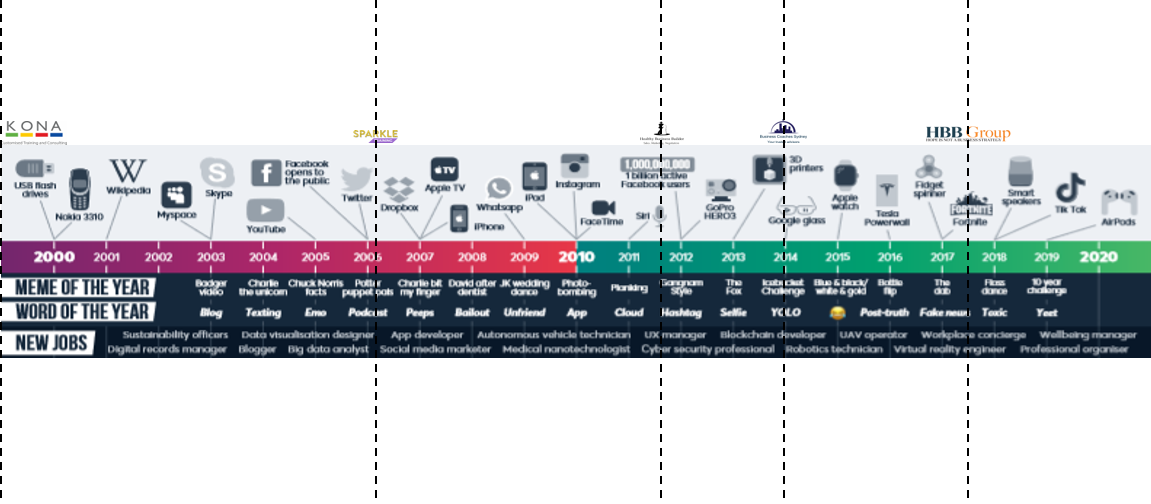
This week the KONA Group celebrates 17 years in business and so much has happened in that time including:
Y2K
Sydney Olympics
GFC
Countless number of changes in political leaders (remember Kevin 07?)
9/11
Launch of the Smart Phone
Souths finally win another Premiership
Lindt Cafe Siege
Property prices explosion (again)
Indonesian Tsunami and Christchurch earthquakes
On the business front, for our clients we have:
Doubled sales of a B2B sales force in 6 months.
Increased revenue of a Finance organisation by 20%.
Increased sales of a Pharmaceutical client by 19% to achieve 140% of annual target.
Increased revenue for a Distribution client by 17%.
Increased customer retention of a Major Credit Card by over 12%.
Trained a sales team to make 439 appointments in ONE POWER HOURSales Training workshop and another team to sell over $1,200,000 of excess stock in another HOUR.
In Sales Excuse #3, how often do your sales team say they didn’t make the sale because “Our price is too high? We are too expensive”, “Our competition is cheaper than us!”, “If we were cheaper we could sell more!”?
This is just another excuse where sales people focus on their own ‘3Ps’ of Product, Price and Problems rather than on the value they can add to customers. There are some simple things we can all do to have quality conversations with our customers, which in turn, leads to better quality sales and repeat business.
At The KONA Group we train and coach Sales Teams every day that are looking to improve their results and when price is a common excuse for underperformance we recommend the following 3 insights as a starting point.
1. Have the right conversations.
Quality Conversations start with Quality Questions. Asking interesting ‘High Value’ open questions that encourage your prospects and customers to talk about themselves and their business is critical. You want customers to value having a conversation with you, not look for a reason to get rid of you as early as possible, so how do you have these conversations? It’s easy really, you ask the right questions based on your customers Business, Market, Competition and Future…. and then you shut up and listen.
In meetings with customers and prospects your salespeople should only be talking 20% of the time. Listening means really listen, not just be quiet whilst waiting for your turn to speak.
2. Adding value to your customers BUSINESS is the key to make selling easy.
Adding value to an existing or potential customer is not just about selling your product or service. Often during a quality conversation with a customer many opportunities to add value will emerge and while some of these will involve your products and services, if you look at the non-product related challenges they face from a Business perspective, you will find more opportunities to add value.
Most businesses are bombarded with salespeople trying to flog them a product or a service regardless of their need however your Sales Team will be amazed at what happens when they start to have quality conversations focused on the customer’s Business rather than the 3Ps. Think rapport building on steroids!
3. Make it about the customer, even when you want it to be about you…
It is easy to say ‘Put the customer at the centre of everything your do’ but salespeople rarely do. It is not about you but rather is always about the customer, even when it really is about you. The moment a customer or a prospect believes that you are only in it for yourself then TRUST melts away and you are back to a price based haggle.
Put your own self-interest to one side and focus on the customer, their organisation, their issues, their strategy and allow the opportunities to add value with your products and services to emerge. You may even find that you never have to actually close the deal, your prospect may do it for you! At the end of the day, all else being equal, most customers will make a price-based decision. It a salespersons job to make sure that all things are not equal.
They need to be the difference, the X factor, the point of differentiation, and then their customers will buy from them, regardless of price!
Going forward: If Quality ‘non-product’ conversations are a challenge for your team then customisedsales training and coaching WILL help your people to become more successful. Constantly ‘sharpening the saw’, as Stephen Covey puts it, is a critical component of being a sales professional.
So to discuss how we can design a customisedsales training and coaching program for your organisation please contact the KONA Sales Performance Specialists via email at info@kona.com.au or call 1300 611 288.
What’s down the track for a knowledge based economy?
OPINION: Not only is its confrontational industrial relations environment seen as a major constraint on innovation, but government statistics show that its investment in R&D lags a long way behind most other industries.
The most recent Australian Bureau of Statistics data on business expenditure on R&D (BERD) shows that of the total $18,849 million invested in R&D across all Australian industries, manufacturing remained the largest contributor at $4,844 million (26 per cent). That outpaced professional, scientific and technical services ($3,753 million, or 20 per cent), financial and insurance services ($3,093 million, or 16 per cent) and mining ($2,830 million, or 15 per cent). Together, these four industries account for 77 per cent of total BERD, while construction contributed $864,103 (4.5 per cent).
While the above data looks depressing, it masks the reality of how much innovation really happens in the construction sector. In contrast to the pre-planned, laboratory-based and scientific R&D that typifies others sectors such as manufacturing, innovation in construction normally happens at the ‘coal-face’ in response to day-to-day problems. This means it is largely ‘hidden’ from formal government R&D statistics.
However, given that we are inexorably moving toward a knowledge-based future where intellectual property and new ideas will mean the difference between staying ahead of increasing competition or lagging behind, there are also strong arguments that the construction sector should be investing more in formal R&D. So it is worth knowing something about what R&D involves and the many commercial benefits it could bring, if designed and managed effectively.
In simple terms, R&D is a knowledge creating process underpinned by rigorous scientific investigation which leads to the commercial development of new services and/or products.
R&D can be applied or pure, the form being a response to market developments and having a practical application.
Pure R&D is more conceptual and exploratory with the aim of adding to our knowledge base without any specific application. In contrast to applied R&D which has traditionally been the focus of the construction industry, pure R&D has traditionally been the responsibility of government. Government support for pure R&D has always been considered crucial because research shows that most private construction companies, if left to their own devices, would under-invest in this area. With only a few exceptions, the vast majority of construction companies see pure R&D as too risky and time-consuming and are not prepared to tolerate the long-term risks in capturing its benefits.
However, as demonstrated by the world’s most innovative companies, when R&D is targeted and managed effectively, it can bring significant commercial benefits.
Take for example, British Petroleum’s (BP’s) highly successful and innovative Venture Research Unit which developed and managed one of the world’s most successful corporate R&D programs. BP’s Venture Research Unit was deliberately located outside any of BP’s existing business units to enable it to generate ‘new breakthrough ideas that would lead to new industries and markets for BP.’
Working under the management of BP’s Venture Research Advisory Council and in close collaboration with the world’s leading universities, BP’s innovation strategy involved signing up the world’s most gifted pioneering researchers whose interests were aligned with the business. Rather than following the traditional approaches to R&D which typically involves commissioning pre-determined business-led projects, BP provided these top researchers with the resources to pursue their own ideas and to launch radical challenges to existing ideas outside any external business influences and constraints.
This process not only preserved the ideology of independent, unbiased research, but was designed to promote uninhibited thinking.
BP chose its team of researchers on the basis of whether their research would radically change thinking about something that was very important to society and to BP’s business. Once accepted into the Venture Research Unit’s team, BP’s goal was to help these leading researchers bring this about. There was an exceptional lightness of touch in managing this research. The only requirement imposed on the academic team was that they were to keep BP regularly informed of what they were doing so that BP could be the first to translate these ideas into marketable products and services to for their customers.
Researchers were not concerned directly with the commercialization process. This was entirely BP’s responsibility and once a researcher received BP’s money, they were free to use it in any way they liked. BP did not dictate projects, fields of study, problems or timescales and eventually the unit’s funding was expanded to a consortium of business partners with complementary interests in BP’s demand and supply chain such as ICI, Sony and DuPont.
The beauty of BP’s collaborative approach was that it avoided the classic problem of selecting research proposals and constraining the freedom of researchers to follow their passions and strengths. By supporting individual leading researchers and their research aspirations rather than specific research projects, BP was able to pursue a liberal approach which drew knowledge from a range of disciplines and business partners.
Furthermore, by hand-choosing their research partners and by minimizing the normal time, resource and bureaucratic constraints associated with scientific research, BP not only reduced the barriers to innovation but they also reduced risk since the researchers they supported were almost certain to succeed. The key question and risk then became how to convert that research into ideas for BP’s benefit. The research that was implemented proved to be extremely successful and their return-on-investment more than covered the relatively small investment in the overall initiative.
While there are too few examples like the above in the construction sector, there are exceptions to this rule. For example, Arup is renowned for investing significantly in both pure and applied research with a longer-term view. Arup is reported to invest approximately three per cent of its annual turnover in R&D and has a clear road map for its R&D which extends over 20 years into the future based on key drivers of change in key business areas.
Arup also integrates research-based KPIs into performance reviews for staff who are required to publish and collaborate with universities in creating new knowledge for the benefit of the business and society at large. Arup’s research program is driven by both ‘pull’ from its business leaders and ‘push’ from universities and research network partners. Research is seen as vital for its strategic business planning to ensure that it is equipped for future trends and that it can capitalize on new opportunities to improve its business and enter new markets.
As in BP’s case, Arup’s research team’s work involves forging and maintaining links with the best quality universities, researchers and research establishments, no matter where they are. Arup also works closely with government research funding and advisory bodies around the world to lobby for certain priority areas of funding and to leverage its own resources. Arup has arguably generated more knowledge than any other firm in the construction industry and has benefited enormously as a result.
Indeed, many of Arup’s most successful business units have arisen out of its willingness to allow its staff members to pursue their own passions and interests within the work environment. Importantly, while this strategy has inevitably involved some risk and failure, it has also enabled Arup to build a global reputation for innovation, attract the world’s brightest and most engaged staff and to be first mover in a number of new markets and reap the significant benefits associated with this.
While contracting is not generally synonymous with R&D, Laing O’Rourke also has a strong commitment to R&D through the formation and continued success of its Engineering Excellence Group (EnExG). It is not only Laing O’Rourke’s spending commitment to innovation and R&D (1.9 per cent of revenue) that led to it being recognized as one of the top 10 most innovative Australian organizations in 2014 and 2015. Rather, it is how these funds are utilized through the EnExG, and other activities of the wider organization, that makes Laing O’Rourke’s approach to innovation distinctly successful in an industry that often promotes similarity.
The EnExG is a highly cross-disciplinary team that has offices in both the United Kingdom and Australia. Now five years old, it employs a broad mixture of intellects and experiences from both within and outside of the traditional construction industry, with the aim of providing the perspectives and insights that can only be gained at the overlapping boundaries of the traditional disciplines of knowledge. By providing the environment for challenging and disruptive ideas to take seed and grow, the EnExG aims to drive fundamental change in the practices and culture of the broader construction industry.
This means much of the work of the EnExG is not solving problems through innovation, but rather providing fundamentally new methods and modes of thinking and working.
The EnExG has pioneered the development and implementation of disruptive technologies such as 3D printing, augmented reality and biometric measurements, among many others, for use by the Laing O’Rourke workforce and clients. Along with this foundational development the EnExG acts as a cultivation space for promising and innovative commercial ventures. One of these, SunShift™, has been awarded several highly competitive government grants and been the subject of much media attention for its potential to reshape the economics of renewable power generation.
While not every consultancy or construction company has the resources to invest in the types of highly structured and formalized R&D programs described above, it is worth remembering that all construction firms, large and small, exist in an increasingly globalised and knowledge-based economy where there is an ever greater reliance on our intellectual and creative capabilities than on our physical inputs or natural resources. We need to work smarter not just harder and without new ideas the Australian construction industry and the jobs that it provides will wither away in the face on growing and smart international competition.
Thanks to Dr Rowan Braham of Laing O’Rourke’s Engineering Excellence Group for providing information relating to its activities.Martin Loosemore is a Professor of construction management at UNSW. This opinion piece was first published on Sourceable.
This week, Glenn Dobson, Managing Director of the KONA Group and Hawaii Ironman triathlete, is interviewed by co-hosts Mark Jones and JV Douglas about why HRs current obsession with ’empowerment’ is a “management cop out”; staying motivated; and how setting new goals and challenges can help you achieve way beyond your own expectations.
“Business people today face so many distractions that it’s increasingly difficult to strike a balance between work and life, setting and achieving goals and maintaining focus and motivation.”
Yet Glenn’s ability to structure his week around the four “big rocks” in his life – work, training, family and sales training & coaching – have allowed him to pursue his dreams of becoming a Hawaii Ironman triathlete in KONA, and international sales coach. (Immediately after this interview he was getting on a plane to train businesses in Johannesburg, Dubai, Dallas and New Zealand)
This structure, he says, is integral to keeping himself motivated and avoiding the burnout that so many marketers and executives experience.
“People often say, ‘how do you fit it all in?’ I train 16 hours a week for an Ironman race and still spend a huge amount of time with my family.
I run a business and spend vast amounts of time with clients.
However I don’t get bogged down in the minutia, and the little low value tasks that can take up time.”
To listen to this excellent interview from CMO on your drive to or from work please click on
For over 2 decades, our customers have reached out to us because we are an expert Australian team with local and global expertise. We are passionate about empowering individuals and teams growth - developing talents, cultivating leadership skills, and overcome any obstacles.
Let's embark on this transformative journey together.
By submitting this form, you are consenting to receive marketing emails from: KONA. You can revoke your consent to receive emails at any time by using the SafeUnsubscribe® link, found at the bottom of every email. Emails are serviced by Constant Contact
Our team of expert coaches and trainers are dedicated to crafting personalised strategies that align with your unique goals and aspirations. We have the tools and expertise to guide you towards greatness.
By contacting us, you are taking the first step towards transforming your team and achieving the extraordinary.
SYDNEY
Suite 404, 128 Military Rd
Neutral Bay NSW Australia
2089
CENTRAL COAST
Suit 2, 18 Karalta Rd,
Erina, NSW
Australia 2250.
MELBOURNE
Suite 1 | 432 Smith Street,
Collingwood Victoria.
Australia 3066.
LONDON
Suite 1 | 2 Gipsy Hill,
London, SE19 1NL.
United Kingdom.
We cover all States Australia wide including Sydney, Melbourne, Brisbane, Perth, Adelaide and Hobart.











 This week the KONA Group celebrates 17 years in business and so much has happened in that time including: