Time management for success

10 Time Management Hacks That Successful Salespeople Swear By

Are you a salesperson who finds yourself wishing there were more hours in the day? Between prospecting, follow-ups, meetings, admin, and hitting targets, time can feel like your most limited resource. The truth is, the best salespeople don’t mysteriously have more time than everyone else. They’ve simply learned how to use it better.


At KONA Training, we often see that time management is the hidden skill that separates top performers from the rest. Mastering your time isn’t about doing more, it’s about doing what matters most.


If you’re ready to take control of your day and boost your results, here are 10 time management hacks that successful salespeople swear by.

Time management for success

If You Had to Pick 4 of the Best Time Management Hacks for Busy Salespeople?

The most effective time management hacks for salespeople are time blocking for prospecting, batching similar tasks, setting strict email windows, and using the two-minute rule for quick wins.

1. Start with a Power Hour

Top performers don’t start their day by checking emails. They start with action. Spend your first hour focused on high-value activities like calling new leads, following up with hot prospects, or preparing proposals.


At KONA Training, we call this your “Power Hour” because it sets the tone for your entire day. If you win the first hour, you win the day. To learn more about KONA’s Power Hour Programs, click here.

2. Plan Tomorrow Before You Finish Today

Before you log off, take ten minutes to plan tomorrow. Write down your top three priorities and block out time for them in your calendar. This simple step helps you walk into each day with clarity and purpose. It’s something KONA Training coaches swear by because it reduces stress and keeps you laser-focused from the moment you start work.

3. Master the Art of Time Blocking

What is time blocking for sales?

Time blocking dedicates fixed calendar slots to specific activities like prospecting or follow-ups, preventing reactive work from consuming your selling time.

Successful salespeople don’t let their day get hijacked by distractions. They use time blocking to schedule every important task. Whether it’s prospecting, admin, or learning, they dedicate specific blocks of time to each. At KONA Training, we teach sales teams to treat these blocks like appointments with themselves. They’re non-negotiable.

4. Control Your Inbox

Emails can eat your entire morning if you’re not careful. Instead of reacting to every notification, set specific times to check and respond to emails. For example, once mid-morning and once mid-afternoon. KONA Training clients often report that this one change alone gives them back hours every week.

5. Use the Two-Minute Rule

If a task takes less than two minutes, do it immediately. It’s a simple rule, but it prevents small tasks from piling up and overwhelming your day. Successful salespeople don’t let tiny to-dos clutter their mental space.


The team at KONA Training encourages sales professionals to keep their focus clear by getting the quick wins done on the spot.

Manage your time

6. Prioritise by Impact, Not Urgency

It’s easy to get caught up in what feels urgent instead of what actually matters. Great salespeople prioritise tasks that move the needle, like connecting with key clients or refining proposals, rather than getting stuck in busywork. KONA Training emphasises the importance of evaluating every task through this lens: Is this helping me sell more or serve better?

7. Learn to Say No

Time management isn’t just about doing more; it’s also about protecting your time. Saying yes to every request spreads you too thin.


The best salespeople say no to low-value meetings and distractions so they can focus on their goals. At KONA Training, we remind our clients that every “no” to something unimportant is a “yes” to success.

8. Automate and Delegate

You don’t have to do everything yourself. Use automation tools for follow-ups, scheduling, and CRM updates. Delegate admin work whenever possible. Smart salespeople focus their time on conversations that build relationships and close deals.
KONA Training helps teams identify where they can streamline their workflow to gain back valuable selling time.

9. Track Your Time Like You Track Sales

If you don’t measure how you spend your time, you can’t improve it. Track your activities for a week and see where your hours go.


Most salespeople are shocked at how much time disappears into admin or low-value tasks. KONA Training encourages time audits as a way to uncover hidden inefficiencies and make better use of every working hour.

10. Protect Your Energy, Not Just Your Time

Time management isn’t only about the clock, it’s also about your energy. Successful salespeople schedule their hardest tasks when they feel sharpest and take breaks before burnout hits. KONA Training often reminds sales professionals that a well-rested mind is your most powerful tool. You can’t sell effectively if you’re running on empty.

Time management skills

Time management isn’t a talent you’re born with; it’s a skill you can learn. The most successful salespeople treat their time with the same care they give their biggest client. If you start applying even a few of these hacks, you’ll notice your productivity and results soar.

If your sales team is ready to master their time and take their performance to the next level, contact KONA Training. We specialise in tailored Sales Training that helps sales professionals sell smarter, not harder.

Reach out today and discover how KONA Training can help your team make every minute count.
Call 1300 611 288 or Email info@kona.com.au

Author – Garret Norris – https://www.linkedin.com/in/garretnorris/

AI salesperson

The Sales Skills AI Can’t Replace and Why You Need to Know

Artificial Intelligence has changed the sales world, there’s no denying it. From automated prospecting tools to chatbots that handle enquiries, AI has made it faster and easier to gather data, send follow-ups, and track leads. But as smart as technology gets, there are still some things it can’t do… At least not like a human can.


At KONA Training, we often remind sales teams that while AI can support your work, it can’t replace the skills that truly drive connection, trust, and influence. And in today’s world, where buyers are more informed and selective than ever, those human skills are what set great salespeople apart.


Let’s talk about the skills that AI simply can’t replicate, and why grasping them will keep you ahead of the game.

AI in sales

1. Emotional Intelligence

AI can read data, but it can’t read the room. It can’t pick up on subtle body language, tone changes, or the slight hesitation that tells you a client isn’t quite convinced. Emotional intelligence, the ability to recognise and manage emotions in yourself and others, is at the heart of every successful sale.
A great salesperson knows when to push forward, when to pause, and when to simply listen. They can sense when a client needs reassurance or when humour might ease tension. These are instincts that no algorithm can match.


At KONA Training, we work with teams to develop this emotional awareness. Teaching them how to adapt their communication style, show genuine empathy, and connect in ways that feel personal and human. Because people don’t buy from robots; they buy from people they trust.

2. Building Relationships

AI can track your customer’s purchase history or remind you of a follow-up date, but it can’t build real relationships. Relationships are built through consistency, authenticity, and care, qualities that require a human touch.


When a salesperson takes the time to understand a client’s business, listen to their challenges, and remember details that matter, it creates a sense of partnership. That’s what keeps customers coming back and referring others. KONA Training focuses on helping sales teams develop long-term relationship-building habits, not just quick-close tactics. Because lasting success in sales isn’t about transactions, it’s about trust.

3. Storytelling

AI can certainly generate text or product descriptions, but it can’t tell a story that moves someone emotionally. A skilled salesperson knows how to make data meaningful, turning facts into stories that resonate.


For example, rather than saying, “Our product increases efficiency by 20%,” a great salesperson says, “One of our clients was spending two hours a day on this task. Now, she finishes in 15 minutes and spends the rest of her time growing her business.”


That’s the power of storytelling, and it’s something KONA Training helps every salesperson master. Because stories are what stick, inspire, and persuade.

Human vs. AI

4. Creativity and Problem Solving

AI can identify trends, but it can’t think outside the box. It can’t brainstorm new ways to position a solution or come up with an innovative approach when the standard pitch falls flat.
Creative thinking is what helps a salesperson turn a “no” into a “maybe,” and a “maybe” into a “yes.” It’s about tailoring your approach, rephrasing your message, and finding new angles that resonate with different personalities.


At KONA Training, we train teams to think creatively under pressure, to approach objections as opportunities and see challenges as chances to stand out.

5. Authenticity and Trust

AI can mimic human conversation, but it can’t be authentic. Buyers today are incredibly savvy. They can tell when someone’s being genuine and when they’re being scripted. The most successful salespeople don’t sound perfect; they sound real.
Authenticity builds trust, and trust drives sales. It’s what makes someone choose you over the competition, even if your product isn’t the cheapest.
Through KONA Training, salespeople learn how to communicate with authenticity, how to be persuasive without being pushy, and confident without being arrogant.

6. Adaptability

AI follows patterns; humans can adapt. When a meeting takes an unexpected turn, when a client changes their needs mid-conversation, or when the market shifts overnight. Adaptability is what keeps salespeople relevant.


At KONA Training, we help sales teams build this flexibility, teaching them how to pivot quickly, handle surprises with grace, and stay confident no matter what’s thrown their way.

AI salesperson

The Human Edge in the Age of AI

Technology will continue to evolve, and AI will keep getting smarter. But it will never replace the uniquely human abilities that make great salespeople stand out, empathy, connection, creativity, trust, and emotional intelligence.


In fact, as automation becomes more common, those human skills will become even more valuable. They’re your competitive edge. The qualities that turn conversations into relationships and opportunities into sales. To ready more about AI in sales, click here.

If you want your team to strengthen the skills AI can’t replace and elevate their performance in every interaction, KONA Training can help.

Contact KONA Training today for tailored Sales Training designed to help your sales team connect, communicate, and close with confidence. Because the future of sales still belongs to people.


Call 1300 611 288 or Email info@kona.com.au


Author – Garret Norris – https://www.linkedin.com/in/garretnorris/

Managing vs. Leading

Are You Managing a Sales Team or Leading One? The Difference Matters

When running a sales team, there’s a big difference between managing and leading. Too often, sales managers fall into the trap of thinking that their role is about checking boxes—reviewing numbers, updating reports, and making sure tasks are completed. While these things are important, they only scratch the surface of what it takes to build a high-performing sales team.


At KONA Training, we’ve seen it time and again: the best sales managers are actually sales leaders. And the difference matters—because leadership inspires, motivates, and transforms a team into something far more powerful than just a group of people hitting quotas.


So, are you managing your sales team or leading it? Let’s break it down.

Managing vs. Leading

Managing a Sales Team

Management often comes down to control and oversight. A manager’s focus is on processes, compliance, and outcomes.

If you’re managing, you might find yourself spending most of your time on:
• Monitoring activity levels: How many calls, meetings, or proposals did the team complete?
• Tracking KPIs and sales numbers.
• Making sure processes and CRM systems are followed.
• Reporting up the chain about progress and results.
• Putting out fires when problems arise.
This type of work is necessary, but if it’s all you do, your team can quickly feel like they’re just cogs in a machine. They’ll follow orders, but they won’t go the extra mile. They’ll hit targets (if pushed hard enough), but they won’t grow in capability, confidence, or resilience.

Leading a Sales Team

Leadership, on the other hand, is about vision, inspiration, and empowerment. Leaders create an environment where salespeople want to succeed—not just because they have to, but because they’re genuinely motivated and believe in the mission.


At KONA Training, we define sales leadership as the ability to:

  • Inspire a shared vision. Instead of just telling the team to hit $1 million this quarter, a leader paints a bigger picture of what that success means for the company, customers, and the team’s own growth.
  • Coach, don’t command. Leaders spend time developing their people, providing feedback, and helping them improve their skills rather than just giving instructions.
  • Empower decision-making. Instead of micromanaging, leaders trust their team to make smart choices. This builds ownership and accountability.
  • Model resilience and positivity. When times are tough (and they always get tough in sales), leaders stay calm, focused, and solution-oriented—setting the tone for the whole team.
  • Celebrate wins and learn from losses. Leaders make sure their people feel valued and supported, even when deals don’t go the right way.

    When you lead instead of just manage, your sales team becomes more than a group of individuals chasing numbers. They become a motivated, resilient, and adaptable force that can consistently deliver results—even in challenging markets.
Difference between leading and managing

Why the Difference Matters

The truth is, you can hit short-term targets by managing. But you’ll never build long-term success without leading.


A managed team might deliver results because they’re told to. A led team delivers results because they want to. And that difference shows up in:
• Higher engagement and motivation.
• Lower turnover (salespeople stay where they feel inspired and supported).
• Stronger customer relationships (because a motivated salesperson serves customers better).
• More consistent performance.
At KONA Training, we’ve worked with countless organisations where the shift from managing to leading has been a complete game-changer. Salespeople who once just did the minimum suddenly started taking ownership, becoming proactive, and driving results well beyond expectations.

How to Make the Shift

If you’re wondering whether you’re more of a manager than a leader, here’s the good news: leadership can be learned. It’s not about personality—it’s about skills, mindset, and habits.


Here are a few starting points we teach at KONA Training:
• Ask more questions than you give instructions. Coaching is about helping your team find answers, not just telling them what to do.
• Focus on development, not just results. Invest in your people’s growth. Teach them how to think, not just what to say.
• Communicate the “why.” People are far more motivated when they understand the bigger picture.
• Lead by example. Show the work ethic, resilience, and positivity you want your team to model.

Lead your team

Managing a sales team might keep the wheels turning, but leading a sales team will take you places. Leadership is what transforms good teams into great ones, and average salespeople into top performers.
If you’re ready to move from managing to leading, KONA Training can help. We specialise in Sales Management Training tailored to your organisation’s needs, giving you the tools, strategies, and confidence to lead your team to lasting success.

Contact KONA Training today and take the first step toward becoming the leader your sales team deserves.


Call 1300 611 288 or Email info@kona.com.au to get started.


Author – Garret Norris –
 https://www.linkedin.com/in/garretnorris/

Missing link

Why Sales Management Training is the Missing Link to Your Team’s Success

Not all training is created equal. The best sales management training goes beyond theory and gives managers the practical tools they need to lead effectively.

That includes:
• Coaching Skills – Teaching managers how to develop their people, not just monitor performance.
o “Knowing where to coach is vital for driving consistent sales growth. That’s why KONA Training developed the Sales Growth Card — a practical framework that helps leaders pinpoint coaching opportunities and accelerate performance.”

• Motivation Techniques – Understanding what drives each salesperson and creating tailored approaches.

• Performance Management – Balancing encouragement with accountability in a way that inspires respect.

• Strategic Thinking – Aligning daily activity with long-term business goals.
o “In sales management, activity = results. That’s why KONA Training has developed the Sales Activity Calculator — a practical tool that helps sales leaders measure, track, and focus on the activities that truly drive performance. Because when you manage activity, you manage outcomes.”

• Communication Mastery – Ensuring managers can clearly communicate expectations and feedback.


When sales teams underperform, most leaders assume the solution is simple: more sales training. They throw resources at teaching their teams new scripts, objection-handling techniques, or closing strategies. And while all of that is useful, it only addresses part of the picture.


The truth is, even the best-trained salespeople can’t thrive without strong leadership. That’s where sales management training comes in—and why many businesses discover that it’s the missing link between “good enough” and exceptional sales results.

Missing link


At KONA Training, we’ve seen this play out countless times. Teams who already had skilled salespeople transformed their performance, not by another round of standard training, but by investing in the best sales management training designed to sharpen leadership at the management level.

Why Sales Managers Are the Real Growth Drivers

Sales managers sit at the heart of performance. They’re the ones who coach, motivate, and hold their team accountable. They translate strategy into day-to-day action. Without them, even the most ambitious sales goals remain just numbers on a whiteboard.


But here’s the challenge: many sales managers are promoted because they were top-performing salespeople, not because they were equipped with leadership skills. Selling and leading are two very different crafts. And unless organisations close that gap with sales management training, they end up with frustrated managers and disengaged teams.


That’s why KONA Training focuses so much on building strong, confident, and capable sales managers—because when managers thrive, their teams follow.

What Makes the Best Sales Management Training Different?

Not all training is created equal. The best sales management training goes beyond theory and gives managers the practical tools they need to lead effectively.

That includes:
• Coaching Skills – Teaching managers how to develop their people, not just monitor performance.
• Motivation Techniques – Understanding what drives each salesperson and creating tailored approaches.
• Performance Management – Balancing encouragement with accountability in a way that inspires respect.
• Strategic Thinking – Aligning daily activity with long-term business goals.
• Communication Mastery – Ensuring managers can clearly communicate expectations and feedback.

At KONA Training, we customise every program to match your organisation’s needs. That means your managers don’t just learn in theory—they walk away with real-world strategies they can apply immediately.

Ripple effect

The Ripple Effect of Strong Sales Management

When managers are trained well, everything changes:
• Salespeople feel supported and motivated.
• Coaching becomes consistent, not occasional.
• Teams develop a culture of accountability and achievement.
• Sales performance improves—often dramatically.

It’s not just about boosting numbers (though that happens, too). It’s about creating a high-performing culture where people want to stay, grow, and contribute. That’s the power of investing in sales management training—and why so many companies that partner with KONA Training see results they didn’t think were possible.

Time to act

Why Now is the Time to Act

The sales landscape is more competitive than ever. Customers are informed, markets shift quickly, and the pressure to deliver results never stops. In this environment, having strong sales managers isn’t optional—it’s essential.

If you want your team to not only hit but exceed their targets, now is the time to invest in the best sales management training. It’s the missing link your team needs to unlock their full potential.

Ready to Transform Your Team?

If you’ve been searching for the best sales management training, look no further. At KONA Training, we specialise in equipping sales managers with the skills, strategies, and confidence they need to drive lasting success.

Contact KONA Training today to find out how tailored Sales Management Training can transform your managers—and your results. Call 1300 611 288 or Email info@kona.com.au


Author – Garret Norris – https://www.linkedin.com/in/garretnorris/

Uncover your Sales Strategy

10 Game Changing Sales Strategies You Can Start Using Today

The world of Sales is fast-paced, so standing still isn’t an option. What worked yesterday might not cut it today—and that’s where a strong sales strategy comes in. Whether you’re leading a team of experienced sales professionals or just starting out, refreshing your approach can make all the difference between hitting targets and missing opportunities.


At KONA Training, we’ve worked with countless businesses to transform their sales performance, and one thing is clear: a well-designed sales strategy can be the difference between average results and extraordinary success. Here are 10 game-changing strategies you can put into action right away.

Sales strategy

1. Sell Value, Not Price

Too many salespeople focus on discounts and deals, but the strongest sales strategy is about demonstrating value. Customers want solutions that solve problems—not just the cheapest option. Position your product or service as an investment, not an expense.

2. Do Your Homework

Preparation is a non-negotiable. A powerful sales strategy always starts with research. Know your prospect’s business, their industry challenges, and what matters to them. The more relevant your insights, the more credible you’ll be.

3. Ask Better Questions

Great salespeople listen more than they talk. A winning sales strategy includes asking open-ended questions that uncover needs, pain points, and opportunities. Once you truly understand your customer, you can tailor your solution with precision.

4. Build Long-Term Relationships

Stop chasing quick wins. A sustainable sales strategy focuses on building trust and long-term partnerships. At KONA Training, we see time and again that strong relationships lead to repeat business and referral—the lifeblood of sales growth.

5. Leverage Social Selling

Your prospects are on LinkedIn, Instagram, and even TikTok. Part of a modern sales strategy is showing up where your customers are, providing valuable insights, and building your credibility online.

6. Master the Follow-Up

Here’s a game-changer: most sales are made after the fifth follow-up, but most salespeople stop after two. A resilient sales strategy means staying consistent without being pushy. Thoughtful, value-driven follow-ups make all the difference.

Storytelling in Sales

7. Use Storytelling to Sell

Facts tell, but stories sell. A great sales strategy includes weaving customer success stories into conversations. Show how others in a similar position have achieved results with your solution—it’s relatable and persuasive.

8. Embrace Data and Metrics

Don’t guess—measure. An effective sales strategy uses data to track performance, conversion rates, and deal cycles. With these insights, you can see what’s working and where to improve. At KONA Training, we help sales teams harness this data for smarter selling.

9. Collaborate with Your Team

Sales isn’t a solo sport. Sharing insights, strategies, and wins with your team sharpens everyone’s performance. The best sales strategy is one that encourages collaboration, not competition.

10. Invest in Continuous Training

The sales landscape is always evolving. A future-proof sales strategy means continually developing your skills. Partnering with experts like KONA Training ensures your team stays ahead of the curve with proven techniques tailored to your business.

Uncover your Sales Strategy

Sales success doesn’t happen by chance—it happens by design. Each of these strategies can give you an edge, but the real transformation comes when they’re implemented consistently and tailored to your unique business challenges.

At KONA Training, we specialise in building customised sales strategies that drive real results. If you want your sales team to not just meet but exceed their targets, it’s time to take action.

Contact KONA Training today to discover how tailored Sales Training can transform your team’s performance.
Call 1300 611 288 or Email info@kona.com.au


Author – Garret Norris – https://www.linkedin.com/in/garretnorris/

Sales strategy steps

How Power Mapping Can Make or Break Your Next Big Deal

In sales there’s nothing quite like the thrill of chasing a big deal. You know the one — the deal that could make your quarter, impress your manager, and maybe even earn you bragging rights at the next team meeting. But the truth is, no matter how polished your pitch is, how confident your delivery feels, or how perfect your proposal looks… you could still lose it.


Why? Because you didn’t have a clear map of who really holds the power in the buying process.


That’s where Power Mapping comes in — and if you’ve never used it before, it could be the game-changer your sales strategy has been missing. At KONA Training, we’ve seen it transform sales teams from “good” to “unbeatable.”

KONA Group Power Map example

So, what is Power Mapping?

Think of Power Mapping as creating a GPS for your deal. It’s the process of identifying all the key players involved in a buying decision — not just the decision-maker’s name you were given, but everyone who influences them.


It’s understanding:
• Who has the authority to say yes
• Who can say no
• Who holds sway behind the scenes
• Who’s quietly sabotaging your deal without you even knowing

If you don’t map this out, you might find yourself spending hours building rapport with someone who likes you… but can’t actually sign off on the deal. That’s a fast track to frustration.

Why skipping Power Mapping can sink your deal

Imagine this – You’ve been talking to a friendly contact for weeks. They love your solution, they nod enthusiastically at every demo, and they assure you it’s “looking good.” You’re feeling confident.
Then… radio silence.

When you finally find out what happened, it turns out there was an internal meeting you weren’t even aware of… and another department head vetoed the deal because they had concerns you never addressed.


That’s the danger of flying blind. Without Power Mapping, you risk missing critical influencers, failing to address hidden objections, and ultimately losing to a competitor who simply knew the playing field better than you did.


At KONA Training, we train sales teams to never let this happen. Our process ensures you uncover every stakeholder, understand their motivations, and strategically win over each one.

Sales Strategy steps

How to start Power Mapping

Here’s how you can integrate Power Mapping into your sales process right now:

  1. Identify all stakeholders early
    Don’t wait until you’re halfway through the sales cycle to ask who else is involved. From your very first conversation, make it a priority to uncover the names, roles, and responsibilities of everyone connected to the decision.
  2. Understand each person’s influence
    Not all stakeholders are created equal. Some hold budget control, others influence technical decisions, and some act as gatekeepers. Assign each one a level of power and influence so you know where to focus your energy.
  3. Map relationships between stakeholders
    This is the secret sauce. Knowing how stakeholders relate to each other — allies, adversaries, mentors, or rivals — can help you navigate tricky internal politics and avoid stepping on toes.
  4. Tailor your messaging for each person
    A CFO cares about ROI. An IT manager worries about integration. A frontline user just wants to know the solution will make their life easier. By mapping this out, you can speak each person’s language instead of delivering a one-size-fits-all pitch.

Why Power Mapping is more than a sales tactic — it’s a winning habit

Here’s the thing, Power Mapping isn’t just for massive enterprise deals. Whether you’re selling to a five-person company or a Fortune 500 giant, understanding the power dynamics will always give you an edge.

When KONA Training works with sales teams, we don’t just teach Power Mapping as a checklist item — we build it into their culture. It becomes second nature, something they automatically do before making a single pitch.


The results?
• Shorter sales cycles
• More accurate forecasting
• Higher close rates
• And fewer “surprise losses” that leave you scratching your head

Power map example

Your next big deal could be hanging in the balance right now. You might be one conversation away from sealing it — or losing it to a competitor who simply did a better job of reading the power dynamics.
Don’t leave it to chance. Learn the skill, practice it, and watch your win rate climb.

At KONA Training, we’ve helped countless sales teams master Power Mapping so they can consistently close bigger, better deals — and we can help yours too.

Ready to make Power Mapping a standard part of your sales playbook?


Contact KONA Training today for tailored Sales Training that will give your team the tools, strategies, and confidence to win your next big deal — and the one after that.

Call 1300 611 288 or Email info@kona.com.au


Author – Garret Norris – https://www.linkedin.com/in/garretnorris/

KONA hearts and minds

Why The KONA Hearts & Minds Sales Methodology is the Best Approach

KONA Hearts & Minds Sales Methodology

Why the KONA “Hearts & Minds” Framework Outshines All Other Sales Methodologies

In the crowded world of sales training and methodologies, it can be hard to know which approach truly delivers long-term results.

From SPIN Selling to Challenger, from Solution Selling to Sandler, each methodology offers a structured way to improve sales performance. And while many have merit, none dig as deeply—or sustainably—as the KONA “Hearts & Minds” approach.

Why? Because most sales methodologies focus exclusively on processes, techniques, or tactics.

KONA goes further.

We don’t just teach people what to do—we change the way they think and feel about selling.

That’s the KONA Training Hearts & Minds difference.

What Is the “Hearts & Minds” Methodology?

The KONA Training framework bridges the gap between:

The Heart—the emotional elements that drive decisions, and

The Mind—the rational factors that validate choices.

The KONA Training Hearts & Minds Framework offers a holistic method for engaging clients, building trust, and ensuring lasting relationships.

Really? Holistic you say? Yes!

At its core, KONA’s Hearts & Minds approach is about aligning both mindset and skillset to drive lasting sales performance.

We believe that truly effective salespeople aren’t just technically competent—they’re emotionally intelligent, purpose-driven, and deeply connected to both the customer and the value they offer.

In other words, we don’t train robots. We develop human beings who sell with confidence, conviction, and clarity.

How Other Sales Methodologies Fall Short

Let’s take a quick look at some of the other options out there:
• SPIN Selling focuses on asking the right questions (Situation, Problem, Implication, Need-payoff), which is great—but it often feels like a script rather than a conversation.
• The Challenger Sale encourages reps to “teach, tailor, and take control,” which works in complex sales, but can create friction if emotional intelligence is missing.
• Sandler emphasizes uncovering pain and getting the buyer to do most of the talking, but can come off as manipulative or overly rigid.
• Solution Selling tries to match problems to solutions, but it assumes the customer knows what they need—which is not always true.


These models are often transactional, not transformational. They rely heavily on scripted behaviours and rigid frameworks.

What happens when the conversation doesn’t go according to the script? Many reps freeze—or worse, default to old habits.

That’s where KONA shines.

Hearts and Minds framework - KONA

Why The KONA Hearts & Minds Methodology Works

KONA Training is different because it starts from the inside out. We equip salespeople not just with what to say, but how to think and why it matters. Here’s how:

  1. Mindset Before Method
    Many salespeople struggle because they’re not confident, don’t believe in the value they offer, or are afraid of rejection.

    KONA addresses these mindset blocks head-on. We help people rewire their internal dialogue so they can approach selling with pride, not pressure.
  2. Emotional Intelligence is Front and Centre
    Understanding your customer is one thing. Empathising with them is entirely another!

    KONA trains teams to read the room, listen between the lines, and adapt their communication style to build trust quickly.

    Buyers are more skeptical than ever. You’ve seen this for yourself. Building trust is the way.
  3. Flexible Frameworks, Not Rigid Scripts
    Our tools and techniques are designed to be applied with agility. We don’t believe in one-size-fits-all checklists.

    We teach principles that guide behaviour in any situation. We give reps the confidence to handle even the most unpredictable sales conversations.
  4. Customer-Centric, Not Company-Centric
    A lot of sales methodologies are focused on pushing product.

    KONA flips that. Our Hearts & Minds methodology is built around uncovering what truly matters to the customer—their goals, fears, and drivers—and aligning your solution to meet those in a meaningful way.
  5. Leaders and Teams Aligned
    Sales performance doesn’t happen in isolation. We work with leaders to ensure coaching, performance conversations, and KPIs are all aligned with the Hearts & Minds philosophy.

    Cultural change is the result—not just short-term uplift.

Real-World Impact

Businesses that adopt the KONA methodology report more than just increased conversion rates. They see:
• Higher team engagement and retention
• More meaningful customer relationships
• Shorter sales cycles
• Greater internal collaboration across departments

Why? Because when people believe in what they’re doing, and understand how to do it well, the results take care of themselves.

KONA est. 1999

There’s a reason our clients keep coming back to KONA: it works. Not just in theory, not just in workshops—but in the real world, where sales are complex, people are unpredictable, and pressure is high.
KONA’s Hearts & Minds approach helps sales professionals become trusted advisors—not just good talkers. In a marketplace full of sellers, the standout will always be the one who leads with purpose and connects on a human level.

The KONA Hearts & Minds approach helps sales professionals become trusted advisors—not just good talkers.

In a marketplace full of sellers, the standout will always be the one who leads with purpose and connect on a human level. Click here for The KONA Study on Sales Methodologies.

The differences might surprise you – The KONA Hearts & Minds Sales Methodology Framework

Ready to transform your sales culture from the inside out?
Contact KONA today to learn how our Hearts & Minds Methodology Framework can elevate your team’s performance for good.
Call 1300 611 288 or Email info@kona.com.au


Author – Garret Norris – https://www.linkedin.com/in/garretnorris/

Face to face

“Do you do Face-to-Face Training?”

Face to face

More and more conversations I am having are starting with the prospect leading with “Do you do Face to Face training?” Over the past few years, online training has had its moment in the sun. Born out of necessity during the pandemic and bolstered by the promise of flexibility and scale, it quickly became the default for many organisations. But lately, there’s been a noticeable shift.

In the last five conversations I’ve had with potential clients, they all led with the same question:

“Do you do face-to-face training?”
Not “Can you offer online modules?”
Not “Do you have virtual options?”

But a clear and deliberate swing back to real, in-person learning experiences—especially for sales and leadership training.

Why the change?

Because while online may tick the box for compliance or process-based learning, sales and leadership are different beasts. They’re deeply human disciplines. They rely on energy, body language, trust, presence, and the ability to challenge, role play, and observe in real time.

Human connection

Accountability

When you’re in the room, you’re in the moment. Distractions fall away, and learning becomes a shared experience, not a checkbox on a to-do list.

Role Play and Real-Time Coaching

I bloody hate facilitating roleplays on-line… Sales and leadership require nuance—tone, timing, empathy. These skills aren’t easily taught over Zoom or Teams. The ability to stop, coach, reset and try again live is game-changing.

Culture Can’t Be Clicked Through

Great sales and leadership cultures aren’t built in breakout rooms. They’re forged in shared experience, discussion, and challenge. That happens best when people are together.

Human Connection

Have you ever had a salesperson say “I have sent them an email” to which your response is “pick up the bloody phone and talk to them or better still go and meet them in person”. Trust, confidence and influence aren’t just words in a workbook. They’re built through eye contact, dialogue and meaningful interaction. You can’t replicate that on a screen or in an email.

Online training has its place—no question. It’s efficient for information delivery, onboarding, and quick refreshers. But when it comes to shifting behaviour, developing capability, and building confident, competent teams—face-to-face is once again the clear winner.

It’s not old-school. It’s real school—and the results speak for themselves. If you’re one of the many leaders realising that the Zoom and Teams era didn’t quite deliver on its promise for your team’s growth, you’re not alone. The tide is turning.

We’re here, in person, ready to train with purpose.

To learn why KONA’s sales training processes are preferred over more traditional sales training methodologies (such as the Miller Heiman sales process) – read more here.

Contact KONA today on 1300 611 288 or email us at info@kona.com.au


Author – Garret Norris – https://www.linkedin.com/in/garretnorris/

Win-win negotiation

Why ‘win-win’ Negotiation is Dead and What Smart Sellers Do Instead

Win-win negotiation

For years, sales professionals were told to aim for the elusive “win-win” in every negotiation. It sounded great—everyone walks away happy, both sides get value, and the relationship is preserved.

But here’s the problem: in today’s complex, competitive selling environment, “win-win” is more often a myth than a reality—and it’s killing deals, not closing them.

So, is the idea of a fair, respectful negotiation dead? Absolutely not.

But the outdated approach of trying to please everyone equally? That’s done. Let’s talk about why, and what smart sellers are doing instead.

The ‘Win-Win’ Trap

At first glance, “win-win” seems like a noble goal. Who wouldn’t want both parties to leave the table feeling satisfied?

But in practice, win-win often turns into “lose-lose.” Why? Because sellers, in an effort to make sure the buyer feels like they’re getting a good deal, end up over-discounting, over-promising, and compromising their own value. It leads to concessions that don’t make strategic sense—trading long-term profitability for short-term approval.

Worse, it can create power imbalances. Buyers learn that if they push hard enough, sellers will give ground just to preserve the relationship.

Suddenly, the negotiation becomes less about value and more about who can hold their breath the longest.

And let’s be honest—some buyers aren’t playing win-win. They’re playing win-more. If you’re still clinging to the “everyone wins” narrative in those rooms, you’re negotiating from a position of weakness.

Value based negotiation

What Smart Sellers Do Instead: Value-Based Negotiation

High-performing salespeople have shifted from chasing “win-win” to value-based negotiation.

Here’s how it works:

1. Know Your Value—and Hold It

Smart sellers enter negotiations knowing exactly what their solution is worth—not just in dollars, but in terms of outcomes, efficiencies, risk reduction, or growth. They anchor on that value, not on discount percentages or pleasing the buyer at all costs.

If your solution saves a company $500,000 a year, you’re not offering a “win” by giving a 15% discount—they’re already winning by choosing you.

2. Ask, Listen, and Align

The best negotiators are also the best listeners. They uncover what the buyer truly values—not just in terms of price, but also timing, implementation support, training, or flexibility. Then they shape the deal around those priorities without compromising key deal terms.

This isn’t about being stubborn. It’s about aligning your offer with what matters most to the buyer without devaluing your own position.

3. Use Leverage, Not Apologies

Stop apologizing for price. If your offer brings real results, that price is more than justified. Smart sellers shift the conversation from “How much can I give up to win the deal?” to “What does this buyer stand to lose if they walk away?”

Leverage isn’t about bullying—it’s about confidence. You’re not begging for the business. You’re guiding a smart decision.

4. Get Comfortable with ‘No’

Sometimes, the best deals are the ones you walk away from. If a negotiation demands you undercut your own value or accept terms that set you up for failure, it’s okay to say no.

Walking away doesn’t mean you’ve failed. It means you’re playing the long game. It signals professionalism and strength—and often, it brings the buyer back with a renewed respect for what you offer.

The Future of Negotiation: Confidence Over Concessions

The era of “win-win” is over, not because we don’t want positive outcomes, but because that old model assumes both parties will play fair, share power, and seek mutual benefit. In reality? That’s rare.

Smart sellers don’t chase balance—they control value. They anchor in confidence, prepare relentlessly, and understand the psychology behind decision-making.

Negotiation is no longer about splitting the pie down the middle. It’s about knowing the true value of your slice—and helping the buyer see why it’s worth every bite.

Improve negotiation skills

Ready to Upgrade Your Negotiation Game?

If you or your sales team are still giving too much away at the table—or if you feel like buyers are holding all the power—it’s time for a change.

KONA offers tailored Negotiation Training designed to help sales professionals protect value, close smarter, and lead more confidently. Whether you’re dealing with tough procurement teams, complex enterprise deals, or price-obsessed buyers, our programs are built to equip you with the mindset, tools, and tactics you need to win well. To read more about different negotiation strategies, click here.

Contact KONA today to learn how we can customise a negotiation training experience that fits your team, your industry, and your goals.

Call 1300 611 288 or Email info@kona.com.au


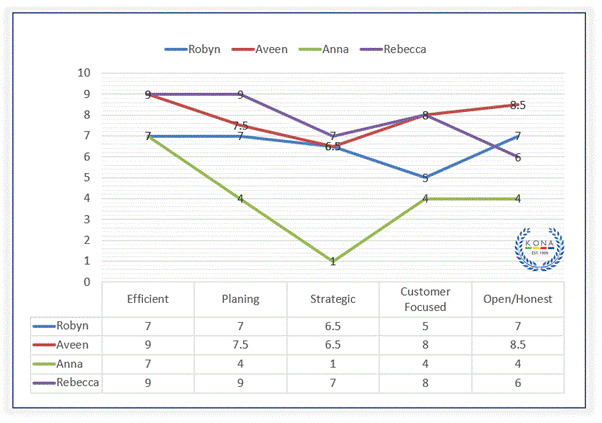
Team graph

Why Every Great Sales Leader Needs a Team Leadership Charter

Leadership Charter Example

If you’re leading a sales team and don’t yet have a Leadership Charter, you’re probably flying blind—and so is your team. Sales leadership isn’t just about hitting numbers or rallying the troops with a Monday morning pep talk. It’s about setting clear expectations, defining your leadership values, and aligning your team with a shared mission. That’s where a Leadership Charter comes in.

We’ll break down what a Leadership Charter is, why it’s critical for sales leaders, and how it can transform your team’s performance and culture.

What Exactly Is a Leadership Charter?

A Leadership Charter is a written declaration of who you are as a leader, how you lead, what you expect from your team, and what your team can expect from you. Think of it as your leadership “compass” — a way to set the direction and tone for your team.

It typically includes:

  • Your leadership purpose or philosophy
  • Core values that guide your decisions
  • Expectations for behaviour, communication, and accountability
  • Commitments you make to your team
  • How you’ll handle challenges and conflict

It’s a practical document that grounds your leadership in clarity and intention.

Team charter

Why Sales Leaders Can’t Afford to Skip This

It’s no secret that sales is high-pressure. Quotas, pipeline management, customer demands, and team dynamics can create chaos if left unchecked. Without a Leadership Charter, your team is left guessing what matters most to you.

Here’s why top-performing sales leaders rely on a Leadership Charter:

1. Clarity Creates Confidence

When your team knows exactly what you stand for and how you operate, it removes ambiguity. They’re not left wondering what will get them praise vs. what will get them pulled up in a one-on-one. Clarity builds trust — and trust builds results.

2. Consistency in Leadership

Sales leaders often have to make fast decisions. A Leadership Charter acts as your leadership filter — helping you make consistent calls that align with your core values. That consistency helps reduce confusion and second-guessing from your team.

3. Alignment Drives Accountability

When your expectations are clearly documented and shared, it’s easier to hold your team (and yourself) accountable. It’s not about micromanagement — it’s about alignment. Everyone knows the rules of engagement.

4. Improves Culture and Morale

A strong Leadership Charter includes how you treat people, celebrate wins, and handle setbacks. It sets the tone for your team culture. And when culture is strong, morale — and performance — follows.

5. Onboarding Gets Easier

Hiring new salespeople? Instead of repeating your leadership style in every onboarding call, your Leadership Charter does the heavy lifting. It gives new team members a fast-track to understanding what matters in your world.

Is it worth it?

“Okay… But Is It Worth the Time?”

Yes — 100%.

Creating your Leadership Charter might take a few focused hours, but the ROI is massive. It’s one of those high-leverage leadership tools that continues to pay off over time.

And here’s the thing: most sales leaders think they’ve already communicated their expectations and values. But unless it’s written down, revisited, and discussed, it’s just noise. A Leadership Charter makes it concrete.

Ready to Lead With Intent?

If you’re serious about elevating your leadership game — and your sales results — creating a Leadership Charter is a no-brainer. It’s the foundation for trust, performance, and a thriving team culture.

At KONA, we help sales leaders craft Leadership Charters that reflect their authentic style while driving real results. Whether you have an experienced leadership team or new leaders stepping into their first leadership roles, we can guide your team through the process with proven tools and coaching. To find out more about why you need a team leadership charter, click here.

📞 Want help building your own Leadership Charter?

Contact KONA today for tailored Sales & Leadership Training that turns good managers into great leaders.

Call 1300 611 288 or Email info@kona.com.au to get started!