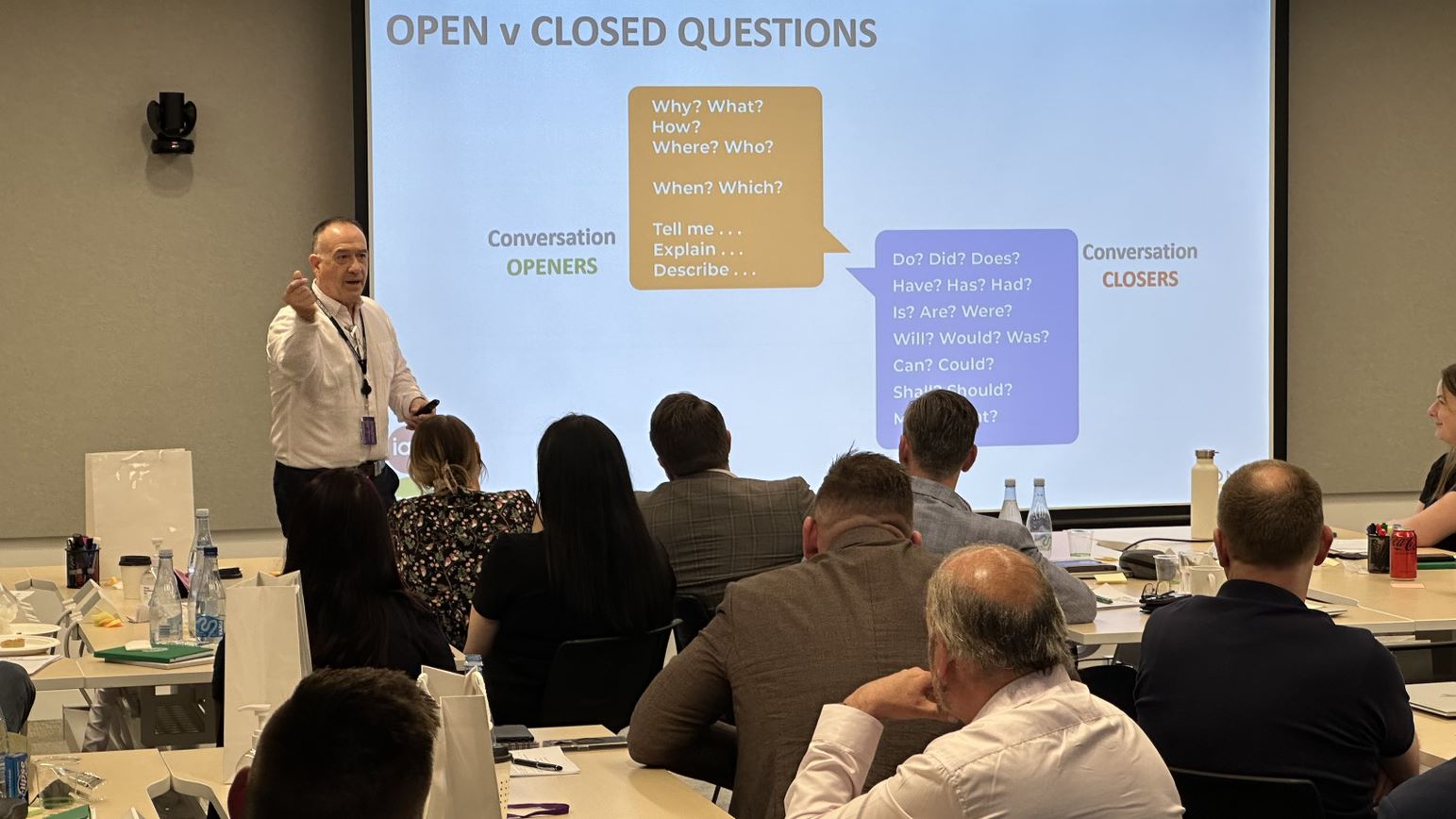
Sales Workshop

How to Choose the Right Sales Training Program for Your Business in 2026

Sales training has come a long way. What worked well in the past isn’t always enough to keep sales teams competitive, confident, and consistent. As we move into 2026, buyers are more informed, sales cycles are more complex, and salespeople are expected to add value at every interaction. This means choosing the right sales training program for your business has never been more important.


But with so many options available, from online courses to one-off workshops and everything in between, how do you actually choose a sales training program that delivers real results rather than just short-term motivation?

Sales Workshop

Start with Your Business Goals, Not the Training Content

One of the biggest mistakes businesses make when choosing sales training is starting with the content rather than the outcome. Before you look at programs, providers, or methodologies, take a step back and ask what you actually want to improve in 2026.


Are you looking to:

  • Increase close rates?
  • Shorten sales cycles?
  • Improve prospecting confidence?
  • Lift average deal size?
  • Develop stronger sales conversations?
  • Or build more accountability across the team?

The right sales training program should clearly link to your business goals. If a provider cannot explain how their training supports revenue growth, pipeline quality, or sales execution, it is a red flag.
Training should never be generic. It should be aligned to where your business is now and where you want it to go.

Behaviour change

Look for Behaviour Change, Not Just Inspiration

Motivational sales training can feel great in the moment. People leave energised, optimistic, and ready to conquer the world. The problem is that motivation fades quickly if it is not backed by practical tools and consistent reinforcement.


In 2026, effective sales training programs focus on behaviour change. That means helping salespeople do things differently on a daily basis.

  • How they prepare for calls
  • How they ask questions
  • How they handle objections
  • How they manage their pipeline
  • How they follow up.


When assessing a program, ask how it helps salespeople apply what they learn in real sales conversations. Look for role plays, practical frameworks, real-world examples, and post-training reinforcement.
If the training does not translate into new habits, it will not translate into better results.

Make Sure It Fits Your Sales Team, Not the Other Way Around

Every sales team is different. Industry, sales cycle length, customer type, experience level, and sales style all matter. A strong sales training program should adapt to your team rather than forcing your team to adapt to it.


In 2026, flexibility is key. Your sales team may include a mix of experienced performers, newer recruits, remote sellers, and sales managers who are also expected to coach. The right program should cater to these differences.


Ask whether the training can be customised. Can it incorporate your language, your sales process, and your real challenges? Does it support different communication styles and strengths within the team?

At KONA Training, everything we do is tailored to our clients. Our sales training techniques include proven sales coaching methods and common sense strategies that define training success.

KONA interactive workshop exercise
An interactive exercise during a KONA Training Workshop

Don’t Ignore the Role of Sales Managers

Sales training often fails because managers are not equipped to reinforce it. If managers are not confident coaching the behaviours being taught, the training will slowly disappear under the pressure of targets and deadlines.


When choosing a sales training program in 2026, look for one that includes sales leaders and managers. Managers need tools to coach, observe, and hold their teams accountable in a supportive way.
Training that involves managers creates consistency and ensures the learning sticks long after the workshop ends.

Think Long-Term, Not One-Off

Sales training should be viewed as an investment, not an event. One-off workshops can be useful, but they rarely create sustained performance improvement on their own.

The best sales training programs in 2026 are structured, ongoing, and supported over time. This might include:
• Follow-up sessions
• Coaching
• Refresher workshops, or
• Practical tools that keep the learning alive

Ask what happens after the training. How is progress measured? How are skills reinforced? How does the program evolve as your team grows? Sustainable sales performance comes from continuous development, not quick fixes.

Choosing a partner, not just a provider

Choose a Partner, Not Just a Provider

Finally, choose a sales training partner who understands your business and genuinely cares about your outcomes.

A good partner will challenge your thinking, ask the right questions, and work with you to design training that
delivers measurable impact.

They should be just as focused on your success as you are.

Ready to Choose the Best Sales Training Program for 2026?

If you want sales training that is practical, tailored, and focused on real-world sales performance, KONA Training can help. We work with businesses to design and deliver customised sales training programs that build confident sales teams, improve execution, and drive sustainable results.

To learn more about choosing the right Sales Training Program for your team, click here.

Contact KONA Training today to discuss tailored sales training for your sales team in 2026 and beyond.


Call 1300 611 288 or Email info@kona.com.au to find out more!


Author – Garret Norris – https://www.linkedin.com/in/garretnorris/

Garret Norris -KONA Training
2026

7 Sales Habits to Reset in January for a Strong Year Ahead

January has a certain energy about it. Fresh notebooks, clean calendars, big targets and even bigger intentions. For sales teams, it is the perfect moment to pause, reset and be honest about what is working and what quietly slipped into bad habits last year.


Sales success is rarely about radical reinvention. More often, it is about fixing the small, repeated behaviours that shape results over time. If you want this year to be stronger, more consistent and less stressful, January is the time to reset these seven common sales habits.

2026

1. Stop Carrying Last Year’s Baggage into This Year

Many salespeople start the new year already frustrated. They are still thinking about missed targets, lost deals or tough clients from last year. That mindset quietly leaks into conversations, follow ups and confidence.

A reset starts with a clean slate. Last year’s results are data, not a verdict on your ability. Review what worked, learn from what didn’t, then consciously let it go. Every new conversation deserves your full energy, not the emotional hangover of last year.

Strong sales performance begins with mental clarity.

New year

2. Reset Your Relationship with Your CRM

For many sales teams, the CRM becomes a dumping ground rather than a decision making tool. Notes are incomplete, follow ups are vague and pipeline stages are more hope than fact.


January is the perfect time to clean it up. Reset your habit from “I’ll update it later” to “If it’s not in the CRM, it doesn’t exist.” Accurate data leads to better forecasting, better coaching and fewer nasty surprises at the end of the quarter.


Your CRM should work for you, not against you.

3. Break the Busy Equals Productive Habit

Last year probably felt busy.

• Meetings
• Emails
• Proposals
• Internal updates

Yet busy does not always mean effective.

Reset your focus to high value sales activities. This means quality prospecting, meaningful discovery conversations and intentional follow up. It also means being ruthless about time wasters that look productive but deliver little return.


In January, encourage your team to ask a simple question daily. Is this activity moving a deal forward or just filling my calendar?

4. Stop Avoiding Tough Conversations

Many salespeople avoid uncomfortable conversations. Pricing discussions, objections, decision timelines and budget reality often get danced around instead of addressed directly.


This habit creates long sales cycles and false hope in the pipeline. Reset it by committing to honest, respectful and confident conversations early. Buyers appreciate clarity far more than vague optimism.
Strong sales professionals do not push. They guide. And guidance requires courage.

Difficult conversations

5. Reset Your Follow Up Discipline

Follow up is one of the most common breakdowns in sales. Not because people do not know they should do it, but because it slips down the priority list.


January is the time to reset follow up as a non negotiable habit. Consistent, value based follow up builds trust and keeps momentum alive. It is not about pestering. It is about being reliable and helpful.
The best salespeople are not always the most charismatic. They are often the most consistent.

6. Stop Selling the Same Way to Every Buyer

Buyers have changed, but many sales habits have not. Too often, salespeople default to their preferred style rather than adapting to the person in front of them.


Reset this habit by focusing on the buyer’s communication style, pace and decision making process. Some want detail. Others want outcomes. Some move quickly. Others need reassurance. Flexibility is not weakness. It is a competitive advantage.

7. Reset the Coaching Conversation, Not Just the Targets

For sales leaders, January often becomes all about numbers. Targets are set, dashboards are updated and pressure builds quickly.


But performance improves fastest when habits are coached, not just results reviewed. Reset your leadership habit by focusing on behaviours, conversations and skill development. Regular coaching check ins beat end of month pressure every time.


When salespeople feel supported and developed, results follow naturally.

Good sales habits

A Strong Year Starts with Better Habits

January is not about working harder. It is about working smarter and more intentionally. Resetting these seven sales habits sets the foundation for a year of stronger conversations, healthier pipelines and more predictable results.


The best time to reset is not when things fall apart. It is when you still have the momentum of a new beginning.


If you want to help your sales team reset their habits, sharpen their skills and build sustainable performance for the year ahead, now is the time to invest in the right support.

Contact KONA to discuss tailored Sales Training for your Sales Team in 2026 and set your team up for a strong, confident and successful year.


Call 1300 611 288 or Email info@kona.com.au


Author – Garret Norris – https://www.linkedin.com/in/garretnorris/

Garret Norris -KONA Training
Manager's dilemma

The Sales Manager’s Dilemma: When to Coach, When to Push, and When to Get Out of the Way

Sales Management is a balancing act. Some days you’re a cheerleader. Other days you’re a drill sergeant. And occasionally you’re just trying not to get in the way of your own team.

The real challenge is knowing which hat to wear and when. That’s the sales manager’s dilemma. Coach, push or step back. Get the timing right and you elevate performance. Get it wrong and you stall momentum, frustrate a good salesperson or accidentally kill a deal that could have been saved.


Let’s break down how to figure out which approach your team needs in the moment.

Manager's dilemma

1. When to Coach

Coaching is your most powerful long term lever. Great coaching turns average salespeople into consistent performers and strong performers into stars. But coaching is not correcting every tiny mistake or telling people what to do. Coaching is about developing their thinking so they can diagnose and solve problems on their own.

You should lean into coaching when:

  • A salesperson is motivated but lacking clarity.
  • The issue is skill based rather than attitude based.
  • You want long term improvement rather than a quick fix.

    In these moments, slow down. Ask questions. What were they trying to achieve in the call or meeting? Where did it go off track? What options do they see for approaching it differently next time?

    Your job is not to provide all the answers. Your job is to help them uncover their own.
    When coaching is done well, your reps walk away with more confidence and more capability. They feel supported instead of judged. Over time, they become more self reliant which frees you up to focus on the bigger strategic picture.

2. When to Push

Sometimes people need a nudge. Or more accurately, a shove. Not every performance issue can be solved with gentle reflection and open-ended questions. There are moments when a salesperson is off track, and you can see it clearly even when they can’t. That’s when it’s time to push.

Push when:

A rep knows what to do but isn’t doing it.
Activity levels have slipped.
A deal is at risk because the rep is avoiding a tough conversation.
The behaviour problem is affecting the rest of the team.

Pushing doesn’t mean yelling or micromanaging. It means being direct, setting clear expectations and holding them accountable. It’s reminding them of their goals and why the work matters. It’s giving them a sense of urgency that they may have lost.

The trick is to push with purpose and professionalism. You’re not punishing them. You’re helping them rise to their potential. Many salespeople actually respond well to a clear directive, especially when they know you’ve got their back.

Which management path should you take?

3. When to Get Out of the Way

This may be the hardest part of sales management. Sometimes the best thing you can do is step aside entirely. High performing salespeople often hit their stride when they have room to run. They thrive on autonomy, trust and ownership.

Step back when:

The rep has proven they can deliver consistently
They have more expertise in the account or industry than you do.
Your involvement will slow down the deal rather than add value.
They’re showing leadership qualities and need the space to grow into them.

Getting out of the way doesn’t mean you disappear. It means you shift into a support role. You’re available but not hovering. You’re aware but not interfering. You’re trusting them to do what you hired them to do.

And here’s the secret. Stepping back is also a powerful motivator. It signals respect. It shows you believe in their ability. That alone can elevate performance more than any pep talk ever could.

4. The Real Skill Is Reading the Moment

There’s no magic formula for deciding when to coach, push or step back. It comes down to reading the moment, understanding the individual and trusting your leadership instincts.

Ask yourself:

  • What does this person need right now.
  • Are they stuck because of skill, mindset or circumstances.
  • Will my involvement improve the outcome or make things worse.
  • What approach will help them grow for the long term.

    Great sales managers adapt. They stay curious. They stay connected. And they always remember that their job is to bring out the best in their people, not simply control their outcomes.
Successful sales manager

Sales management is not easy. It demands emotional intelligence, sharp judgment and the willingness to switch gears quickly. But when you master the balance, you create a team that is confident, capable and consistently closing.

If you want support in strengthening your leadership skills and learning how to coach, push and step back with confidence, contact KONA Training for tailored Sales Management Training designed to help you lead with clarity and impact.


Call KONA on 1300 611 288 or send us an email to info@kona.com.au


Author – Garret Norris – https://www.linkedin.com/in/garretnorris/

Garret Norris -KONA Training
Procrastination

Procrastination in Sales and How It Destroys Your Time Management

As a Salesperson, you’ve probably been there. You have a list of calls to make, emails to send, or proposals to follow up on, but somehow scrolling through social media or reorganising your desk suddenly seems way more important. That, my friend, is procrastination at work. And while it may feel harmless in the moment, it can wreak havoc on your time management and, ultimately, your sales results.

Procrastination is more than just putting things off. It’s a mindset that convinces you that urgent but less important tasks are more important than the ones that actually move the needle in your sales performance. You tell yourself you’ll do that follow-up call after one more coffee or one more email. The next thing you know, the day has slipped away, and the most critical actions for hitting your targets remain undone. This is where effective time management becomes the make-or-break factor of your week.

Procrastination

Don’t think of time management as being about rigid schedules or micromanaging every minute of your day. It’s about prioritising activities that have the highest impact on your sales goals and taking consistent action on them.

Procrastination destroys time management because it replaces deliberate action with avoidance. Each minute spent avoiding important tasks is a minute lost that you can never get back.


Salespeople who struggle with procrastination often notice a few patterns. First, there’s the tendency to underestimate how long tasks will take. You think a follow-up email will only take five minutes, but then you spend twenty minutes crafting it perfectly. Next, there’s decision fatigue. When your brain is overloaded with choices, it’s easier to put off decisions entirely. Finally, there’s the fear factor. Sometimes procrastination is a sign of underlying fears like rejection, failure, or not meeting your targets.

The good news is that procrastination isn’t inevitable. With the right strategies, you can reclaim your time management and get back to being productive and results-driven. One of the most effective approaches is structured planning. Start your day by identifying the top three tasks that will drive your sales forward and commit to tackling them first. This approach, often called “eating the frog,” ensures that your most important work gets done before distractions creep in.

Procrastination cycle

Break larger tasks into smaller, actionable steps

Instead of thinking “I need to reach out to all my leads,” break it down into “call five leads” or “send three personalised emails.” Smaller tasks feel more manageable and reduce the mental barrier that often leads to procrastination.

Accountability

Accountability also plays a huge role. Sharing your goals and deadlines with a colleague, mentor, or sales coach can dramatically improve your follow-through. KONA Training works with sales teams to implement these kinds of accountability systems, helping salespeople stay on track, manage their time effectively, and achieve consistent results.

Procrastination leads to Distractions

Limit time spent on non-essential activities and create an environment that supports focus. This could mean scheduling specific times for emails and social media, turning off notifications, or setting clear boundaries around your workday. With deliberate effort and the right support, procrastination can be replaced with productive habits that strengthen your time management and boost your sales performance.

Distractions


At KONA Training, we help sales professionals identify the root causes of procrastination and develop practical, real-world strategies to overcome it. From personalised coaching to team workshops, our focus is on helping you take control of your time, prioritise high-impact activities, and turn good intentions into tangible sales results.


Procrastination may be tempting, but every moment you delay is a moment your competitors could seize. By addressing it head-on and adopting strong time management strategies, you can transform how you work and what you achieve.

Take the first step today and see how focused action and smart planning can change your sales game. KONA Training is ready to help you make procrastination a thing of the past and your time management a strength that drives your success.

Contact KONA Training today to discuss our tailored Sales Training Progams and the value they can bring to your Sales Team.

Call 1300 611 288 or Email info@kona.com.au


Author – Garret Norris – https://www.linkedin.com/in/garretnorris/

Garret Norris -KONA Training
Time management for success

10 Time Management Hacks That Successful Salespeople Swear By

Are you a salesperson who finds yourself wishing there were more hours in the day? Between prospecting, follow-ups, meetings, admin, and hitting targets, time can feel like your most limited resource. The truth is, the best salespeople don’t mysteriously have more time than everyone else. They’ve simply learned how to use it better.


At KONA Training, we often see that time management is the hidden skill that separates top performers from the rest. Mastering your time isn’t about doing more, it’s about doing what matters most.


If you’re ready to take control of your day and boost your results, here are 10 time management hacks that successful salespeople swear by.

Time management for success

If You Had to Pick 4 of the Best Time Management Hacks for Busy Salespeople?

The most effective time management hacks for salespeople are time blocking for prospecting, batching similar tasks, setting strict email windows, and using the two-minute rule for quick wins.

1. Start with a Power Hour

Top performers don’t start their day by checking emails. They start with action. Spend your first hour focused on high-value activities like calling new leads, following up with hot prospects, or preparing proposals.


At KONA Training, we call this your “Power Hour” because it sets the tone for your entire day. If you win the first hour, you win the day. To learn more about KONA’s Power Hour Programs, click here.

2. Plan Tomorrow Before You Finish Today

Before you log off, take ten minutes to plan tomorrow. Write down your top three priorities and block out time for them in your calendar. This simple step helps you walk into each day with clarity and purpose. It’s something KONA Training coaches swear by because it reduces stress and keeps you laser-focused from the moment you start work.

3. Master the Art of Time Blocking

What is time blocking for sales?

Time blocking dedicates fixed calendar slots to specific activities like prospecting or follow-ups, preventing reactive work from consuming your selling time.

Successful salespeople don’t let their day get hijacked by distractions. They use time blocking to schedule every important task. Whether it’s prospecting, admin, or learning, they dedicate specific blocks of time to each. At KONA Training, we teach sales teams to treat these blocks like appointments with themselves. They’re non-negotiable.

4. Control Your Inbox

Emails can eat your entire morning if you’re not careful. Instead of reacting to every notification, set specific times to check and respond to emails. For example, once mid-morning and once mid-afternoon. KONA Training clients often report that this one change alone gives them back hours every week.

5. Use the Two-Minute Rule

If a task takes less than two minutes, do it immediately. It’s a simple rule, but it prevents small tasks from piling up and overwhelming your day. Successful salespeople don’t let tiny to-dos clutter their mental space.


The team at KONA Training encourages sales professionals to keep their focus clear by getting the quick wins done on the spot.

Manage your time

6. Prioritise by Impact, Not Urgency

It’s easy to get caught up in what feels urgent instead of what actually matters. Great salespeople prioritise tasks that move the needle, like connecting with key clients or refining proposals, rather than getting stuck in busywork. KONA Training emphasises the importance of evaluating every task through this lens: Is this helping me sell more or serve better?

7. Learn to Say No

Time management isn’t just about doing more; it’s also about protecting your time. Saying yes to every request spreads you too thin.


The best salespeople say no to low-value meetings and distractions so they can focus on their goals. At KONA Training, we remind our clients that every “no” to something unimportant is a “yes” to success.

8. Automate and Delegate

You don’t have to do everything yourself. Use automation tools for follow-ups, scheduling, and CRM updates. Delegate admin work whenever possible. Smart salespeople focus their time on conversations that build relationships and close deals.
KONA Training helps teams identify where they can streamline their workflow to gain back valuable selling time.

9. Track Your Time Like You Track Sales

If you don’t measure how you spend your time, you can’t improve it. Track your activities for a week and see where your hours go.


Most salespeople are shocked at how much time disappears into admin or low-value tasks. KONA Training encourages time audits as a way to uncover hidden inefficiencies and make better use of every working hour.

10. Protect Your Energy, Not Just Your Time

Time management isn’t only about the clock, it’s also about your energy. Successful salespeople schedule their hardest tasks when they feel sharpest and take breaks before burnout hits. KONA Training often reminds sales professionals that a well-rested mind is your most powerful tool. You can’t sell effectively if you’re running on empty.

Time management skills

Time management isn’t a talent you’re born with; it’s a skill you can learn. The most successful salespeople treat their time with the same care they give their biggest client. If you start applying even a few of these hacks, you’ll notice your productivity and results soar.

If your sales team is ready to master their time and take their performance to the next level, contact KONA Training. We specialise in tailored Sales Training that helps sales professionals sell smarter, not harder.

Reach out today and discover how KONA Training can help your team make every minute count.
Call 1300 611 288 or Email info@kona.com.au

Author – Garret Norris – https://www.linkedin.com/in/garretnorris/

AI salesperson

The Sales Skills AI Can’t Replace and Why You Need to Know

Artificial Intelligence has changed the sales world, there’s no denying it. From automated prospecting tools to chatbots that handle enquiries, AI has made it faster and easier to gather data, send follow-ups, and track leads. But as smart as technology gets, there are still some things it can’t do… At least not like a human can.


At KONA Training, we often remind sales teams that while AI can support your work, it can’t replace the skills that truly drive connection, trust, and influence. And in today’s world, where buyers are more informed and selective than ever, those human skills are what set great salespeople apart.


Let’s talk about the skills that AI simply can’t replicate, and why grasping them will keep you ahead of the game.

AI in sales

1. Emotional Intelligence

AI can read data, but it can’t read the room. It can’t pick up on subtle body language, tone changes, or the slight hesitation that tells you a client isn’t quite convinced. Emotional intelligence, the ability to recognise and manage emotions in yourself and others, is at the heart of every successful sale.
A great salesperson knows when to push forward, when to pause, and when to simply listen. They can sense when a client needs reassurance or when humour might ease tension. These are instincts that no algorithm can match.


At KONA Training, we work with teams to develop this emotional awareness. Teaching them how to adapt their communication style, show genuine empathy, and connect in ways that feel personal and human. Because people don’t buy from robots; they buy from people they trust.

2. Building Relationships

AI can track your customer’s purchase history or remind you of a follow-up date, but it can’t build real relationships. Relationships are built through consistency, authenticity, and care, qualities that require a human touch.


When a salesperson takes the time to understand a client’s business, listen to their challenges, and remember details that matter, it creates a sense of partnership. That’s what keeps customers coming back and referring others. KONA Training focuses on helping sales teams develop long-term relationship-building habits, not just quick-close tactics. Because lasting success in sales isn’t about transactions, it’s about trust.

3. Storytelling

AI can certainly generate text or product descriptions, but it can’t tell a story that moves someone emotionally. A skilled salesperson knows how to make data meaningful, turning facts into stories that resonate.


For example, rather than saying, “Our product increases efficiency by 20%,” a great salesperson says, “One of our clients was spending two hours a day on this task. Now, she finishes in 15 minutes and spends the rest of her time growing her business.”


That’s the power of storytelling, and it’s something KONA Training helps every salesperson master. Because stories are what stick, inspire, and persuade.

Human vs. AI

4. Creativity and Problem Solving

AI can identify trends, but it can’t think outside the box. It can’t brainstorm new ways to position a solution or come up with an innovative approach when the standard pitch falls flat.
Creative thinking is what helps a salesperson turn a “no” into a “maybe,” and a “maybe” into a “yes.” It’s about tailoring your approach, rephrasing your message, and finding new angles that resonate with different personalities.


At KONA Training, we train teams to think creatively under pressure, to approach objections as opportunities and see challenges as chances to stand out.

5. Authenticity and Trust

AI can mimic human conversation, but it can’t be authentic. Buyers today are incredibly savvy. They can tell when someone’s being genuine and when they’re being scripted. The most successful salespeople don’t sound perfect; they sound real.
Authenticity builds trust, and trust drives sales. It’s what makes someone choose you over the competition, even if your product isn’t the cheapest.
Through KONA Training, salespeople learn how to communicate with authenticity, how to be persuasive without being pushy, and confident without being arrogant.

6. Adaptability

AI follows patterns; humans can adapt. When a meeting takes an unexpected turn, when a client changes their needs mid-conversation, or when the market shifts overnight. Adaptability is what keeps salespeople relevant.


At KONA Training, we help sales teams build this flexibility, teaching them how to pivot quickly, handle surprises with grace, and stay confident no matter what’s thrown their way.

AI salesperson

The Human Edge in the Age of AI

Technology will continue to evolve, and AI will keep getting smarter. But it will never replace the uniquely human abilities that make great salespeople stand out, empathy, connection, creativity, trust, and emotional intelligence.


In fact, as automation becomes more common, those human skills will become even more valuable. They’re your competitive edge. The qualities that turn conversations into relationships and opportunities into sales. To ready more about AI in sales, click here.

If you want your team to strengthen the skills AI can’t replace and elevate their performance in every interaction, KONA Training can help.

Contact KONA Training today for tailored Sales Training designed to help your sales team connect, communicate, and close with confidence. Because the future of sales still belongs to people.


Call 1300 611 288 or Email info@kona.com.au


Author – Garret Norris – https://www.linkedin.com/in/garretnorris/

Managing vs. Leading

Are You Managing a Sales Team or Leading One? The Difference Matters

When running a sales team, there’s a big difference between managing and leading. Too often, sales managers fall into the trap of thinking that their role is about checking boxes—reviewing numbers, updating reports, and making sure tasks are completed. While these things are important, they only scratch the surface of what it takes to build a high-performing sales team.


At KONA Training, we’ve seen it time and again: the best sales managers are actually sales leaders. And the difference matters—because leadership inspires, motivates, and transforms a team into something far more powerful than just a group of people hitting quotas.


So, are you managing your sales team or leading it? Let’s break it down.

Managing vs. Leading

Managing a Sales Team

Management often comes down to control and oversight. A manager’s focus is on processes, compliance, and outcomes.

If you’re managing, you might find yourself spending most of your time on:
• Monitoring activity levels: How many calls, meetings, or proposals did the team complete?
• Tracking KPIs and sales numbers.
• Making sure processes and CRM systems are followed.
• Reporting up the chain about progress and results.
• Putting out fires when problems arise.
This type of work is necessary, but if it’s all you do, your team can quickly feel like they’re just cogs in a machine. They’ll follow orders, but they won’t go the extra mile. They’ll hit targets (if pushed hard enough), but they won’t grow in capability, confidence, or resilience.

Leading a Sales Team

Leadership, on the other hand, is about vision, inspiration, and empowerment. Leaders create an environment where salespeople want to succeed—not just because they have to, but because they’re genuinely motivated and believe in the mission.


At KONA Training, we define sales leadership as the ability to:

  • Inspire a shared vision. Instead of just telling the team to hit $1 million this quarter, a leader paints a bigger picture of what that success means for the company, customers, and the team’s own growth.
  • Coach, don’t command. Leaders spend time developing their people, providing feedback, and helping them improve their skills rather than just giving instructions.
  • Empower decision-making. Instead of micromanaging, leaders trust their team to make smart choices. This builds ownership and accountability.
  • Model resilience and positivity. When times are tough (and they always get tough in sales), leaders stay calm, focused, and solution-oriented—setting the tone for the whole team.
  • Celebrate wins and learn from losses. Leaders make sure their people feel valued and supported, even when deals don’t go the right way.

    When you lead instead of just manage, your sales team becomes more than a group of individuals chasing numbers. They become a motivated, resilient, and adaptable force that can consistently deliver results—even in challenging markets.
Difference between leading and managing

Why the Difference Matters

The truth is, you can hit short-term targets by managing. But you’ll never build long-term success without leading.


A managed team might deliver results because they’re told to. A led team delivers results because they want to. And that difference shows up in:
• Higher engagement and motivation.
• Lower turnover (salespeople stay where they feel inspired and supported).
• Stronger customer relationships (because a motivated salesperson serves customers better).
• More consistent performance.
At KONA Training, we’ve worked with countless organisations where the shift from managing to leading has been a complete game-changer. Salespeople who once just did the minimum suddenly started taking ownership, becoming proactive, and driving results well beyond expectations.

How to Make the Shift

If you’re wondering whether you’re more of a manager than a leader, here’s the good news: leadership can be learned. It’s not about personality—it’s about skills, mindset, and habits.


Here are a few starting points we teach at KONA Training:
• Ask more questions than you give instructions. Coaching is about helping your team find answers, not just telling them what to do.
• Focus on development, not just results. Invest in your people’s growth. Teach them how to think, not just what to say.
• Communicate the “why.” People are far more motivated when they understand the bigger picture.
• Lead by example. Show the work ethic, resilience, and positivity you want your team to model.

Lead your team

Managing a sales team might keep the wheels turning, but leading a sales team will take you places. Leadership is what transforms good teams into great ones, and average salespeople into top performers.
If you’re ready to move from managing to leading, KONA Training can help. We specialise in Sales Management Training tailored to your organisation’s needs, giving you the tools, strategies, and confidence to lead your team to lasting success.

Contact KONA Training today and take the first step toward becoming the leader your sales team deserves.


Call 1300 611 288 or Email info@kona.com.au to get started.


Author – Garret Norris –
 https://www.linkedin.com/in/garretnorris/

Missing link

Why Sales Management Training is the Missing Link to Your Team’s Success

Not all training is created equal. The best sales management training goes beyond theory and gives managers the practical tools they need to lead effectively.

That includes:
• Coaching Skills – Teaching managers how to develop their people, not just monitor performance.
o “Knowing where to coach is vital for driving consistent sales growth. That’s why KONA Training developed the Sales Growth Card — a practical framework that helps leaders pinpoint coaching opportunities and accelerate performance.”

• Motivation Techniques – Understanding what drives each salesperson and creating tailored approaches.

• Performance Management – Balancing encouragement with accountability in a way that inspires respect.

• Strategic Thinking – Aligning daily activity with long-term business goals.
o “In sales management, activity = results. That’s why KONA Training has developed the Sales Activity Calculator — a practical tool that helps sales leaders measure, track, and focus on the activities that truly drive performance. Because when you manage activity, you manage outcomes.”

• Communication Mastery – Ensuring managers can clearly communicate expectations and feedback.


When sales teams underperform, most leaders assume the solution is simple: more sales training. They throw resources at teaching their teams new scripts, objection-handling techniques, or closing strategies. And while all of that is useful, it only addresses part of the picture.


The truth is, even the best-trained salespeople can’t thrive without strong leadership. That’s where sales management training comes in—and why many businesses discover that it’s the missing link between “good enough” and exceptional sales results.

Missing link


At KONA Training, we’ve seen this play out countless times. Teams who already had skilled salespeople transformed their performance, not by another round of standard training, but by investing in the best sales management training designed to sharpen leadership at the management level.

Why Sales Managers Are the Real Growth Drivers

Sales managers sit at the heart of performance. They’re the ones who coach, motivate, and hold their team accountable. They translate strategy into day-to-day action. Without them, even the most ambitious sales goals remain just numbers on a whiteboard.


But here’s the challenge: many sales managers are promoted because they were top-performing salespeople, not because they were equipped with leadership skills. Selling and leading are two very different crafts. And unless organisations close that gap with sales management training, they end up with frustrated managers and disengaged teams.


That’s why KONA Training focuses so much on building strong, confident, and capable sales managers—because when managers thrive, their teams follow.

What Makes the Best Sales Management Training Different?

Not all training is created equal. The best sales management training goes beyond theory and gives managers the practical tools they need to lead effectively.

That includes:
• Coaching Skills – Teaching managers how to develop their people, not just monitor performance.
• Motivation Techniques – Understanding what drives each salesperson and creating tailored approaches.
• Performance Management – Balancing encouragement with accountability in a way that inspires respect.
• Strategic Thinking – Aligning daily activity with long-term business goals.
• Communication Mastery – Ensuring managers can clearly communicate expectations and feedback.

At KONA Training, we customise every program to match your organisation’s needs. That means your managers don’t just learn in theory—they walk away with real-world strategies they can apply immediately.

Ripple effect

The Ripple Effect of Strong Sales Management

When managers are trained well, everything changes:
• Salespeople feel supported and motivated.
• Coaching becomes consistent, not occasional.
• Teams develop a culture of accountability and achievement.
• Sales performance improves—often dramatically.

It’s not just about boosting numbers (though that happens, too). It’s about creating a high-performing culture where people want to stay, grow, and contribute. That’s the power of investing in sales management training—and why so many companies that partner with KONA Training see results they didn’t think were possible.

Time to act

Why Now is the Time to Act

The sales landscape is more competitive than ever. Customers are informed, markets shift quickly, and the pressure to deliver results never stops. In this environment, having strong sales managers isn’t optional—it’s essential.

If you want your team to not only hit but exceed their targets, now is the time to invest in the best sales management training. It’s the missing link your team needs to unlock their full potential.

Ready to Transform Your Team?

If you’ve been searching for the best sales management training, look no further. At KONA Training, we specialise in equipping sales managers with the skills, strategies, and confidence they need to drive lasting success.

Contact KONA Training today to find out how tailored Sales Management Training can transform your managers—and your results. Call 1300 611 288 or Email info@kona.com.au


Author – Garret Norris – https://www.linkedin.com/in/garretnorris/

Uncover your Sales Strategy

10 Game Changing Sales Strategies You Can Start Using Today

The world of Sales is fast-paced, so standing still isn’t an option. What worked yesterday might not cut it today—and that’s where a strong sales strategy comes in. Whether you’re leading a team of experienced sales professionals or just starting out, refreshing your approach can make all the difference between hitting targets and missing opportunities.


At KONA Training, we’ve worked with countless businesses to transform their sales performance, and one thing is clear: a well-designed sales strategy can be the difference between average results and extraordinary success. Here are 10 game-changing strategies you can put into action right away.

Sales strategy

1. Sell Value, Not Price

Too many salespeople focus on discounts and deals, but the strongest sales strategy is about demonstrating value. Customers want solutions that solve problems—not just the cheapest option. Position your product or service as an investment, not an expense.

2. Do Your Homework

Preparation is a non-negotiable. A powerful sales strategy always starts with research. Know your prospect’s business, their industry challenges, and what matters to them. The more relevant your insights, the more credible you’ll be.

3. Ask Better Questions

Great salespeople listen more than they talk. A winning sales strategy includes asking open-ended questions that uncover needs, pain points, and opportunities. Once you truly understand your customer, you can tailor your solution with precision.

4. Build Long-Term Relationships

Stop chasing quick wins. A sustainable sales strategy focuses on building trust and long-term partnerships. At KONA Training, we see time and again that strong relationships lead to repeat business and referral—the lifeblood of sales growth.

5. Leverage Social Selling

Your prospects are on LinkedIn, Instagram, and even TikTok. Part of a modern sales strategy is showing up where your customers are, providing valuable insights, and building your credibility online.

6. Master the Follow-Up

Here’s a game-changer: most sales are made after the fifth follow-up, but most salespeople stop after two. A resilient sales strategy means staying consistent without being pushy. Thoughtful, value-driven follow-ups make all the difference.

Storytelling in Sales

7. Use Storytelling to Sell

Facts tell, but stories sell. A great sales strategy includes weaving customer success stories into conversations. Show how others in a similar position have achieved results with your solution—it’s relatable and persuasive.

8. Embrace Data and Metrics

Don’t guess—measure. An effective sales strategy uses data to track performance, conversion rates, and deal cycles. With these insights, you can see what’s working and where to improve. At KONA Training, we help sales teams harness this data for smarter selling.

9. Collaborate with Your Team

Sales isn’t a solo sport. Sharing insights, strategies, and wins with your team sharpens everyone’s performance. The best sales strategy is one that encourages collaboration, not competition.

10. Invest in Continuous Training

The sales landscape is always evolving. A future-proof sales strategy means continually developing your skills. Partnering with experts like KONA Training ensures your team stays ahead of the curve with proven techniques tailored to your business.

Uncover your Sales Strategy

Sales success doesn’t happen by chance—it happens by design. Each of these strategies can give you an edge, but the real transformation comes when they’re implemented consistently and tailored to your unique business challenges.

At KONA Training, we specialise in building customised sales strategies that drive real results. If you want your sales team to not just meet but exceed their targets, it’s time to take action.

Contact KONA Training today to discover how tailored Sales Training can transform your team’s performance.
Call 1300 611 288 or Email info@kona.com.au


Author – Garret Norris – https://www.linkedin.com/in/garretnorris/

Sales strategy steps

How Power Mapping Can Make or Break Your Next Big Deal

In sales there’s nothing quite like the thrill of chasing a big deal. You know the one — the deal that could make your quarter, impress your manager, and maybe even earn you bragging rights at the next team meeting. But the truth is, no matter how polished your pitch is, how confident your delivery feels, or how perfect your proposal looks… you could still lose it.


Why? Because you didn’t have a clear map of who really holds the power in the buying process.


That’s where Power Mapping comes in — and if you’ve never used it before, it could be the game-changer your sales strategy has been missing. At KONA Training, we’ve seen it transform sales teams from “good” to “unbeatable.”

KONA Group Power Map example

So, what is Power Mapping?

Think of Power Mapping as creating a GPS for your deal. It’s the process of identifying all the key players involved in a buying decision — not just the decision-maker’s name you were given, but everyone who influences them.


It’s understanding:
• Who has the authority to say yes
• Who can say no
• Who holds sway behind the scenes
• Who’s quietly sabotaging your deal without you even knowing

If you don’t map this out, you might find yourself spending hours building rapport with someone who likes you… but can’t actually sign off on the deal. That’s a fast track to frustration.

Why skipping Power Mapping can sink your deal

Imagine this – You’ve been talking to a friendly contact for weeks. They love your solution, they nod enthusiastically at every demo, and they assure you it’s “looking good.” You’re feeling confident.
Then… radio silence.

When you finally find out what happened, it turns out there was an internal meeting you weren’t even aware of… and another department head vetoed the deal because they had concerns you never addressed.


That’s the danger of flying blind. Without Power Mapping, you risk missing critical influencers, failing to address hidden objections, and ultimately losing to a competitor who simply knew the playing field better than you did.


At KONA Training, we train sales teams to never let this happen. Our process ensures you uncover every stakeholder, understand their motivations, and strategically win over each one.

Sales Strategy steps

How to start Power Mapping

Here’s how you can integrate Power Mapping into your sales process right now:

  1. Identify all stakeholders early
    Don’t wait until you’re halfway through the sales cycle to ask who else is involved. From your very first conversation, make it a priority to uncover the names, roles, and responsibilities of everyone connected to the decision.
  2. Understand each person’s influence
    Not all stakeholders are created equal. Some hold budget control, others influence technical decisions, and some act as gatekeepers. Assign each one a level of power and influence so you know where to focus your energy.
  3. Map relationships between stakeholders
    This is the secret sauce. Knowing how stakeholders relate to each other — allies, adversaries, mentors, or rivals — can help you navigate tricky internal politics and avoid stepping on toes.
  4. Tailor your messaging for each person
    A CFO cares about ROI. An IT manager worries about integration. A frontline user just wants to know the solution will make their life easier. By mapping this out, you can speak each person’s language instead of delivering a one-size-fits-all pitch.

Why Power Mapping is more than a sales tactic — it’s a winning habit

Here’s the thing, Power Mapping isn’t just for massive enterprise deals. Whether you’re selling to a five-person company or a Fortune 500 giant, understanding the power dynamics will always give you an edge.

When KONA Training works with sales teams, we don’t just teach Power Mapping as a checklist item — we build it into their culture. It becomes second nature, something they automatically do before making a single pitch.


The results?
• Shorter sales cycles
• More accurate forecasting
• Higher close rates
• And fewer “surprise losses” that leave you scratching your head

Power map example

Your next big deal could be hanging in the balance right now. You might be one conversation away from sealing it — or losing it to a competitor who simply did a better job of reading the power dynamics.
Don’t leave it to chance. Learn the skill, practice it, and watch your win rate climb.

At KONA Training, we’ve helped countless sales teams master Power Mapping so they can consistently close bigger, better deals — and we can help yours too.

Ready to make Power Mapping a standard part of your sales playbook?


Contact KONA Training today for tailored Sales Training that will give your team the tools, strategies, and confidence to win your next big deal — and the one after that.

Call 1300 611 288 or Email info@kona.com.au


Author – Garret Norris – https://www.linkedin.com/in/garretnorris/