National Retail Chain Consistently Underperforming

Initial situation

  • Successful historically, yet mainly being driven through marketing and advertising dollars.
  • Sales people not converting leads and ‘walk-ins’ into sales.
  • Sales people focused totally on the latest greatest product innovation.
  • Consistently overwhelmed customers with technical specifications, without taking the time to understand the customers reasons to buy.
  • Managers not measuring or managing the performance of their people.

What we did …

  • Worked with selected stores to drive sales performance.
  • Taught the sales people to demonstrate to customers the value that their company brought other than just the lowest price, product and features.
  • Coached Managers in how to introduce Performance Measures to direct, acknowledge and reward achievement.

Outcomes…

“We used to have only 2 people out of 10 on target. Now, with their training we had 8 out of 10 on target last month.” “I am getting more customers coming back to me” “I am selling more add- ons” “My time with the customer is being better spent as I am building better relationships with them quicker” “I am now able to up-sell to more expensive products and am selling more accessories” “I am able to match products to the customer more effectively and the customers have been happier with their choice” “I am closing more sales” “The sales process is now a lot less intimidating” “The customers are more relaxed as my approach is more personal and in depth” “The customer came back & asked for me” because “You are the first store that has known what I want” “I was able to break down barriers quicker and we got down to business quicker” “We built rapport quicker as we were more conversational and both of us were more relaxed and less pressured” “They stay longer in store” “I am able to give better service to the customer as they trust you more”

5 Tips to Improve Your Sales Team’s Performance (Part 2)

By Garret Norris, Sales Training & Negotiation Specialist. In last week’s part 1,  we stressed that no matter what business you are in, what has worked well in the past just isn’t good enough today Sales people and managers who put their head in the sand and say “We have always done it this way”, or “my customers are different” are going to be replaced by professional sales people who are always looking for ways to improve their client’s businesses, not just sell more product So here is Part 2 of some basic sales management steps you can take to improve your sales team’s performance and implement a solid Sales Training program that will ensure your growth (or survival) and reduce your costs of selling. antique.

It’s not only made well – but it’s just uncomfortable enough to become an antique.

6. Ask, listen, and act.  Better than any others, these three words summarise success in sales and your sales coaching must always reinforce them
  • Your questions must be creative, planned, relevant, and interesting.
  • Your listening skills must be highly developed and focused on your customer, rather than thinking about the next question you will ask
  • You must respond to key words in the customer’s sentences and take action that proves that you listened to the customer and want to help them.
7. Take the responsibility but not the credit.  Realise that as sales manager your people look to you for direction and coaching, not for you to claim the spotlight To build a strong team willing to go the extra mile when you need it, give your team the credit for everything that goes right, and take the blame when it goes wrong. Protect your people from above but hold them accountable for the performance. 8. Work on the basics.  Even the best of the best have room for improvement so make a decision to improve your weaknesses and set Sales Pipeline goals to force yourself to do the things you don’t like to do. Be creative in your prospecting, fact finding, and presentation skills and set new standards by imagine the perfect salesperson and comparing yourself to them. 9. Develop your attitude.  Your attitude is controllable so change the beliefs that limit your success. Your thought habits control your commitment, enthusiasm, persistence, resilience, happiness, and confidence. So be aware of them, decide which ones are unproductive, and then make a commitment to change. 10. Maximise your time.  Focus on your goals and set daily activity KPIs for short and long term importance and urgency. Create a weekly sales schedule and manage your time against it daily. If you are behind target introduce weekly Power Hours to drive activity that creates results Remember, just one hour a day used more productively adds up to more than six extra weeks of productive time a year. Going forward: Garret Norris is KONA Group’s Sales Training & Negotiation Specialist so to discuss how Garret can improve your sales results please contact him today on 1300 611 288 or info@KONA.com.au
For Tips 1 – 5 please read Part 1 of Garret’s blog at

5 Tips to Improve Your Sales Team’s Performance (Part 1)

By Garret Norris, Sales Training & Negotiation Specialist.

In Australia a good Sales Management professional has to move faster every day.

Very quickly, competitors can pop up out of the blue with products similar to yours and before you know it, the race is ON to retain and grow existing accounts while winning new clients.

No matter what industry you’re in, what worked well a few years ago isn’t good enough today. (Just look at the politics in Australia if you need any proof!!).

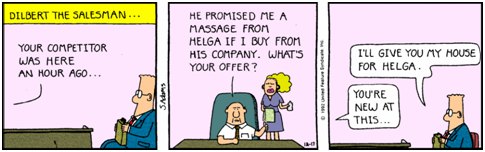
cartoon

This is not the time for trial and error or order taking; this is a time to sell!

So here are some basic steps you can take to improve your sales performance, by implementing a robust and customised Sales Training and Sales Management Training program which will increase sales and reduce your cost of selling, to ensure your survival.

1. Clarify your Sales Strategy. 

Begin by understanding your business niche. What do you do best? Who needs what you do? How do you best approach these prospects? What are the consequences if they don’t buy? How much are they willing to pay? If these questions are not answered easily, discuss with your own management for clarity and vision.

2. Break the sale into specific goals to drive your Sales Pipeline. 

Write down the activity goals (calls per day, proposals per month, referrals per call, etc.) that you can control.

Set results goals (sales per month, amount per sale, profit per sale, etc.) to measure your progress, and track them closely. Increase your activity and measure the results as setting short term goals will focus your attention and energise your action.

3. Sell to customer needs. 

Always assume your prospects will buy only what they need so uncover how you can convince them of that need

While you can emphasise the features and benefits of your product or service, by uncovering your customer’s business problems and “what keeps them awake at night” you will be way ahead of your ‘product flogging, price selling’ competitors!.

4. Create and maintain favourable attention. 

Effective marketing, referrals, strong sales skills, and strategic questions are the keys to creating favourable attention. Diligent follow-through and above-and-beyond customer service are the keys to maintaining it so what is your Customer Service Charter and Plan.

5. Sell on purpose, with a purpose. 

Know both what to do and why you’re doing it at every step along the way. Who are you targeting and why? What are you going to present to them and why? What are you going to ask them and why? What is your proposal going to look like and why? When are you going to ask for the order?

If you don’t feel sure of yourself at every step of the selling process, managers need to follow through and spend time on the road with you field coaching, not sitting behind their desk giving guidance.

Going forward:

Garret Norris is KONA’s Sales Training & Negotiation Specialist so to discuss how Garret can improve your sales results please contact him today on 1300 611 288 or info@KONA.com.au

For Tips 6 – 10 please read part 2 of Garret’s blog


Positive Attitude – One Of The Keys To Being A Successful Leader

By Tim Kitching of the KONA Group. In my experience senior executives are generally smart, interesting and accomplished leaders but they may not be the smartest, most interesting or most accomplished person in their organisation. They do, however, have one thing in common.  These head honchos have a positive attitude. They know that possessing the right mental attitude is more important than being the smartest or most interesting person in their organisation. Naturally, this doesn’t mean that they just go around spouting off platitudes about positive attitude and then get promoted. They have to live and work this way.  A lack of sincerity is obvious and is perceived by employees as the very opposite of positive. Here are 6 key traits that I see in successful executives:
  1. They communicate to the entire organisation their vision for the future all of the time.
  2. They don’t just adhere to the company values, they actually live them and inspire others to do the same.
  3. They go for optimism rather than pessimism every time.
  4. They think things through before making decisions. They don’t allow themselves the luxury of ‘knee jerk’ reactions.
  5. They surround themselves with positive people and shy away from those who think negatively and drain their precious energy.
  6. They are great believers in what they are doing!
These traits help to express a consistent positive attitude. What Positive Attitude Is All About? One of my favorite quotes is, “We can’t always control our circumstances but we can control our attitude. We must be more concerned with what we do with what happens to us than what happens to us.” Marvin Ashton said this in a speech in October 1974. It is as relevant today as it was over 40 years ago. This is more often stated as, “You may not be able to control events around you, but you can control how you react to them” Positive attitude is the difference between sustainable success and luck. It is the approach that delivers results because anything is possible with the right attitude. The ability to deliver what others see as impossible or very difficult is the job description of a modern executive. The fact is, that positive attitude is a learnt behaviour and as a result transitioning from a negative outlook to a positive one is a choice. If this is a challenge for you consider Executive Coaching or Group Workshops for your team as one way of driving the personal change needed to succeed as a modern executive. If you have further interest in this topic you will be interested in Tim’s previous blog ‘4 tips to get the most out of your executive coach’. Tim is a Speaker, Coach and Facilitator who works with individuals and organisation to improve performance and drive results.  He can be contacted at tim@KONA.com.au. He is a Director at The KONA Group and specialises in Executive Coaching and Sales Excellence.

Improving Your Coaching as a Leader Can Start with Two Easy Steps.

By Timothy Kitching, Executive Coaching Director at the KONA Group. Our employees tell us that they want constructive and pragmatic coaching from their people leaders. The benefits of a coaching culture in the workplace are clearly documented and supported by evidence based research.  Increased productivity, greater employee engagement and significantly improved revenue are all tangible results seen from organisations that adopt a coaching culture. The KONA Group offers a range of Sales management training and coaching opportunities. Here are two hot tips that will help you achieve even better results when coaching your people:
  1. Ask your people what they would like to work on, a coaching session is about the person you are coaching, not about you!
As a leader, engage with your people by being genuinely interested in them.  Invest some time in understanding the person you will be coaching.  Your people have a ‘fake’ meter that can sense a lack of real interest a mile away.  In coaching you can’t ‘fake it until you make it’, you actually have to be sincere in your interest and efforts. If you need a process or work with in a very process focused workforce don’t be afraid to provide a checklist of topics that are potential discussion topics prior to the session.   Ask them to choose or suggest a subject that they would be interested in talking about. Why bother with what your people think?
  • Both of you will feel a degree of control over the coaching sessions, this helps people buy into the experience.
  • The person being coached sees that you respect their views and opinions.
  • The sessions are perceived as being sincere and genuine, and that really matters.
  1. Ask the person you are coaching for Feedback
Asking for feedback as soon as a coaching session is finished initiates open conversation where both of you can further develop your coaching relationship.  Coaching is about combined efforts producing positive results. Some feedback questions that you can ask include:
  • Do you feel that our conversation was worth your time?
  • Do you feel that what we discussed was important or relevant to you?
  • Do you feel like I was able to listen and understand what you had to say?
  • Has this conversation helped you find solutions to problems?
  • What could we do differently to make it even better next time?
If you are interested in further information on Executive coaching you will be interested in one of our previous blogs on ‘Mindfulness in a coach’.  Coaching is a difficult and challenging skill to master.  Each coach has a different style that impacts how effective their efforts are. If you need help do not be afraid to engage an executive coach to help you develop as a coach and turbo charge both your performance and that of your team.

Coaching for a Congruent Life In Today

By Timothy Kitching Executive Coaching Director at the KONA Group.

Living a congruent life in today’s world is a big ask.  I don’t think we realise it but the huge range of pressures that are placed on all of us from the time we are little to conform and bow to peer pressure makes the idea of congruence easy to say, but much harder to do.

compass

Living a truly congruent life means that your personal, social, family and work lives are all consistent in their values and behaviours.  You have a ‘True North’ and you know where it is! It means that you are authentic.  I can hear many of your thoughts now, “I am pretty authentic, what you see is what you get.”  For those of you that are managers let me give you an example that is all to common.Reaching this position is part of many leadership programs including the KONA Leadership Development Programs.

A manager I once worked for used to talk a lot about behaviours and how the smallest things sent the loudest messages.  He was right and would use this when he spoke to his teams about values and authenticity.  He would relate it to such things as ‘doing what you say you are going to’ and ‘showing respect to the people you work with by being on time’.

Some days later he had overbooked his diary and arrived late to an important meeting that I had organised on his behalf.  I had made sure that all of the attendees were in the room ready to go on time and his late arrival was both embarrassing and hypocritical.  My frustration must have been evident because he delayed the meeting further and took me into another meeting room and said, “I am a General Manager and I don’t think it is too much for others to have to wait for me when I have a busy morning.  They work for me, not the other way around!  Your job is not to judge me’

This is a perfect example of a lack of authenticity and congruence.  Being on time and showing people respect is something you should do because it is right, not because they hold a higher or lower station in life to you.  In this example it is very clear that this individual did not believe in the concept of equality.  He may have believed in authenticity as he certainly did not hide his views. The lack of authenticity, however, was in his external professional image to his people versus his actual actions.

Being congruent and authentic requires a clear set of values that you follow as an individual. These must be recorded somewhere and be something that you share with others because it is at the very core of who you are.  Sadly most of us have never invested the time and energy to work out what these personal values are, let alone start to try to live them.

Here’s a Tip…

Have a clear set of values and know what you life purpose is, know why you are here.  Then focus on living your personal values each and every day.  It is much harder than you think but it makes decision much easier in time.  Be calm, deliberate, in the moment and mindful.

If you have further interest in this topic you will be interested in Tim’s previous blog ‘Don’t live a life of quiet desperation’.

Tim is a Speaker, Coach and Facilitator who works with people to help them live congruent lives.  He can be contacted at tim@KONA.com.au. He is a Director at The KONA Group and specialises in Executive Coaching and Sales Excellence.

Are Your Sales People ‘Busy’ or Focusing On What is Important?

By Garret Norris, Sales Training & Negotiation Specialist.

Do you salespeople have their eyes on the target?

Only last week I was speaking with a Sales Director in Sydney about the success of the Sales Training and Sales Management Training programs we are running, and I was asking how things were going? To which he replied, “I am far too busy at the moment to even think about selling and I should be able to get back to it in a few weeks”.

This made me start to reflect and for some reason I thought about the walks I like to take:

On a beautiful December day, sunny, windless spring morning, I went for a walk in the bush near my house, looking forward to the scenery. Right? The Aussie bush, being from Ireland I did not and still don’t think about how many things can annoy you on a simple walk. Not 20 yards in, I met… Flying ants. Horse flies. Green-headed flies. Gnats of all varieties and a family of Magpies. They trailed just behind and a little above me, diving, flying into my ears, buzzing my eyes, hovering under my nose for brief moments, biting the back of my neck. “And the Magpie nearly scared the life out of me!!!!”

I raised a defence.

Waving my arms and hands around my head as I walked and ran, I whacked a few buzzy buggers this way and that, squashed a few on my head, and sniffed one up my nose.

The defence worked….for the most part….but I was so distracted, I didn’t get to look at the scenery much. I lost the main point of the walk!

Which can happen when we’re selling, right?

Are Your Sales People 'Busy' or Focusing On What is Important?

We get distracted; we lose track of the main point. Sometimes, we distract ourselves, pursuing customers that don’t quite fit, needs that are too small, or accounts that soak up lots of time.

Sometimes, we get distracted by our managers, or internal politics, or the relentless buzzing and diving of our company product managers each of whom thinks his or her products should be our first consideration. Bzzzzzzzz.

For the bush, the solution is easy: a hat, some bug spray, and a flyswatter.

In the office, not as easy. While insect repellent and a flyswatter can be helpful in meetings, other strategies might be required.

I like: business plans, reviewed monthly.

Three to five weekly top priorities, the weekly “A” list. Three to five daily priorities, the daily “A” list. And blocks of time dedicated to one thing, no multitasking, so we can focus on the most important clients and most important issues through which we earn the BIG bucks.

I like: Face to Face Sales Meetings.

On KONA’s Australian Sales Training and Sales Management Training programs it has been proven time and again that the most successful sales people are the ones who meet with clients Face to Face the most

Australians buy off people they like, not off emails, texts and voice messages

So if you need to increase your sales then increase the number of quality F2F meetings you and your team have a week

Avoid These Distractions in Sales

1/ Answering Emails

Many people fall into the habit of checking emails literally dozens of times each day. While we want to be responsive and timely when answering, most emails don’t need to be answered within minutes of receiving them.

It’s much more efficient to set up 2 or 3 times each day when you check and respond to emails. Checking and responding to emails each time one arrives in the inbox is a major waste of time. When it’s not time to check your email, keep the program closed so you’re not tempted each time a new email comes in

2/ Handling Follow up Work

After almost every sales call or meeting there is follow up work to get done. There are proposals to go over, records to update, and the next steps in the process to get prepared. These tasks are necessary and must get done in a timely manner. It is easy to get distracted and waste time in the same way as when emails are answered as they come.

Again, time should be set aside each day for follow up duties. Updating several records at once takes less time than doing it individually several times each day.

3/ Social Media

Most people already know that social media can be a bottomless pit if we let ourselves get distracted. It’s okay to occasionally take a break and check twitter or the latest headlines.

It’s important to keep screens to social media closed during work periods. Reward yourself with 5 minute breaks throughout the day to relax and enjoy what’s on social media. It’s also a good idea to keep your phone silent and only check it periodically. With texts, calendar reminders, and app notifications your phone is likely to be buzzing almost constantly throughout the day.

4/My “FAVOURITE” Office Gossip

As much as most of us would like to believe we don’t get caught up in this sort of thing, it can be a major distraction if you’re not careful. Sometimes there’s a fine line between networking and sharing information, and complaining about how awful a particular client or coworker can be. While you don’t want to be totally unavailable to coworkers, there are simple steps to take when you really need to stay focused and get work done.

If you’re in an office, closing the door for specific times throughout the day can send the message that unless it’s an emergency you shouldn’t be interrupted at that time. If you’re in a cubicle or other open area wearing headphones is a great way to keep from being distracted. People are less likely to interrupt someone wearing headphones. OR more drastic that I have seen in the past is to put up a sign saying – “MAKING SALES, GO AWAY UNLESS URGENT”………

To discuss how Garret can improve your sales results please contact him today on 1300 611 288 or info@KONA.com.au


2 Insights into Mindfulness and your Executive Coach.

By Timothy Kitching , Executive Coaching Director at the KONA Group.
 
Choosing the right Executive Coach is the first major decision as you enter into a coaching relationship.  This sounds easy but there are many coaching styles and schools of thought in the marketplace.
 
Our advice is to have a detailed conversation with your prospective coach before you engage them and ensure your coach has a proven track record across multiple industries (not just experienced in yours) or is accredited by one of the recognised coaching organisations either nationally or internationally.
 
Executive Coaching is different to Australian Sales Management Training and Leadership Training so another area to explore with your prospective coach is does your coach practice Mindfulness?
 
Remember you want your coach to be able to create an environment that takes away the limitations that usually come with your history, environment, expectations and assumptions.
 
In your conversations with your coach you will need a space of open reflective exploration.
 
If your coach is coming into a coaching relationship with you from a place of inner calm and confidence they will be more effective.
 
You don’t want a coach who is taken in by the latest fancy techniques or flashy models of executive coaching written by some American ‘guru’ who has no idea of the Australian culture and attitudes to success and failure (read our recent article on ‘Why are Australian sales teams scared of success?
 
Your Executive Coache’s job is to help you expand your mind, your way of thinking, your emotional awareness and personal performance.
 
Coaching that incorporates mindfulness is more effective as they have been found to create benefits for clients in everything from personal health and relationships to decision-making and leadership.
 
Some of the advantages of a coach that practices mindfulness includes:
 
    1. A clear and focused mind. For the executive coach, mindfulness is characterized by a clear and focused mind. The ever-present, persistent chatter we are so used to in our lives is absent in this type of coaching as it is the key to allowing something to happen in someone else. A busy mind negates efforts to have others express themselves. Remember those conversations with colleagues and family? How often did you get the feeling that they weren’t really hearing you because they were too busy telling you about their own situation or why you shouldn’t let your issues bother you so much. On the other hand when someone hears us with an open, clear and focused mind, we get a sense of our own value and substance and ability to move forward
 
  1. A measured approach to conversations and exploration. Coaches who prefer working with quiet thoughtfulness are of exceptional value as they give you room to move from one perspective to another, from one idea to another, from one incomplete thought to another until they become whole thoughts and form as a basis for growth.. In conversations with executive coaches, this mindfulness is experienced positively as you have the space to think, feel, wonder and explore while keeping the relationship open and collaborative. An effective executive coach establishes an emotional area where you don’t get worried about being controlled or manipulated.
 
If you are looking for an executive coach to help you boost your leadership skills and overall wellbeing remember to keep executive coaches who practice mindfulness in mind and contact Tim Kitching on 1300 611288 or info@KONA.com.au

Risk Management, The 10 threats to your business

By Mark Hamon, Risk Management Training and Safety Consultant Sydney. It’s the start of 2016 and we all face another year of business challenges ahead, you only have to read the news media stories on the stress and pressure faced by many business in these uncertain times. Risk impacts on our businesses every day including:
  1. Litigation risk
  2. Emergencies or disasters
  3. Financial loss
  4. Errors, wastage or poor quality with products or services
  5. Loss of reputation in the market / customer perception
  6. Workplace accidents or incidents
  7. Crime and security issues
  8. Environmental issues
  9. Damage to equipment or resources
  10. Cyber threat
A business manager should carry out an overarching risk assessment of their entire operation, so all areas of their business have been risk assessed with controls in place. Risk will never be 100% totally eliminated, but should be reduced as low as reasonably possible to an acceptable level by all key stakeholders involved. By incorporating an integrated risk management plan (ISO31000) into your business, you will reduce the chance of an unexpected or unplanned risk event from impacting on your business. A good integrated risk management plan benchmarked against the latest standards in global excellence will help you reduce risk across all areas of your business operations. By consulting Mark Hamon, the Risk Management Specialist from KONA Group, an evaluation of your business can best determine where to focus on actions for improvement.  A business risk gap analysis will show you the risk exposure your business faces and the controls you need for peace of mind.

4 Tips to Get the Most Out of Your Executive Coach

By Timothy Kitching Executive Coaching Director at the KONA Group. It was not that long ago that having an Executive Coach was viewed in a negative light. executive coachingVery few of a company’s top executives were signed up for executive coaching sessions unless there was an underlying performance concern There was almost always a company-sponsored Australian sales training courses or sales management training and coaching programs, but that was typically for the whole management group. Getting picked-out in particular to go through executive coaching? That might have caused some anxiety in the past but not anymore. The fact is, being chosen today to receive Executive Coaching is viewed as a huge benefit and prerequisite of any effective leader’s growth Executive coaching’s impact on business operations has become so great, seventy to eighty percent (70-80%) of companies now use it. The demands of managing Australian organisations or business units with varied groups of people in ever challenging environments requires different ways of thinking and continued personal development. That is what Executive Coaching is all about. In today’s increasingly complex and competitive business world, executive coaching has become a valuable tool to hone an executive’s leadership and interpersonal skills. So as with all personal development programs the key question is how to get the most out of your executive coach and here are 4 tips to get the most from your sessions: 1. Together with your coach, work-out a feedback mechanismwhere you can tell your coach what’s working and what’s not. Make this a regular thing in each of your coaching sessions. 2. Keep an open mind to the feedback you may get. You may receive feedback that is confronting or challenging or new.  Try not to adopt a ‘BED’ attitude and Blame, Excuse or get Defensive and reject this feedback. Ask questions to get a better understanding and explore the feedback with your coach before making a decision regarding it’s relevance or otherwise. 3. Make it a point to have your executive coach work with youon mapping out and crafting a developmental program. At the very least this should set down your key strengths, areas for improvement and further development, the roadblocks to change. 4. Create SMART goals to ensure you create real change. Your executive coach should be able to tell you how practical or impractical your plan is and help you in measuring its progress at certain points. Remember that a good Executive Coach is there to help you develop personally and professionally The achievements, however, are yours to don’t expect a coach to do the work for you or come up with solutions for you.  That is your job, not theirs. If you are looking for support and help to grow in your role and overcome the challenges of running a business and team please contact Tim Kitching at info@KONA.com.au or call 1300 611288