Sales Techniques to identify Customer Pain Points and Needs

People buy for Pleasure or Pain, Aspiration or Need.

How do you identify the Needs and Pain Points of your Customers?

A key factor that determines the success of a company is its ability to truly understand the needs and pain points of its customers.

This understanding forms the foundation for creating products and services that address real problems and provide value. In this blog, we will explore sales techniques to identify customer needs and pain points to enhance your business strategies.

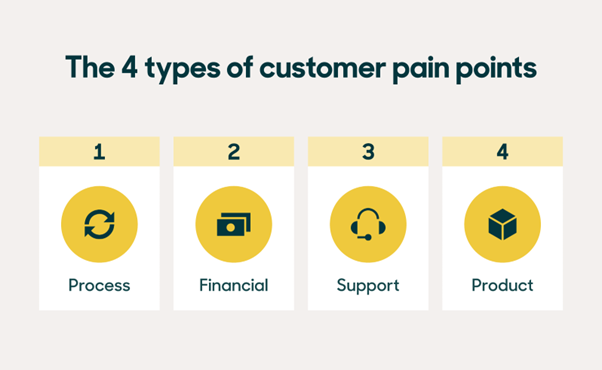
There are typically four types of customer pain points being Process, Financial, Support & Product.

Conduct Thorough Market Research

Market research is the starting point for identifying customer needs and pain points. It involves gathering information about your target audience, industry trends, and competitors.

Utilise both qualitative and quantitative research methods, such as:

  • Surveys
  • Focus groups
  • Social media analysis

This will help you to gather insights into your customers’ preferences, challenges, and desires.

Listen to Customer Feedback

Customer feedback is a goldmine of information.

Whether it’s through:

  • Customer support interactions
  • Online reviews
  • Social media comments

Paying attention to what your customers are saying can help uncover their pain points and unmet needs.

It’s important to regularly engage with customers to gather their opinions and experiences and make adjustments based on their feedback.

Create Buyer Personas

Buyer personas are fictional representations of your ideal customers.

By creating detailed personas that encompass demographic information, behaviours, goals, and pain points, you can better understand the motivations and challenges your customers face.

These personas serve as a reference point for tailoring your products and services to meet their specific needs.

Analyse Customer Journeys

Understanding the customer journey is crucial for identifying pain points.

  • Map out the various touchpoints a customer has with your brand, from initial awareness to post-purchase interactions.
  • Identify potential bottlenecks, moments of frustration, and areas where customers might be seeking additional solutions.

Addressing these pain points can lead to improved customer satisfaction.

Identify customer pain points by understanding the customer journey.

Monitor Social Media and Online Communities

Social media platforms and online communities provide valuable insights into customer discussions, complaints, and recommendations. Regularly monitor these spaces to identify emerging trends, common challenges, and areas where your target audience seeks solutions. Engaging in these conversations can also demonstrate your commitment to addressing customer needs.

Offer Exceptional Customer Support

Your customer support team is at the forefront of interacting with customers.

You can train them not only to resolve issues but also to listen to customer concerns.

By analysing the patterns of customer inquiries, you can identify recurring pain points and take steps to alleviate them.

Conduct Surveys and Questionnaires

Surveys and questionnaires provide a structured way to collect targeted feedback from your customers.

Craft questions that delve into their experiences, preferences, and challenges.

This data can help you identify trends, prioritise pain points, and make informed decisions about product development and improvements.

Monitor data analytics and usage patterns to uncover valuable insights into customer behaviour.

Monitor Analytics and Usage Patterns

Data analytics can reveal valuable insights into customer behaviour.

  • Monitor how customers interact with your website, mobile app, or products.
  • Identify drop-off points, frequently used features, and areas where customers spend the most time.

These patterns can provide insights into both needs and pain points.

Identifying customer needs and pain points is an ongoing process that requires continuous effort and adaptation.

By combining thorough research, active listening, and a commitment to delivering exceptional customer experiences, you can develop products and services that truly resonate with your target audience.

Remember, a customer-centric approach not only enhances your business’s bottom line but also fosters lasting customer loyalty.

The KONA Group specialise in Corporate Sales and Management Training Programs and Tailored Business Growth Strategies.

If you would like to find out what we can do for your business, call us on 1300 611 288 or

Email info@kona.com.au


What are the Key Elements of a Successful Negotiation?

I’m asked all the time about ego and negotiation and in a response to a delegate yesterday I said: “It seems you’re suggesting that having a strong ego or displaying an overly dominant attitude might not be effective in negotiation situations. In many cases, you’re right. Negotiation is a complex interpersonal process that often requires collaboration, active listening, and empathy.”Garret Norris, CEO of the KONA Group

The Key Elements of Effective Negotiation

A successful negotiation involves several key elements that contribute to achieving a mutually satisfactory agreement between parties. Whether you’re negotiating a business deal, a contract, a salary, or any other arrangement, let us guide you through the elements that can greatly enhance your chances of success.

Preparation

Thoroughly research and understand your own needs, goals, and priorities, as well as those of the other party.

Anticipate potential objections, concessions, and alternative solutions.

Knowledge is a powerful tool in negotiation.

Clear Objectives

Clearly define your objectives and desired outcomes for the negotiation.

Having a well-defined goal helps you stay focused and avoid unnecessary concessions.

In Negotiation it is important to have well-defined goals in order to keep you focused.

Active Listening

An effective yet simple tactic when negotiating is to pay close attention to what the other party is saying.

Listen actively to their concerns, needs, and interests.

This helps build rapport and understanding, enabling you to find common ground.

Effective communication will allow you to clearly convey your own points while acknowledging the other party's perspective.

Effective Communication

Clearly and persuasively convey your own points while acknowledging the other party’s perspective. Use concise and respectful language, and be open to asking clarifying questions.

Flexibility and Adaptability

Be prepared to adjust your approach and consider alternative solutions.

A willingness to compromise and find creative options can help break impasses.

Patience and Timing

Negotiations can take time. It’s important to stay patient and avoid rushing the process. Allow both parties to express themselves fully before moving forward.

Emotional Intelligence

Manage your emotions and be aware of the emotions of the other party.

Emotions can impact decision-making, so maintaining a calm and empathetic demeanor is crucial.

Building Relationships

Establish a positive rapport with the other party. A good working relationship can lead to more productive negotiations and future collaborations.

Trust and Credibility

Demonstrate honesty and integrity throughout the negotiation. Building trust enhances cooperation and reduces the likelihood of disputes later on.

The goal in negotiation is to find common ground where both parties feel they have gained something.

Win-Win Mindset

Remember to aim for a solution that benefits both parties. The goal is to find common ground where both sides feel they’ve gained value.

Concessions

Be strategic in making concessions. Don’t give away too much too soon, and ensure that any concessions are reciprocated.

The Importance of BATNA

BATNA in Negotiation means Best Alternative to a Negotiated Agreement.

BATNA (Best Alternative to a Negotiated Agreement):

Understand your BATNA and the other party’s BATNA. This is your fallback plan if the negotiation doesn’t result in an agreement. Knowing your BATNA gives you leverage.

Non-Verbal Communication

Pay attention to body language, tone of voice, and other non-verbal cues. These can provide insights into the other party’s thoughts and feelings.

Documentation is important in negotiation so that each party clearly understands their commitments.

Documentation

Clearly outline the terms of the agreement in writing to avoid misunderstandings later on. Both parties should have a clear understanding of their commitments.

Professionalism

Maintain a professional attitude and demeanor throughout the negotiation process. Respectful behaviour fosters a more productive atmosphere.

Timing and Deadlines

Use timing strategically. Introduce deadlines to encourage decisions and avoid unnecessary delays.

Mediation or Third Party

If negotiations reach a “deadlock”, consider involving a neutral third party or mediator to facilitate discussions and find common ground.

Remember, negotiation is a dynamic and complex process. The successful application of these elements can vary depending on the specific situation and the parties involved. Flexibility and adaptability are key in tailoring your approach to each negotiation.

Contact KONA for tailored Negotiation Training, or see what else we have to offer!

Sales TrainingSome call it an ‘unfair advantage’. To us, it’s simply learning to love sales and your customers again.

Call Centre Trainingfocuses on the delivery of customer service excellence first and foremost.

Sales Pipeline helps sales leaders to develop a customised funnel process for their organisation.

Power Hour delivers immediate ROI by teaching your sales team the disciplines and skills to turn calls into sales and hot prospects.

Customer Service Trainingthe key to every organisation’s commercial success, and the glue that holds it all together.

And so much more.


Has Your Business Considered These Eye-Opening Sales Statistics?

When it comes to statistics, we rely on them to help forge our strategy or to choose a supplier.

Statistics play a crucial role in business strategy for several reasons.

Data-driven decision making

Statistics provide a systematic and objective approach to analysing data. By using statistical methods, businesses can make decisions based on evidence and facts rather than intuition or gut feelings. This reduces the risk of making decisions on suppliers based on biases or incomplete information.

KONA have in FY 22/23:

  • Delivered sales training to over 1,920 salespeople.
  • Delivered customer service training to over 480 CSO’s.
  • Profiled over 768 people using DISC, HBDI and MBTI
  • Delivered leadership training to over 228 leaders.

Understanding sales trends and statistics is essential for making informed decisions and crafting effective sales strategies.

Here we will delve into ten intriguing sales statistics that will help businesses gain valuable insights and adapt to the dynamic market landscape.

1. Customer Experience Matters

Over 70% of customers are willing to pay more for products or services from companies that provide exceptional customer service. (Source: HubSpot)

This highlights the importance of focusing on customer satisfaction and building strong relationships with clients.

2. Speed Matters

Did you know that 50% of sales go to the vendor that responds first? (Source: InsideSales)

In today’s fast-paced world, quick response times can make a significant difference in securing a sale.

3. Social Selling Impact

A compelling 78% of salespeople who utilise social selling techniques outperform their peers who don’t use social media. (Source: Forbes)

Social selling is no longer an option but a necessity for modern sales professionals.

4. Lead Nurturing Pays Off

Companies that excel at lead nurturing generate 50% more sales-ready leads at a 33% lower cost. (Source: Forrester Research)

Investing in lead nurturing can lead to increased conversion rates and more cost-effective sales processes.

5. Mobile Sales on the Rise

Mobile sales make up 34.5% of all e-commerce sales globally. (Source: Statista)

With the increasing popularity of mobile devices, businesses must optimise their sales channels for mobile users to tap into this growing market.

6. Video Content Sells

Including video in your sales emails can boost click-through rates by a staggering 300%. (Source: HubSpot)

The power of visual content should not be underestimated in engaging potential customers.

7. Trust and Referrals

A massive 92% of customers trust referrals from people they know. (Source: Nielsen)

Word-of-mouth marketing and referrals remain incredibly influential in driving sales.

8. Personalisation is Key

A study found that 80% of customers are more likely to make a purchase from a brand that offers personalised experiences. (Source: Epsilon)

Tailoring sales efforts to individual preferences can significantly impact conversion rates.

9. Abandoned Carts Can Be Recovered

Approximately 69% of online shopping carts are abandoned, but effective retargeting strategies can recover 5-10% of these sales. (Source: Baymard Institute)

Don’t ignore potential revenue from abandoned carts; implement retargeting techniques to bring customers back.

10. Upselling and Cross-Selling Work

Upselling and cross-selling can lead to significant revenue growth.

Upselling has a 20-30% success rate, while cross-selling sits at 10-30%. (Source: Source: Marketing Metrics)

Encourage sales representatives to explore upselling and cross-selling opportunities with existing customers.

In the ever-evolving world of sales, staying informed about key statistics is vital for businesses aiming to succeed.

By understanding the impact of customer experience, the importance of quick responses, the power of social selling, and the potential of mobile sales, companies can shape their strategies for maximum effectiveness.

Focusing on personalised experiences, abandoned cart recovery, and upselling/cross-selling can significantly boost revenue and customer satisfaction.

So, take these ten compelling sales statistics into account and pave the way for a successful sales future.

Contact KONA to discuss how we can help you boost sales in your business!

Call 1300 611 288 or email info@kona.com.au


5 Ways Sales Coaching Can Improve Your Sales Team

As part of our role, we assist companies coaching salespeople out in the field.

Last week was spent with a long-standing client in Brisbane accompanying Salespeople/Key Account Managers, visiting customers and prospects.

After each call we would talk about how they could have performed better and what they would do differently on the next call.

Results from Sales Coaching

Without exception, each salesperson increased their skills and became more confident after each call, some even made significant sales with prospects who previously told them that they will not buy… So, how?…

Trying New Sales Techniques from KONA Training

They tried new techniques that we ran in the sales training, and they loved but never actually put into practice when they went back out in the “coalface”.

So, how much time should you spend coaching your team each week? There isn’t a right or wrong answer, but if you are managing a business-to-business sales team, we recommend that you spend 40 – 65% of your time Sales Coaching your team.

When we look at training and how we “keep it alive” after the initial workshop, coaching plays a massive and important role.

Sales coaching is a powerful tool for developing and enhancing the skills of your sales team.

By providing targeted guidance and support, sales coaching can significantly improve your team’s performance and drive better sales results.

Five Ways Sales Coaching Can Benefit Your Sales Team

1. Sales Skills Development

Sales coaching focuses on identifying the strengths and areas for improvement of individual sales team members.

By providing personalised coaching sessions, you can help your team members develop essential sales skills, such as effective communication, negotiation, objection handling, and closing techniques.

Regular coaching sessions allow for continuous skill development and improvement, enabling your sales team to become more confident and successful in their roles.

2. Goal Setting and Accountability

Sales coaching plays a vital role in setting clear and achievable goals for your sales team.

By working closely with each team member, you can help them define S.M.A.R.T goals:

  • Specific
  • Measurable
  • Attainable
  • Relevant
  • Time-bound

Regular coaching sessions provide a platform for reviewing progress, discussing challenges, and holding team members accountable for their goals.

This process keeps your team focused, motivated, and aligned with the overall sales objectives.

Garret Norris CEO/Co-Founder of KONA

3. Enhancing Sales Strategies

Sales coaching helps your team members refine their sales strategies and approaches.

Through one-on-one coaching sessions, you can:

  • Analyse past sales interactions
  • Evaluate sales techniques
  • Provide feedback on how to improve

By identifying areas where adjustments are needed, such as refining the sales pitch, overcoming objections, or adapting to different customer personas, you can guide your sales team toward more effective and successful strategies.

4. Building Confidence and Motivation

Sales can be a challenging and competitive field, and it’s essential to maintain your team’s confidence and motivation.

Sales coaching provides an opportunity to recognize and reinforce individual achievements, celebrate successes, and boost team morale.

By offering guidance, support, and constructive feedback, you can instil confidence in your team members, helping them overcome obstacles and stay motivated in their pursuit of sales excellence.

5. Continuous Learning and Adaptation

The sales landscape is constantly evolving, and it’s crucial for your team to adapt to changing market dynamics and customer preferences.

Sales coaching encourages continuous learning by staying updated on industry trends, new sales techniques, and emerging technologies.

Through coaching, you can provide resources, training materials, and industry insights to equip your team with the knowledge and skills needed to stay ahead of the competition.

Sales Coaching empowers your sales team by:

  • Developing their skills
  • Setting goals
  • Refining strategies
  • Boosting confidence
  • Promoting continuous learning

By investing in sales coaching, you create a culture of growth and improvement, resulting in a more effective and successful sales team.

Contact KONA today to discuss how Customised Training & Sales Coaching

can benefit your sales team.


5 Signs Of A Bad Sales Deal & How To Avoid Them

We were called into an organisation recently because, while they seemed to be making sales, many of them were “bad” for a number of reasons.

While my team member was on a flight home we were talking via “WhatsApp” about the solution, and how they can avoid this in the future.

Here is what we are advising to identify them, and “AVOID A BAD SALE”:

Unbalanced Value Proposition:

One of the first signs of a bad sales deal is an unbalanced value proposition.

If the deal heavily favours the customer while neglecting your company’s needs and profitability, proceed with caution.

Evaluate the terms and conditions, pricing, and potential return on investment (ROI) to ensure that the deal is mutually beneficial.

Negotiate to create a win-win situation or consider walking away if the balance cannot be restored.

Lack of Alignment with Your Ideal Customer Profile:

A bad sales deal often arises when there is a mismatch between the prospect and your ideal customer profile.

The deal may result in wasted time and resources if it doesn’t:

  • Align with your target market
  • Meet the customer’s needs
  • Meet their ability to pay

Before engaging in a sales deal, conduct thorough research and qualify prospects based on their fit with your ideal customer profile.

Focus your efforts on prospects who have a genuine need for your product or service and are capable of becoming long-term, profitable customers.

Overly Demanding or Unreasonable Requests:

When negotiating a sales deal, pay close attention to any requests or demands that seem excessive or unreasonable.

If the prospect expects unreasonable discounts, extended payment terms, or unrealistic deliverables, it could indicate a problematic partnership.

Consider whether meeting these demands would strain your:

  • Resources
  • Profitability
  • Compromise the quality of your product or service

If the requests seem out of line, be willing to push back or walk away if necessary to protect your business interests.

Lack of Trust or Transparency:

Trust is the foundation of any successful business relationship.

If you notice a lack of transparency or dishonesty from the prospect during the sales process, it’s a clear sign of a bad deal.

Watch for red flags such as evasive answers, inconsistent information, or a refusal to provide essential documents.

Trust your instincts and conduct thorough due diligence to verify the prospect’s credibility and reputation.

It’s better to turn down a deal with a dubious prospect than risk getting entangled in a harmful partnership.

Unfavourable Contract Terms and Conditions:

Reviewing the contract is vital to uncover potential pitfalls.

If the contract terms and conditions are heavily one-sided, leaving your company exposed to significant risks, it’s a warning sign.

Look out for clauses that limit your control over the product or service, impose excessive penalties or termination fees, or grant the prospect unfair advantages.

Ensure the contract is fair and protects your interests.

Negotiate for more balanced terms or walk away if the other party is unwilling to make reasonable adjustments.

In the fast-paced world of sales, it’s crucial to exercise caution and discernment when evaluating potential deals.

Recognising the signs of a bad sales deal early on can save you valuable time, resources, and potential damage to your company’s reputation.

By being attentive to the terms of a sales deal, you can navigate the sales landscape more effectively.

Remember, it’s better to pass on a bad deal and focus on finding the right opportunities that align with your business goals and values.

Contact KONA today to discuss tailored Sales Training for your Sales Team!

8 Qualities A Great Sales Coach Should Possess

I was recently training and coaching the leadership team of a large “sales focused” global organisation when I was asked this question:

“Garret, in your opinion, what qualities should a great sales coach possess?”

Here is my answer:

Experience

A good sales coach typically has extensive experience in the field of sales.

They have likely faced various challenges and learned valuable lessons from their own experiences, which they can share with their clients.

Expertise

A great sales coach has in-depth knowledge of sales strategies, techniques, and best practices.

They understand the sales process and can effectively convey that knowledge to their clients.

Communication Skills

Effective communication is crucial in sales, and a great sales coach should excel in this area.

They can articulate concepts clearly, actively listen to their clients’ concerns, and provide constructive feedback.

Motivational Abilities

Sales can be a demanding and competitive field, so a great sales coach knows how to motivate and inspire their clients.

They can help salespeople overcome obstacles, build confidence, and maintain a positive mindset.

Analytical Skills

Sales coaches often assess their clients’ performance, identify areas for improvement, and develop customised strategies.

Strong analytical skills enable them to analyse sales data, identify trends, and provide data-driven insights.

Adaptability

Sales strategies and market dynamics can change rapidly.

A great sales coach stays updated on industry trends, adapts their approach accordingly, and helps their clients navigate evolving challenges.

Empathy And Emotional Intelligence

Understanding clients’ unique needs, motivations, and challenges is crucial for a sales coach.

They should demonstrate empathy, provide support, and tailor their coaching style to individual personalities and situations.

Continuous Learning

Sales is a dynamic field, and a great sales coach recognises the importance of continuous learning.

They stay informed about new sales techniques, technologies, and industry developments to provide the most relevant and up-to-date guidance.

While these are some general qualities of a great sales coach, it’s essential to research and gather specific feedback and testimonials.

Contact KONA about sales coaching today!


3 Reasons Why You Should Train Your Sales Team This EOFY

Has your business ever experienced a decline in sales? Perhaps you have noticed team morale has dropped, or maybe your company has recently had a high turnover of staff.

It may be time to consider engaging with a Sales Trainer to implement a sales training program for your sales team.

Three Reasons Why You Should Consider Training Your Sales Team

The best sales trainers will tell you that training your sales team at the end of the financial year (EOFY) can provide many benefits.

Here are three key reasons why you should consider training your sales team during this period:

1. Maximising Performance and Revenue

The end of the financial year is a critical time for businesses to achieve their revenue goals.

Training your sales team during this period can help them:

• Refine their skills
• Learn new strategies
• Stay up-to-date with the latest sales techniques

By equipping your sales team with the necessary knowledge and tools, you can enhance their performance, increase their productivity, and ultimately drive more revenue for your business.

Effective training can help them to:

• Close deals more effectively
• Negotiate better terms
• Overcome objections
• Lead to improved sales results

2. Capitalising on New Targets and Budgets

The start of a new financial year often brings new sales targets and budgets.

Training your sales team at the EOFY enables them to familiarise themselves with the upcoming targets and understand any changes in the budget allocation.

By aligning the team’s skills and strategies with the new targets, they can better plan their sales activities, identify potential opportunities, and effectively allocate their resources.

This proactive approach to training ensures that your sales team is prepared to ‘hit the ground running’ as the new financial year begins.

3. Addressing Skill Gaps and Adapting to Market Changes

The business landscape is constantly evolving, and it’s essential for sales teams to adapt to changing market conditions.

The EOFY provides an excellent opportunity to assess the performance of your sales team over the past year and identify any skill gaps or areas for improvement.

By conducting targeted training sessions, you can address these gaps and equip your team with the skills needed to excel in the upcoming year.

Whether the training is for:

• Improving their product knowledge
• Enhancing their negotiation skills
• Leveraging new sales technologies

An effective Sales Trainer will provide modern training that can help your sales team stay competitive and adapt to market changes effectively.

Training your sales team during the EOFY comes with many benefits.

By investing in your sales team’s development and providing them with the necessary tools and knowledge, you can empower your team to achieve better results, drive revenue growth, and stay ahead of the competition.

Contact KONA today to discuss a tailored Sales Training program for your team!


6 Ways To Lessen The Effects of Inflation Impacting Sales

As inflation continues to affect various sectors of the economy, businesses are looking for ways to lessen its effects on sales.

Here we will discuss six ways that businesses can mitigate the effects of inflation on their sales.

Upsell & Cross Sell

Upselling and cross-selling increases the overall revenue generated from each customer transaction.

Upselling – encourages customers to purchase a higher-priced item or a more expensive version of a product they are already interested in.

By persuading customers to spend more money, upselling can increase the average sale value and the overall revenue generated per transaction.

This increased revenue can help offset the impact of inflation on the cost of goods sold.

Cross-selling – involves recommending related products to customers to encourage them to make additional purchases.

Cross-selling can help increase the total amount customers spend on their purchases, and can help offset the impact of inflation by increasing revenue generated per customer.

Combining these two strategies can help businesses mitigate the impact of inflation on sales.

Upselling and cross-selling can help businesses build stronger relationships with customers by providing them with a better shopping experience and meeting more of their needs.

Ultimately this can lead to increased customer loyalty and repeat purchases.

Upselling and cross-selling

Increase Prices Strategically

A common response to inflation is to increase prices – but businesses need to be strategic about how they do this.

Consider the cost of goods sold, the competition, and the impact on customer demand.

A small price increase might be more effective than a large one.

It could also be phased in over time to minimise the impact on customers.

Implement Cost-Cutting Measures

Businesses can look for ways to reduce their expenses by:

  • Negotiating with suppliers
  • Reducing waste
  • Finding more efficient processes

By cutting costs, businesses can maintain their profit margins despite rising prices.

Offer Discounts and Promotions

Offering discounts and promotions is another way to mitigate the effects of inflation.

Customers are more likely to buy when they feel they are getting a good deal.

Businesses can offer sales, coupons, or other promotions to incentivise customers to buy despite rising prices.

It’s important to note that discounts should be strategic and well-timed, or they could hurt profit margins.

Diversify Your Product Line

Expanding your product line can help to lessen the effects of inflation.

If prices are rising for a particular product, businesses can offer alternative products or services that are less affected by inflation.

This way, they can still generate sales – even if customers are cutting back on spending for certain items.

Focus On Customer Service

Focusing on customer service can help mitigate the effects of inflation.

When customers feel valued and appreciated, they are more likely to continue doing business with a company, even if prices are rising.

By providing excellent customer service, businesses can retain customers and maintain sales despite inflation.

By providing excellent customer service, businesses can retain customers and maintain sales despite inflation.

Inflation is an economic reality that businesses need to address.

By implementing these strategies, businesses can ease the effects of inflation on their sales and remain competitive in their industries.

Contact KONA today to discuss a tailored Sales Training Program for your business!

4 Ways To Maximise Last Quarter Sales This EOFY

As the end of financial year approaches, it’s time to start thinking about how to maximise your sales.

Here are four effective ways to boost your sales and end the financial year on a high note:

Offer Special Promotions and Discounts

These promotions can help incentivise customers to make a purchase, especially if they feel like they are getting a good deal.

To make the most of this strategy, ensure that your promotions are publicised through email campaigns, social media, and other advertising channels.

Focus on Customer Retention

Loyal customers are more likely to make a purchase than new customers, so it’s important to keep them engaged and happy.

Consider sending out special offers to your email list or offering loyalty rewards to encourage repeat purchases.

You can also personalise your marketing to make customers feel valued and appreciated.

Increase Your Online Presence

With more people shopping online than ever before, it’s important to ensure that your online presence is strong.

This can include:

  • Investing in search engine optimisation (SEO) to improve your website’s visibility on search engines
  • Increasing your social media presence
  • Creating engaging content for your blog

By improving your online presence, you can reach more potential customers and increase your chances of making a sale.

Free Ways to Increase Your Business's Online Presence | by Tim | Medium

Negotiate And Close Better At A Good Margin

Negotiating and closing deals at a good margin requires a combination of skills, strategies, and tactics.

Here are some tips to help you negotiate and close deals successfully:

1. Research and prepare:

Before entering into a negotiation, research the other party and gather information about their needs, interests, and preferences.

Also, prepare your own objectives, and identify your strengths and weaknesses.

2. Set a clear and realistic goal:

Determine your minimum and maximum acceptable outcomes and identify the range within which you want to negotiate.

Be flexible and creative in finding solutions that meet both parties’ needs.

3. Build rapport:

Establishing a good relationship with the other party is essential to successful negotiation.

Listen actively, ask open-ended questions, and show genuine interest in their perspective. Try to find common ground and build trust.

4. Present your case persuasively:

Use clear and concise language, and back up your arguments with evidence and data.

Highlight the benefits of your proposal and how it meets the other party’s needs.

5. Be willing to compromise:

Negotiation is a give-and-take process, and both parties need to make concessions.

Identify areas where you are willing to give ground and be prepared to make trade-offs.

6. Close the deal:

Once you have reached an agreement, summarise the key points and confirm that everyone is clear on the terms.

Be sure to get everything in writing and include any contingencies or conditions that need to be met.

Remember it’s the EOFY and that successful negotiation is about finding win-win solutions that benefit both parties QUICKLY!!!

How Long It Roughly Takes to Close a Deal in SaaS. And Why.

By following these tips, you can negotiate and close deals at a good margin while building strong relationships with your partners.

Maximise your last quarter sales and end the financial year on a high note.

It’s important to monitor your sales regularly and make adjustments to your strategy as needed to ensure success.

Contact KONA today to discuss tailored training and consulting for your business.

3 Reasons Why Your Sales Team May Not Be Hitting Targets


Sales teams are the backbone of successful businesses, responsible for bringing in revenue and driving growth.

Sometimes sales teams can struggle to hit their targets, and it can be challenging to identify the reasons behind this.

Here are three common reasons why sales teams may not be hitting their targets and what you can do to address them.

Lack Of Clear Goals And Direction

One of the most common reasons why sales teams may not be hitting their targets is a lack of clear goals and direction.

Without specific, measurable, achievable, relevant, and time-bound (SMART) goals, sales teams may lack focus and direction.

This can often lead to a lack of motivation and lower productivity.

Sales teams need:
• Clear goals
• Performance metrics
• Incentives that align with the company’s overall objectives

Sales leaders need to set targets that are challenging but achievable, and regularly communicate progress updates to the team.

Providing regular feedback and recognition to the team members who achieve or exceed their goals will help to motivate the team.

Inadequate Training and Coaching

Sales is a constantly evolving field, and the sales team needs to keep up with the latest trends, techniques, and technologies to stay competitive.

Without adequate training and coaching, sales teams may struggle to keep pace with changing market dynamics. This can negatively impact their performance.

Sales leaders need to provide regular training and coaching to their teams to ensure they have the skills and knowledge needed to succeed.

This includes:
• Product knowledge
• Sales techniques
• Objection handling techniques
• Negotiation skills

Leaders should provide ongoing support and mentorship to help salespeople develop their skills and confidence.

Poor Lead Quality and Insufficient Lead Generation

Sales teams can only succeed if they have high-quality leads to work with.

If the lead generation process is insufficient or the quality of leads is poor, sales teams will struggle to meet their targets.

Sales leaders need to work with their marketing teams to ensure the lead generation process is effective.

This includes:
• Developing buyer personas
• Identifying the most effective lead generation channels
• Optimising the lead scoring and qualification process

Sales and marketing teams should work together to ensure there is a consistent flow of high-quality leads that meet the sales team’s needs.

Sales teams are critical to the success of the business, and it’s essential to understand why they may not be hitting their targets.

By addressing the issues, Leaders can help their teams stay motivated, focused, competitive, and drive revenue growth for the business.


Contact KONA today to discuss customised Sales Training for your Sales Team!