Two of the most important months of the year in Sales happen to be October and November.
However too many Salespeople and Sales Managers are either unaware of this, or simply choose not to do anything during these critical months of activity.
Many Salespeople fall into the trap of “easing off” at the bottom end of the year.
Step it up…
But this is the time you need to be stepping it up!
So many Salespeople don’t change their pace during October and November and then roll into Christmas and January and wonder why they miss their target. Worse still, they start Q1 of the new calendar year playing catch up.
Crucial Sales Techniques need to be put in place now to maintain pipeline strength at the start of the new year.
Why are October and November so important to Sales?
Whenever we ask a B2B client how your December and January were, the reply from many is “not that good”. There are more organisations open for business and back to work in January than ever before. And no more so than now.
Remember not so long ago we had 2 years of on-again-off-again lockdowns. Business owners are still smarting about the threat of, or actually shutting their doors.
Your Sales Pipeline in October and November
How prepared are you for October and November?
Is your team implementing the key Sales Pipelineprinciple of Managing the Lead Time between Sales Activity and Sales Results?
Your Salespeople should be filling their 2022 Pipeline now.
Why be filling your 2024 Pipeline now?
Because it takes an average of 2 to 3 months to convert a new opportunity or win a new client. Therefore – 2 to 3 months prior to January is October and November.
Are your Salespeople active right now or are they sitting back
So are your Salespeople active right now or are they sitting back – saying “January has always been quiet for us”?
A slow start to the new calendar year is hard to claw back from, both in target numbers and morale.
With that in mind, here are Three Proven Sales Techniques to Smash Targets.
1. Start Implementing Weekly or Fortnightly Power Hours
Power Hour Session Pipeline Case Study
In a tailored Strategic Sales Training workshop a few years back in November, we generated a massive ROI for a client with a solid Power Hour session.
Here is what that Power Hour session looked like:
We gathered all their 36 Salespeople, Sales Support and Sales Managers into a room.
Prior to the session, each participant had to arrive with a target list of 50 contacts – existing, lapsed, and prospects.
We then ran 2 hours ofPower Hour Training. Then, everyone had to put the training immediately into practice.
Outcome: the group BOOKED 546 FACE TO FACE MEETINGS IN ONE HOUR. That is more than 15 appointments per person! Their conversion ratio at that time was 34% of meetings to orders, and they had a HUGE January and start to the New Year.
2. Do Your Research
If you search “CEO of KONA Group” you are guaranteed you’ll come up with an image and blurb of Garret Norris. Search “John Wright KONA Group” and you will see information about the Group’s Melbourne Sales Coach. Research your prospects! That is how you will connect with them.
Next, using the information you have researched about your prospect, you then:
A) figure out the best way to address their pain point, then
B) how you will get past the gatekeeper.
By the time you get to the decision-maker, you must know enough to give them insights into their own business. 77% of buyers say they won’t engage with a Salesperson if they don’t do the homework first*. So get Googling. (*LinkedIn State of Sales Report, 2017).
3. Work Out Your Why!
Your Salespeople should all be good communicators.
But – there’s always an opportunity to train and upskill their pitching and selling processes. That is, there are always opportunities to sharpen the axe and move your Salespeople from good communicators to skilled effective communicators.
That means, they should be able to identify and articulate ways they can add value to potential customers. But to do this, your Salespeople need to work out their Why.
Do your Salespeople know how to work out their Why Statement and company value proposition?
Knowing your Why will help you to move targets through the Sales pipeline and advance to the more critical stages.
That’s the part in the pipeline where you secure the Sale.
We all get them, the “annoying” telephone calls from someone trying to sell you something you absolutely don’t need. That is not what you want as your strategy right? Thankfully,there are other ways.
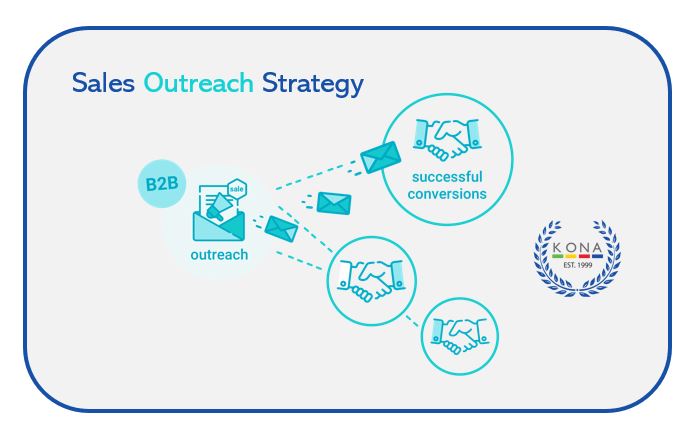
Sales Outreach has come a long way and has evolved to something quite different from pure cold calling. And as the field continues developing, you need to keep up with it. With the help of research and new techniques, you can improve your Sales Outreach Strategy and make it more effective in today’s current climate.
Consequently, a rise in engagement, conversion rates, and profits is likely to follow. So don’t hesitate, because as we teach in our workshops, Activity Drives Results, and therefore, with a better Sales Outreach you will get better results.
WHAT IS SALES OUTREACH?
Sales Outreach is the process of engaging with prospects who meet your customer profile. That is, with the goal of bringing them into the Sales pipeline and converting them into paying customers.
Moreover, the rise of inbound marketing has greatly increased the number of channels for the modern marketer. But it has also increased the noise that we need to learn to cut through if we are to reach the modern B2B buyer.
Consequently, and partly as a response to the noise, outbound marketing has been modernised. Prospecting has become a key part of the marketing mix. Crucially, it allows highly targeted Sales Outreach to deliver personalised messages to key decision-makers.
SALES OUTREACH STATISTICS
Cold Sales Outreach is a vital part of starting conversations with potential customers. The merits of this, and which methods of Outreach are most effective, are revealed in some surprising statistics.
The average Salesperson only spends a third of their day actually selling
40% of Salespeople say prospecting is the hardest part of their job (HubSpot)
60% of B2B buyers say no four times before saying yes
48% of Salespeople never even make a single follow up attempt (Invespcro)
It takes between eight and 18 calls to actually connect with a buyer (Brevet & TopoHQ)
Salespeople spend the equivalent of an entire day each week writing emails (HubSpot)
70% of unanswered Sales emails aren’t followed up (Yesware)
Follow up emails generate 77% of prospecting campaign responses (Sopro)
80% of prospects prefer Sales discussion over email compared to any other medium(HubSpot)
Email marketing is almost 40 times more effective than social media marketing for new customer acquisition (Brevet)
89% of marketers say that email is their primary channel for lead generation (Copper)
WHAT ARE THE BEST WAYS TO IMPROVE YOUR SALES OUTREACH STRATEGY?
If you notice that you’re not reaching your Sales goals, it might be time to work on your Sales Outreach approach. Does your team have an effective Sales Outreach Strategy in place? Below are 6 Ways to Improve Your Sales Outreach Strategy to get you started.
1. BE PROACTIVE
Remember? We will say it again and never stop drilling it in. Activity Drives Results!
As a business with something to sell, you are the one that should make the first move. This is particularly obvious with outbound Sales Outreach. That is, where the entire concept is that you contact potential clients to close the deal. But even if you’re focusing on inbound Sales Outreach, there are things you can do to improve your chances of conversion.
For example, collecting data about your leads, prospects, and existing clients will give you a better idea of who they are and what they respond to. This is addressed in a 90 Minute Virtual Workshop, called The Importance of Information Gatheringand Your Sales Outreach Strategy.
Once you have gathered the correct and valuable data from your prospect, you can use the knowledge to improve your approach. That means, from your marketing and branding all the way to your customer services. This process will significantly increase your opportunities of being contacted by interested customers.
2. UNDERSTAND, NOT JUST KNOW, WHO YOUR BEST CUSTOMERS ARE
Having a comprehensive understanding of your customers is key to achieving core business goals.
Whether you’re trying to build the customer experience, create more engaging content, or increase Sales. Knowing your customers betterthan they do is key. That means developing ideal customer profiles and mapping your audience. This is addressed in a 90 Minute Virtual Workshop, called Customer DNA and Your Sales Outreach Strategy.
3. PICK THE PROPER PLATFORM
Who you approach is also going to affect how you approach them.
You want to meet potential clients where they are, that is – using the communication channels they prefer. Virtually everyone uses e-mail these days, so that’s a safe bet for Sales Outreach. Phones have been successfully used in Sales for decades, so they will probably work for you too.
What’s new in recent years is social media. If you can harness the power of different social media platforms, you can significantly improve your strategy. Just remember to choose the right social media.
90% of top-performing Salespeople now use social media as part of their sales strategy. (LinkedIn)
Have a think about which channels will work best for your target audience. Cold calling will be the way to go for some.
An approach on social media can work really well for others. Of course, LinkedIn is the go-to network for most B2B buyers. However, if your audience is, say, wedding photographers, then Instagram might be a place they are more active.
64% of sales reps who invest in social media hit their team quota – compared to only 49% of reps that don’t use social media. (LinkedIn)
Cold email outreach is a proven tactic that delivers the highest lead rates and marketing ROI. And as the above figures show, four out of five B2B buyers prefer to be contacted by email over any other medium.
4. PERSONALISE EVERY APPROACH
Personalisation is where it is at these days. It is in fact, one of the most effective tactics for both marketing and client retention that you can possibly invest in. It makes your efforts more relevant for the individual client. But also, it makes them feel important and special rather than just another number.
Every person you contact should believe that you typed out an email just for them. Cold email copywriting is an art form in itself, but it’s the personalisation that really takes a message to the next level.
By personalising 20% of email content, open rates increased over 40% on average and reply rates increased 112%. This is compared to emails with no personalisation at all. (SalesLoft)
But how do you personalise a Sales Outreach approach?
The first step is collecting as much information as you can. Remember, The Importance of Information Gathering and Your Sales Outreach Strategy?
Equally as important, invest in a good CRM system! This is crucial. A solid CRM will help you collect, organise, and measure data about ALL your team’s leads. Then, when your Salespeople contact those leads, they can use information about them to adjust and tailor their Sales pitch to each one. They should use the customer’s interests and previous experiences with the business as a starting point to rebuild that all-important rapport. Crucially, they will refer back to emails and conversations and know how to connect with a particular customer and pick up from where they last left off. Finally, your Salespeople can use the data to guide your marketing strategies too. This will consequently increase the number of inbound contacts you get and have a significant growth effect on their pipeline.
Businesses that leverage CRM software sees sales increase by 29%, sales productivity increase by 34%, and sales forecast accuracy increase by 42%. (Salesforce)
5. CHANGE YOUR MINDSET
You have to get into the right state of mind.
You can no longer focus on selling your product, service, or solution. You must focus on communicating as a trusted advisor and industry thought leader. That means focusing on the value and ROI your solution delivers versus the simple features and benefits of the actual product or service.
But how do you change your mindset?
Keep yourself open to new ideas by continuing to learn. Crucially, invest in your team’s education with continuous learning and training.
Tailored training involves the use of Sales-based activities designed to spark creativity and help your Salespeople reframe their thinking to value-based selling, rather than basic brand flogger.
The mindset of every Salesperson has the power to drive or destroy their sales. It is up to you as their Leader, to shape a positive, results-orientated mindset.
6. REMEMBER TO FOLLOW UP
Most of the time,a single contact is not going to be enough for conversion. And when your customers are other businesses as well, you need to remember they too are busy people whose first priority is probably not your business.
So don’t let them forget about you! Contact them again after a while. If you can, work on building actual relationships. A more personal approach will help you make the Sale. However, know when to hold back as well. Aim for a balanced approach where you follow up without being too pushy.
How do you know when your team needs to improve its Sales Outreach Strategy?
There’s never a bad time to improve your Sales Outreach strategy. After all, a better approach leads to better results.
As Leaders, if you’re working on your quarterly plans or reorganising things in your business, reconsidering how you do your Sales Outreach techniques should be on the list every time.
But it becomes critical when you notice too many deals are lost and leads are not moving through the Sales pipeline. This will affect your ROI and overall profits, so trying a new approach as soon as possible is a must.
Call us to organise your team of professionals to be part of your bespoke training and build a customised Sales Outreach Strategy. Each focus learning area will be tailored to your team’s needs and challenges.
They can be part of 4 x 90 minutes Sales Outreach Strategy EssentialsVirtual Workshops. Cherry-pick one or all of the topics below and customise your Team’s Learning.
To book Your Team’s tailored ↑Sales Outreach Strategy Building VirtualWorkshops, contact KONA on 1300 611 288 for a confidential conversation, or email info@kona.com.au anytime.
In Australia and around the world, customer expectations for service are constantly increasing.
Now, customers expect more than an answer to their question. They want their problems solved quickly and desire a personal interaction with a skilled agent – not automation.
Customer Expectations are Increasing
Apart from choosing intuitive and easy-to-use call centre software, call centre managers are also investing more time, money and effort into the development of training programs so that their call centre agents will be well prepared to meet the increasing expectations of their customers.
According to The Global Call Centre Report, compiled by researchers at Cornell University, newly-hired call centre agents typically receive 15 days of initial training.
If your training protocol falls shy of this 15 day mark, it might be time to take a long hard look at your training curriculum and whether or not your call centre agents are sufficiently trained to meet the needs of your customers when they hit the phones.
This article contains tips for training call centre agents. We hope you use these tips to enhance the training you provide your agents – so they can better meet the needs of your customers.
Introduce the team
Kick off training with an introduction and a strong “WHY” statement (why should we help the customer). If you have the budget it would be very beneficial to conduct some profiling on the team members so the understand themselves and better understand the customers response.
KONA call centre experts recommend DISC profiling as it is easy, cost effective and applicable.
Educate your new agents about your business
Your team, new hires and existing staff should have a comprehensive understanding of your business, product and call centre operations.
They should also be provided information about company culture, mission, core values and understand their role in achieving business goals.
With this understanding, your agents will be more prepared to interact with customers in a manner that is consistent with your business values.
Bring top-performing agents to training
Encourage your top agents to give practical tips on how to be a top performer. This will set the bar high for new hires and enhance their insight into how to effectively execute their job.
Explain their role in building customer relationships
A great way to enhance agent motivation to provide outstanding service is to help them understand the role they play in building customer relationships.
Educate them on customer lifetime value as well as the cost of a bad interaction. Let them know how the quality of the service they provide impacts customer conversion, retention and loyalty. Once they have this understanding, they will be more motivated to provide top-notch service.
Teach agents call handling best practices
New agents should be provided examples of appropriate greetings, transfer techniques and how to end a conversation. Allow them to listen to recordings and also provide them with scripts. Encourage them to practice with each other until these become natural.
Teach agents call centre etiquette excellence
When your agents have a concrete understanding of what to say and what not to say, they will be more prepared to provide excellent service. Accomplish this by teaching them about call centre etiquette excellence and informing them of etiquette guidelines.
Educate them about their desired outcome
Their overarching goal (apart from providing amazing service of course) might be to increase sales, resolve a customer’s issue on first contact or resolve the customer’s issue as quickly as possible. Whatever the goal, agents should know it and know how to achieve it.
Show agents how to find answers to their questions
Have a knowledge base? Teach new hires how to use it.
Have a technical support department? Teach agents how to conference them into a call.
Have managers that are available to jump into a live call? Tell agents who to ask for help. Do they have a rock star agent in their department? Tell them who that is and when it is ok to ask for their assistance.
Trainees will inevitably come across questions that they don’t know how to answer. Show them where to look and who to ask to help them resolve the issue.
Coach your agents individually
According to The Global Call Centre Report the time to proficiency can vary depending on:
The educational level of newly hired call centre agents
The complexity of the product or service
Training protocols
Management strategies
Keep this variation in mind when training agents. Keep your eye out for learning or knowledge gaps and do your best to adjust your approach to training in an effort to fill them.
Make sure your training is hands-on and practical
Agents often learn best by doing. Team up your agents and have them role play common call scenarios. Allow them to get their hands dirty playing with your product. Give them sufficient hands-on time to learn your call centre software. These hands-on training experiences are essential to cultivating a capable workforce.
Constantly evaluate their progress
Throughout the training program, consistently monitor agent performance and provide them with timely feedback. New hires should know exactly what is and what is not working so they can adjust their approach accordingly.
Training never stops
According to The Global Call Centre Report, experienced call centre agents receive an average of six training days per year.
Make sure your agents keep their performance high by continually providing refresher courses, training on new products or software and training to enhance their professional development.
As customer expectations for service increase, it is on call centre managers and executives to train agents to effectively meet their customer’s needs. Following these practical and simple tips will help you enhance your training program so your call centre agents can provide amazing customer service.
To find out more, please call 1300 611 288 or email info@kona.com.au
What is the Secret to Happiness and How Does a Happy Mindset Improve Sales?
Coping with the emotional toll of missed opportunities and train-wreck sales meetings can be tiring as well as demoralising. But despite the trials, you must fight against what can at times seem like an onslaught of negativity. That is, if you want to get to the rewards. And the best way to do that is by cultivating and also nourishing a positive attitude.
However, the trick is not just being positive when everything is A-Okay, but rather staying positive even when things don’t go so well. Remember the time old philosophy – that you can’t always control the outcomes of things, but what you can control is how you respond to those outcomes. But is this the true secret to happiness? Well, read on.
While many of us can handle the pressure, some of us crumble under it. And if we don’t take care of our own happiness, our sales success can take a real blow. “How do you know if you have a piece of quartz or a diamond on your team, in your relationships, family, and even within yourself?The only way to really know – is to apply pressure”, reflects HBB Group CEO Garret Norris. So when it comes to handling pressure, do you have diamonds or quartzes on your team?
Are You a Diamond or a Quartz Under Pressure
That’s why we want to show you that there is a real relationship between happiness and sales success. But it is up to you to decide, how does your personal happiness play a part in your sales process? And ultimately, what record long study has revealed the true secret to happiness?
What is the Secret to Happiness?
Robert Waldinger is a Harvard professor. He has been studying lifelong happiness for near on his entire life. It has been the longest study on happiness ever. And remarkably, it is still going on today.
The study started with boys from a variety of backgrounds. That is some poor, some rich, some in college and some on the streets. Researchers tried to predict the lives of the boys. All of them had different dreams of becoming rich and famous. However, a true prediction turned out to be impossible. As their health, personal relationships, jobs and social status did not match the researchers’ predictions.
Waldinger surprisingly could only come up with one major conclusion. Just one crucial result, from 75 years of studying happiness in 724 different men. The finding: good lives come from good relationships.
In other words, when these men didn’t have strong personal relationships and couldn’t count on others for support, their health declined. And consequently, they were less motivated to continue pursuing a successful career. And most importantly, good relationships were all based on effective communication!
So, How Do We Cultivate and Nourish Happy Relationships?
Well, based on Waldinger’s research, below are 7 Tips on How to Be A Happy (Sales) Person. Or indeed a happy person in general. Fundamentally, these tips all have two key aspects in common. Effective Communication and Activity.Happiness is not a goal, it is a process. It is all about cultivating good relationships through communication. As for being active – activity drives results! Every time.
Secret to Happiness in a Sales Process
These tips are not just for Salespeople, everyone can benefit from these simple practices, so share them amongst your colleagues, peers and family. Isn’t the greatest gift of all is when we see someone happy? Well, why not give others the tools to make themselves happy, daily.
7 Tips on How to Be A Happy (Sales) Person
1. Talk to Another Adult Daily
Have an actual small conversation with them. Even if it is a neighbour or someone at the shops. It’s a break for your mind. And it gives you fuel for self-worth. By connecting with others, you become bigger than yourself. Conversations are the mixing bowls that great ideas emerge from. By discussing an idea with someone, even a stranger, they can help flesh it out.
Additionally, when someone takes the time to listen to you, they demonstrating appreciation for you. They may not agree with you in everything, but value your perspective. That in turn formulates self-worth and personal value. Our looks or digital image are no match for a conversation in showcasing our personality. Talking to someone is you in 3D, HD, and live all in one.
And best of all, conversations can make you laugh, can be fascinating, and can cheer you up.
2. Do Not Let Others Control Your Emotions
This one is easier said than done, but when done, it is highly successful emotionally. Added to that, it is also the absolute best feeling! Do not waste your personal social interactions on people who are emotionally draining. It was Eleanor Roosevelt who eloquently stated, “No one can make you feel inferior without your consent.”
As much as we hate to admit it, we are where we are in life because of the decisions we’ve made, either consciously or unconsciously. Most people don’t want to accept that they are the cause of their own outcomes. Especially when they’ve been so directly and closely exposed to vile human beings. They become programmed to a certain response, but the response is still nevertheless a choice. There’s always another response to choose.
When we take ownership of how we respond, we are taking full responsibility for ourselves. Look at the word responsibility: response + ability. That means our ability to respond to situations, events, or people in the way we choose. We can choose to respond in anger, or we can choose to respond with calm.
Here are some ways to better control your emotions and choose a better response:
Start each day with a Positive Mindset. When you start with a positive outlook at the beginning of they day, it sets a calm tone for the day. It heightens your focus and self-awareness. It makes you better equipped to handle adversity.
Accept Response-Ability. Accept that your feelings are entirely in your hands. When you do this, you take back control. You get to decide how you want to react.
Reflection.Think back at a time when you got angry at someone. How did it go down? What did you say or do? How did you handle it? Now, think about the feeling when it first arrived. How could you have made a conscious decision to respond differently?
Shut the Ego Up.Someone did something, and you suddenly became angry. Your ego said: “Go ahead. Get angry! Your feelings are totally justified. They *made* you feel this way. They totally deserve your wrath!” So, you ran with it. Sure, there’s always that sense of instant gratification that you get by letting loose on someone who’s done or said something that caused a negative feeling to stir in you. But that is only temporary. And sometimes, most of the time, you feel like a complete donkey’s rear afterwards because you didn’t have more self-control. Then the guilt and shame settles in. And so starts the viscous cycle.
What if you decided to ignore the ego when the feelings first started coming on and you said: “Nope. I am not going to feel this way. This feeling doesn’t serve me or my well-being. I am going to calmly let it go.” Try it next time you hear that wicked voice in your head pushing you to react in a fruitless attempt to punish the offending party.
By taking responsibility for your reactions, you eventually gain control over your emotions. You begin to develop new emotional habits and a better response system. Your perception of what once would have made you really angry will change, and you will see it in a different light. You are in control of how you feel and how you respond.
3. Learn to Be Comfortable Alone But Also Try and Connect with New People
We often feel like we have to do things as a group in order for them to be fun. Not true. In reality, that’s not always the case. A lot of the time, many of us feel like we just need timeout with ourselves. And that is so important.
Alone time resets the brain and spirit. It dilutes the fog and clears the emotions from concern of what others are thinking. Having timeout with yourself allows you to crucially workout what you like and don’t like clearly. It gives you power to choose what you want in that moment, as well as in the future.
Try it out: it will do wonders for your confidence, and you will more than likely meet other people who have the same interests as you. And that there is equally important. Connecting with like-minded folk, adds to our self-worth and allows us to always be learning to better our emotional growth. And we know we only stop learning when we stop living!
4. Communicate Effectively with Your Partner, Family, Friends, and Colleagues
Open communication is the best way of maintaining strong relationships. Ask them quality questions about themselves using open questions. This will yield you answers which reflect their true feelings.
Additionally, listen to them. Actively. That is actually, listen! Very different to hearing them! Communication is not the same as broadcasting, or simply sending out of information. Effective Communication is a two-way process, in other words, it involves both the sending and receiving of information.
It therefore requires both speaking and listening. But most importantly, it requires developing a shared understanding of the information being transmitted and received.
If you are the Information ‘Sender’ you need to communicate clearly to start with. Then ask quality questions to check your listeners’ understanding. You must also then in turn listen to their replies. And crucially, if necessary clarify further.
If you are the Information ‘Recipient’ you need to listen carefully to the information. Then check you have understood by reflecting back, or asking questions. This is to ensure that both of you have the same understanding of the situation.
Effective Communication is therefore an active process, there is nothing passive about strong communication, in either direction.
The action of a good deed is amazing for nourishing our well-being. Why? Because it’s a win-win situation. You are giving back AND you feel good about yourself. Additionally, you are also opening the door to opportunities to forge relationships with people who think like you!
Doing a good deed helps you focus your thoughts outward toward others. It helps you take a step outside your own world for a little while. Performing good deeds can have positive effects on your health, like reducing stress.
Two large studies found that older adults who volunteered reaped benefits in their health and well-being. Those who volunteered were living longer than non-volunteers. Another large study found a 44% reduction in early death among those who volunteered a lot (webmd.com).
WHY DO WE FEEL GOOD WHEN WE DO A GOOD DEED?
When we engage in good deeds, we reduce our own stress. This includes the physiological changes that occur when we’re stressed. During this stress response, hormones like cortisol are released, and our heart and breathing rates increase. That is, the “fight or flight” response.
WHY IS STRESS BAD FOR OUR HEALTH?
If a stress response remains “turned on” for an extended period, the immune and cardiovascular systems are adversely affected. That means the body’s defences are weakened, making it more susceptible to abnormal cellular changes. Studies of telomeres, that is the “end-caps of our genes”, have revealed long-term stress shortens those end-caps. And shortened end-caps is linked with early death.
In a nutshell, the process of cultivating a positive emotional state through pro-social behaviours, that is by being generous, may lengthen our life.
6. Always be Active but One Step at a Time
We know that activity drives results. And what’s more, it is awesome for our health. That is, activity promotes increased muscular endurance. That means, your muscles will be able to work longer and harder before they lose strength or feel exhausted (‘fatigued’). This effect can also see you feeling more able to cope with everyday physical tasks. Lowering blood pressure. Increasing good cholesterol levels. All round great benefits.
But remember, you don’t need to tackle every task. Rather tackle things one step at a time. This allows us to keep making progress even if we aren’t making as much progress as we had planned for before we started. Consequently, we can work through challenges instead of quitting every time we hit a tough spot.
HOW DO YOU EAT AN ELEPHANT?
If you are setting goals and finding that you can’t seem to stick with it, then shift your mindset to start to focus on each step. This allows you to concentrate on the current step and getting past it. There you go, an accomplishment already!
You will be amazed at how much this can help. It can allow you to continue just long enough for the work to become a routine and then habit. It can become an automatic act without much thought. When it does, you will start to be able to build on it. Today, just focus on working through today’s challenges.Remember the old adage – how do you eat an elephant? One bite at a time.
7. Acknowledge Difficulties and Be Happy in the Present
This point in particular is what is known as giving your brain a “happiness advantage”. We must not bottle-up our feelings or brush sadness and conflict under the carpet. Rather, we must learn to always acknowledge our situation. Work on it. And continue to move forward. By learning how to be happy in the present you automatically cleanse your mind.
Try your best to be accepting of the moment and practice gratitude as much as you can. And for those of us that find the art of gratitude difficult to navigate on a continual basis, try these helpers:
Write down 3 new things per day that made you feel happy or grateful
Keep a list of positive experiences and add to it when you can
Exercise!! Even if it is a 40-minute walk. Every day!
Spend a minimum of two minutes a day slow breathing (or even better, meditating). In your own way.
Spread the Happiness. That means, bring positivity into the world around you! Compliment a colleague. Reach out to a person feeling blue. Spend some time volunteering. Surprise someone with a gift or kind message for no reason, or to simply say thinking of you or thank you.
If you follow these tips, you will notice that you are happier, healthier, and more successful.
Keep in mind that happiness is not a goal, it is a way of life!
Great, now that you understand the core happiness process, you can apply these techniques to your sales process. Firstly, it is important to strengthen your relationships. Sales is a people-oriented job, so maintaining good customer relationships increases your personal happiness.
Are you in a love-hate relationship with your job?
That is, do you hate it when you are at work and love it when you’re not?
Happy salespeopleconvert more leads and are generally more successful because their customers actually want to talk to them. They are more engaging and talk about the value of a product more than an unhappy salesperson does. If you’re unhappy in your sales job, try the tips above and apply the learnings below. Together this formula will see you your sales performance skyrocket as well as your KPIs and ROI.
Learn how to apply the two key happiness factors – effective communication and activity – in your Sales Process, by studying these Two Focus Learning Areas.
1. EFFECTIVE COMMUNICATION FOR SALES SUCCESS AND HAPPINESS
Understand Why You Are Here, What is Your Value Proposition?
Learn How to Communicate with Customers in Unsettling Times
Ask Quality Questions and Actively Listen to Strengthen Customer Relationships
Change Your Sales Mindset
Grasp the Power of Words
Get Jabbed with Infectious Positivity
Learn How to Reframe Speech for Positive Communication
Call us to organise your team of professionals to be part of your bespoke training and build a Positive Sales Process in your business. Each focus learning area will be tailored to your team’s needs and challenges.
4 x 90 minutes Effective Communication and Positive Sales Process Virtual Workshops. Cherry pick one or all of the topics mentioned above. Customise your Team’s Learning.
To Book Your Team on their tailored ↑Effective Communication and Positive Sales Process VirtualWorkshops Contact KONAon 1300 611 288 for a confidential conversation, or emailinfo@kona.com.au anytime.
Most companies aspire to build a brand that potential buyers will support for the long haul. But, as salespeople look at the potential needs of their customers, they will realise that building customer relationship is imperative for their customers to trust and support their brand.
Building relationships is vital to understanding and addressing your customers behaviour, needs, complaints, etc.
Business to customer relationships are the reason why specific products are made, and why some services are integrated. In such more precise definition, sustaining a good relationship with your existing customers and potential ones require a lot of communication.
One way of communicating effectively with your customers is by asking probing and useful sales questions to them when presenting your products and services.
Read on as we discuss in this post how formulating different sales questions can help you build a healthy relationship with your clients.
1. It Helps Build Trust
Trust can be a difficult thing to achieve, especially if you have clients that are sensitive and have high expectations with your brand. Trust is the foundation of a great client, to gain this kind of relationship, salespeople should focus on what your company promotes rather than pleasing clients with false information about your company as well as being complicated.
A clear and genuine motive behind every probing question you will ask can help you better understand your customer’s situation, and thus allowing you to provide a more tailored solution for their needs.
In order to build trust, you must show respect and assurance when asking a question to your clients. This includes being polite when asking if they are comfortable for some changes with the service they want, or if they are satisfied with the service that your company had given, etc.
2. It Shows That You’re Proactive
Asking the right questions can also help you respond to your customer’s concerns as quickly as possible, helping you build the reputation for speed of response and a reliable source of information in the process as well.
By asking questions, you will be able to address any concerns and objections from customers that may arise during product presentations. An effective method to know the concerns of your customers is to ask them about their perception of your products or service.
3. It Can Help You Exceed Expectations
Sales questions will not only provide you with the information you need to offer the right solution but valuable insights on how you can provide them with a service delivery experience that exceeds their expectation as well.
At times, some of our clients might have a variety of comments about our business. Looking through these different comments and understanding what they all imply can allow you to adjust service level with each type of client, ensuring that each one of them receives a service that matches their preference and needs.
4. It Keeps Your Customer Engaged with Your Brand
With technology, there are more ways to begin conversations with your customers than ever before. There are many online tools and social media outlets you can use to reach customers. Use your resources wisely; this predicts how well you manage your priorities in creating a good relationship with your clients.
Questioning is essential to building a good and healthy relationship with your clients; this enables you to provide the right product and service, establish a good reputation among your prospective clients, and ultimately retain more loyal customers in the long run.
Contact us today to learn more about how our Custom Sales Training program can help you build a good relationship with your clients.
It matters not on which side of the political fence you sit. The COVID Pfizer Vaccine rollout bungle can teach us all some very critical lessons about crucial negotiation mistakes to avoid.
Get Sales Negotiations Right
If there’s one thing a Salesperson cannot afford to get wrong, it is an effective Sales Negotiation.
We are living and working in an age where competition between businesses is fierce. Additionally, information is now more readily available to customers more than ever before. Therefore, it is vital that Salespeople have the skills and knowledge necessary to Negotiate and close every Sale.
Having said that, equally as important to having the skills to know what to do, is also being aware what notto do.
Know What NOT To Do
Here are the Top 8 Negotiation Mistakes that will Blow Your Deal. Take note and learn from mistakes. Ultimately, it could be the difference between winning and losing your next deal.
By all means tell your colleagues what a great Negotiator you are. But don’t boast about it so much to the prospect. Critically, what you end up doing here is setting up a Win-Lose dynamic, which will only harden your negotiating position.
Mistake 2: Threatening “No Deal”
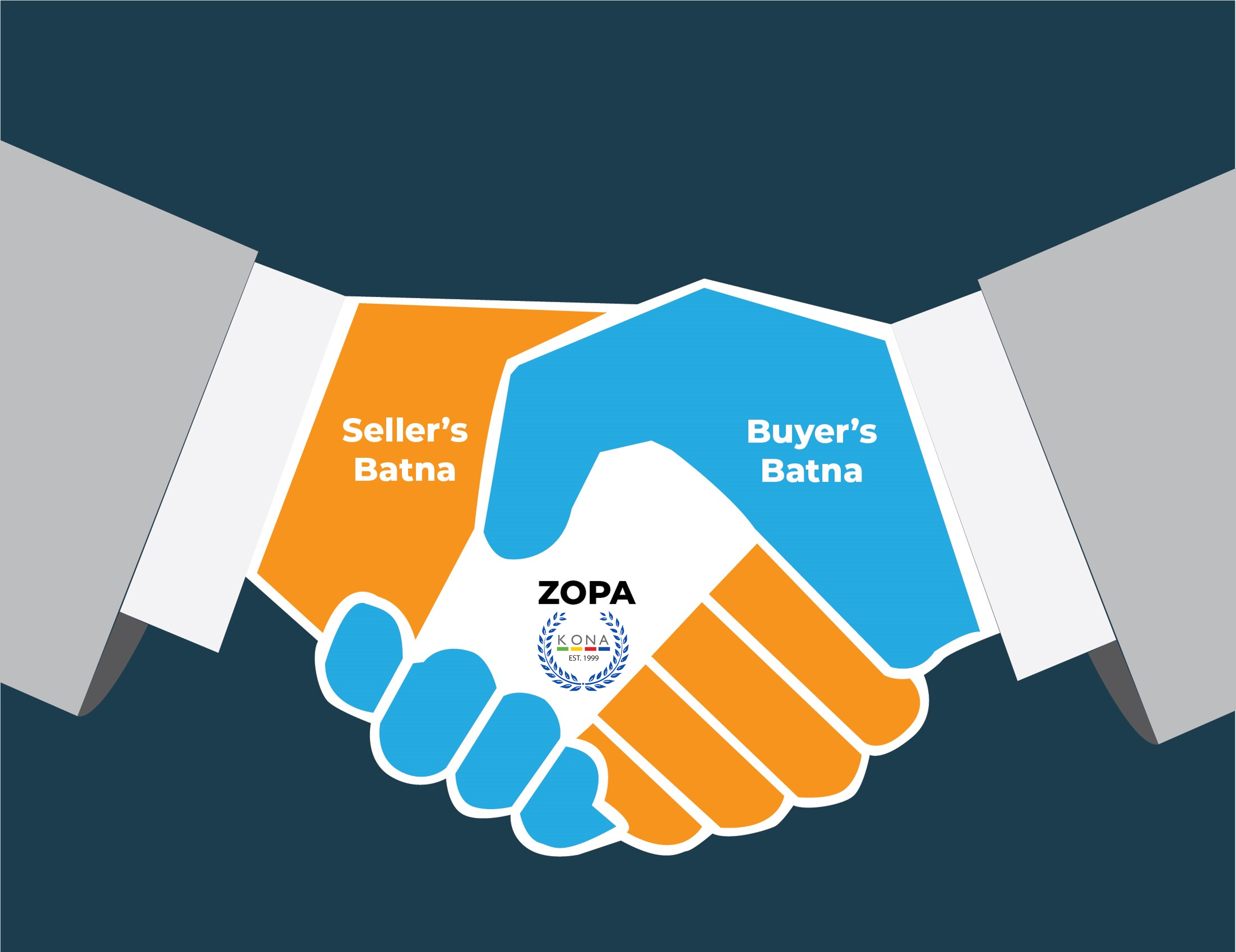
Best practice in Negotiation says that you should always have a BATNA. That is, a Best Alternative To a Negotiated Agreement. That said, you should never use your BATNA to bully or threaten the other party in the negotiation. Consequently, this will destroy the trust with your prospect. And crucially, it gives them power to weaponise their BATNA against you!
Mistake 3: Unprepared and Unaware
Remember the 5Ps?! Proper Preparation Prevents Poor Performance. You must properly prepare so that you put yourself in the strongest position for a Sales Negotiation. Proper preparation is a two-step process.
Know Your Product or Service Inside Out
Firstly, it is crucial to know your product or service inside and out. That means, be able to answer any questions or provide as many value propositions as possible.
Know Your Customer Well
But, the one aspect many Salespeople forget is knowing your customer equally as well. Doing so will ensure that you can react proactively and customise your value proposition to their particular pain points. This then arms you with the ability to also overcome any potential objections. Additionally, proper preparation allows you to have an insight into their buying processes, as well as their budgetary constraints.
Remember the power of an Efficient SWOT Analysis(Strengths, Weaknesses, Opportunities, and Threats) and the crucial role it plays prior to any negotiation.
Your SWOT Analysis determines whether one side needs the deal more than the other.
It identifies potential weaknesses or threats that you may have that you may need to mitigate against in your negotiating strategy.
Winning in Negotiations starts by thinking like an insider in your prospect’s business.
If you can figure out where your prospect sees the greatest opportunity for growth, or the greatest need for defensive measures, you inevitably embed yourself into their strategic thinking. This leverage in thinking will give you the ultimate flexibility, or wriggle-room, in every negotiation.
This is a significant one. A classic anecdote in good Negotiation is the TOTO Principal, Tale Of The Orange. The TOTO Principal puts the “Getting to Yes” in a Negotiation in simple terms.
Basically, a husband and wife both want an orange but they only have one between them. If they Negotiate in a Win-Lose way, they will split the orange into two. This turns it in to a Win-Lose Negotiation. Why? Because you often end up in a compromise that suits neither party. However, if the couple Negotiates collaboratively, they will discover that the woman wanted the orange peel to make jam and the man wanted to eat the orange fruit. Thus they reach a Win-Win position.
Prime Example
This is evident in the current Pfizer Vaccine bungle in this country. The Australian PM’s approach to the purchase of the Pfizer Vaccines was a compromise between Leaving and Remaining.
This could have worked (see Mistake 6) but because it was perceived as imposed rather than co-invented it lost both groups of stakeholders.
Both sides felt it was a hostile situation (see Mistakes 2 and 3), which delivered neither of their key objectives. Pfizer didn’t get the Sale, and Australia, well… the situation our economy, people, and society are in right now answers the question of who lost the most!
Mistake 5: Know your Negotiating Partner
We could have titled this “know your enemy” but, of course, the other player is not your enemy but your negotiating partner (see Mistakes 1 and 2). You need to understand who else your negotiating partner needs to involve on their side, to review proposals and reach an agreement.
In the Australian Pfizer Vaccine bungle, there was clearly no appreciation of the processes Pfizer would need to use to keep its key stakeholders on board, and the constraints they were operating within.
It was a one-way Negotiation by the Australian PM, which shot down all previous efforts of building trust and rapport.
Mistake 6: Lame Questioning and Lousy Listening
This mistake feeds directly from the previous one, but there’s more to this problem than ignorant assumptions. Many Salespeople love to talk.
But when your lips are moving, you are not learning!
It’s hard to sell if you don’t know why someone’s buying, so ask them. Ask short, open-ended questions. Like, “Can you say more about that?” or “What’s the concern?” or “Can you help me understand more about…” Then be quiet and listen. Get curious, ask clarifying questions.
Focus on understanding and summarise what you think they said. By the time you are done, you will know so much about them you will have enough information for five years’ worth of business.
Mistake 7: Ignorant to Position Versus Interest
This mistake is at the core of almost any Negotiation or Sales mistake.
First, definitions. A “position” is what someone says they want. It is their stated request or demand. An “interest” is the underlying motivator or reason behind the stated request or demand.
For example, your prospect may ask for a 15 percent discount. That is their position. As the Salesperson, we naturally assume they’re asking because they think our product or service is too expensive.
But if we asked, we might discover they actually think it is fairly priced. The reason they asked for the discount is because they have a limited budget this quarter, but they’d prefer to buy it all now instead of later. Once you identify the real reason for the request, many solutions emerge.
One option is to sell it all to them now at the full price but spread the billing over two quarters. Had you not gotten below the position, your response might have been to start by offering a five percent discount and hope to meet them halfway at ten percent. This would have cost you and still not have addressed their real need. This mistake can cost businesses millions of dollars and countless hours of wasted time and energy. Or in the Pfizer Vaccine Rollout Bungle, it could cost you the entire deal.
Lacking a Solid Strategy for how you are going to exactly drive your SalesNegotiation can be detrimental. You have now invested the time to gather as much knowledge about your prospect. And you are also completely educated in your product or service. It is then now time to plan out exactly how you are going to use that information in your Negotiations.
To Effectively Negotiate, this is not a time to wing it. For a Negotiation to end in your favour, it is crucial to have a clear Sales Strategy in place. A Sales Strategy that takes you from a defined opening point to successful closure. Also, unlike the Pfizer Vaccine Rollout bungle in Australia, you need to ensure your Sales Strategy has parameters that allow for negotiating flexibility but at the same time does not allow boundaries to be crossed. This will avoid situations where you are pressed for unprofitable prices or that may be damaging for future business relations.
Summary:
Don’t Boast or Brag
Be Wary of Threatening “No Deal”
Be Properly Prepared and Better Aware
Establish Proposition
Know your Negotiating Partner
Ask Quality Questions and Actively Listen
Find Out Both the Position and Interest
Set a Solid Strategy
FINALLY:
Akin to flying a plane – practice your Negotiation scenarios in a safe environment BEFORE you try to do the real thing! Learn Effective Negotiation Techniques. Having set and pre-practiced Negotiation tools in your kit puts you ahead of your competition even before you walk into the negotiating room. Proper, activity-based training is a vital part of every successful negotiation. This is also a valuable step in your team’s professional growth and development.
To Book Your Team on their ↑Navigate the Negotiation Your Way ↑ Workshopeither F2 Onsite or Virtual Training contact KONAon 1300 611 288 for a confidential conversation, or email info@kona.com.au anytime.
For many of us in a work from home set up, it can get exceedingly difficult to keep our minds continually engaged. But there are ways to invigorate morale and at the same time keep up productivity during lockdown.
At the KONA Group, we live by the philosophy activity drives results. So with that mantra in mind, we make sure all our employees stay active in mind and body. We believe a balance of mental and physical stimulation in our working day does wonders in increasing Sales and skyrocketing productivity.
HBB Group CEO Garret Norris on his Rowing Machine while Working From Home
Then there’s KONA Senior Partner Glenn Dobson, he likes to build fences with his wife Ann as BlazeAid volunteers. And as soon as Glenn gets back into mobile reception range, he’s making those Sales calls!
The KONA Group’s Senior Partner Glenn Dobson with wife Ann Volunteering for BlazeAid Cobargo
As for Maud Vanhoutte, KONA’s Effective Communication Specialist, she draws creative inspiration and is paws-itively productive during her work day thanks to her best friend Nalla.
Maud Vanhoutte, KONA’s Effective Communication Specialist, with her productive pooch, Nalla.
So what do you do to entertain yourself during lockdown while also fitting business in?
FUN BIT + PRIZE TIME
The Competition
Send in your most inventive way(s) that you have kept yourself amused and still fit business in during lockdown. Entries can be:
Individual
Team
Company-wide
The Winner
The winning company will receive a 90-minute Virtual Workshop for their TEAM with a Specialist Trainer in one of the below learning areas:
Sales
Customer Service
DISC Profiling (Profiles Need to Be Bought Separately)
Additionally, laughter is a key to our brain’s executive function, the part of us that keeps our eyes on the prize and produces results. And that there is Why Are We Doing This – to produce results. We practice what we preach. Our job at The KONA Group is to get you, our customer, to produce results. And if we can make you laugh along the way, then awesome!
The “What To Do“
Email info@kona.com.au your most creative way(s) that you keep yourself amused while working
All entries must be submitted with a photo of said activity/task
Include a contact name and number
If you wish, tell us what Learning Area you want your Team to sit in on for their 90-Minute Virtual Training Workshop
HAVE FUN ?
In the meantime, here are the Top 3 Habits to Increase Productivity While Working From Home:
1. Get the Right Amount Of Sleep
How much sleep do you get? If you are among the 40-odd percent of adults who sleep less than the recommended 7 to 9 hours per night, you may be suffering from mild sleep deprivation. Even if you’re clocking close to 7 hours, getting just 20 to 30 minutes less sleep than you need each night can impair cognition and performance. And you might not even realise it (drweissbluth.com/).
That said, it is not about getting hours upon hours of extra sleep. It is as simple as going to bed (a little) earlier. You will be amazed at your productivity level the next day.
2. Get a Stand-Up Desk or Use A Better Chair
When you spend most of your day seated, the chair you’re using can greatly affect how you feel during your working hours.
In fact, standing is much better for our posture and cognitive ability than sitting. A recent survey (officedepot.com/) found that more than half of workers who use an office-style chair daily suffer from back pain or physical discomfort because of their desk chairs.
3. Take Exercise Breaks
Let’s face it – we are now more than ever living in a sedentary work environment. This means we have to work a little harder to work physical activity into our daily routines.
A gym workout is a popular choice for many workers committed to fitness. But for all of us, we should consider the physical and mental benefits of a midday exercise break. Exercise breaks at around lunchtime can benefit more than just your health, it also boosts concentration and creativity levels when you do get back to work.
So, send in your most inventive activity you or a colleague does to amuse yourselves and keep fit all while still conducting business during lockdown, for your chance TO WIN your Team a 90-Minute Virtual Training Workshop!
“The ultimate measure of a man is not where he stands in moments of comfort and convenience, but where he stands at times of challenge and controversy. The true neighbour will risk his position, his prestige, and even his life for the welfare of others. Where do we stand as leaders? Do our leaders stand for the welfare of others through this difficult time?” – Dr Martin Luther King Jr.
Impact of a Leader that does not care
Leaders who don’t care for their team members are adding tremendous costs to their organisation. And most often, it is the people on the front lines who are blamed. Additionally, they are blamed for being disengaged, for low productivity, and for lack of loyalty (that is, turnover).
The most direct result of poor leadership is poor Sales. And as we know, in the Sales industry low productivity means missed targets. Consequently, this has a direct impact on a Salesperson’s individual performance and KPI. But more so, on the company’s overall financial gains.
For Your Team’s Leadership Training and Charter Development
Effects of Poor Leadership
Poor Leadership has devastating effects on any team but particularly on a Sales team. Why? Because a Leader is so much more than just a figurehead. Ultimately, a Leader has a massive impact on the core belief system of the wider team.
Anyone who holds a position of authority has the responsibility to ensure all team members are working together towards a collective goal.
Leaders are a valuable part of any business because they determine the pace and progress of work. However, compassion and understanding while striving towards these goals have never been more important.
Based on that, poor Leadership becomes a massive liability. Many are of the belief that Leadership is “so easy”… all you have to do is tell others what to do. But that thinking is quickly quashed when faced with the reality of leading.
The actions of a poor Leader is more than missed targets, it can destroy the entire culture of a company.
Poor Leadership can bring down the entire organisation single-handedly.
Now we don’t know what we don’t know. But once we are made aware, it is up to us as Leaders to adopt change and grow. Grow from our experiences, grow from what we are being told, grow from our mistakes. Poor Leaders can change – if they want to!
Spotting poor leadership early will help you to pivot in the right direction. Here are 5 Ways Poor Leadership Impacts Your Business.
For Your Team’s Leadership Training and Charter Development
1. Loss of Motivation to work
Poor leadership can have a negative impact on the performance and morale employees.
Ultimately, commitment levels will plummet, and there will be little to no motivation to attend to their tasks. Additionally, employees will have no creative energy, or desire, to come up with innovative ideas. Their drive to contribute to company growth will wane and eventually expire.
2. Poor Sales Performance
As mentioned, one of the most direct results of poor leadership is dwindling Sales. Adding to point number one, employees will lose all mojo to perform their best if they feel their Leader is lacking in interest. And in Sales, poor performance ultimately means missed KPIs and low productivity.
Also, poor leaders do not fully maximise their staff members. They typically lack the necessary capacity to evaluate their employees’ strengths and weaknesses. Because of this, these employees are assigned roles that don’t bring out their strengths. This factor alone is detrimental to the company long-term.
3. Lack of Ownership and Transperancy
A strong leader is able to instil the value of ownership across all departments to each employee. On the other hand, a bad leader makes people feel indifferent to taking responsibility over their own roles within the company. Subsequently, a Leader’s “I don’t really care” mentality trickles down to all employees.
Poor leaders also have the tendency of failing to be transparent to their employees. The KONA Group Coaching Program teaches and believes that honesty is an integral trait of a great leader. It is core to the Leadership framework and is top line in the development of Leadership Charters.
4. Mismanaged Resources
Sales is not the only company function impacted by poor leadership. It can affect others as well. Time and costs also suffer as a result of poor leadership. Put simply, a lot of time ends up getting wasted correcting the wrong calls made by a bad leader or a mismanaged employee.
For Your Team’s Leadership Training and Charter Development
5. Poor Work Culture
Poor leadership, combined with low morale, will create a negative workplace environment.
This means that even workers who were not originally affected by the initial issues can become “infected” by this negative environment.
This low morale gradually spreads to all areas of the company. Remember, the trickle down affect of poor leadership?
Evaluating Poor Leadership
There is no room for poor leadership in any organisation. What is the quality of the Leadership in your company?
If you are a Sales Leader, take time to reflect on how you can challenge your own ideas about what it means to be a great Leader. Moreover, actively work to ensure that you are enabling your team to be as effective as possible.
Also, take a step back and think about KPIs impacted by Leadership. This includes turnover and growth. Is turnover high? Are new employees leaving after a short tenure? Are tenured employees leaving after years of loyalty? These types of questions may open some uncomfortable doors but are so important for both your growth as a Leaders (and person), as well as employee and company growth. Analysing your own Leadership ability and that of your peers enables your company to recruit effectively, as well as retain those very employees that make your company successful.
Despite the urge to act now to avoid the “use it or lose it” budget spending, it’s vital to think strategically about your organisation’s future objectives before moving forward. Be wise when considering your End Of Financial Year (EOFY) spending, but don’t be complacent.
Notably, your actions right now could positively impact other areas of your business. That is, investing in professional development now could result in bolstering employee morale as well as helping you get ahead on your KPIs for the upcoming quarter.
Ultimately, with the right investment you will have more than a budget increase to look forward to next year.
INVEST IN VALUE
So use your budget now and we will hold delivery dates for when you are ready to use them in the next 12 months. Consider being part of the KONA Credit Benefits (KCB) Program.
With this in mind, here is how to get the most value for your organisation by spending your budget before the end of the financial year. Put simply, there has never been a better time to upskill your team.
To Get Your KONA CREDIT BENEFITS > Before the End of the Financial Year > to Use over 12 Months
Top 4 EOFY Budget Spending Ideas
1. Learning tools to Streamline Processes
Investing in sharpening the tools of your team while you are able to is a wise business move. Basically, it ensures your employees are well equipped to start bolstering the budget for the remainder of the year.
The end of the financial year is a great time to take inventory of your team’s current skill level. Also, it’s a wise time to identify any gaps in your learning processes that cause pain for productivity.
Even though educational needs vary from person to person and department to department, consider the value of uniform learning. That is, embedding a uniform teaching methodology across your entire business. By doing so, you are creating ONE language everyone can both speak and understand.
For example, the valuable profiling tool of DISC teaches all employees across all levels how to understand human behaviour. By instilling the language of DISC in your workplace you ensure everyone is operating form the same manual. Ultimately, it guarantees solidarity and strength in the eyes of your customers.
2. Recognise Employees
Everyone enjoys feeling appreciated. If your company enjoyed a successful year or your team has gone above and beyond, why not use the budget money to reward your employees?
Recognition takes many different forms, which can fit almost any budget imaginable. Moreover, employee recognition is best when there is a measurable result that comes from it. Consequently, it is worth considering investing in team-building activities. Ultimately, it strengthens trust, encourages communication, resolves conflict, and increases collaboration between employees. Additionally, effective team-building activities produce more engaged employees. And as a result, contributes to a healthy work culture while at the same time boosting your ROI.
Treat your employees to fun and dynamic team building sessions! The best team-building activities don’t feel like the typical day at the office. Or in recent times, another virtual meeting! Try one of KONA’s energy high knowledge rich Virtual and F2F Team Building Workshops! SO many belly laughs and so much employee satisfaction.
3. Invest in EduTainment
Budget surpluses also provides ways to invest in education opportunities that can keep employees up to date with industry standards. Workforce statistics reveal that companies with engaged employees make 2.5 times the revenue. Additionally, those highly engaged employees are also 87% less likely to leave their jobs.
There are some interesting ways to impart dynamic as well as educational information on to your employees. And these do not necessarily involve state-of-the-art technologies. Ultimately, by being engaging you ensure what they are learning will stick. We call it EDUTAINMENT! That is an investment that keeps on giving!
KONA Group DISC & Sales Workshop
Edutainment makes sure you get your money’s worth, by adding a level of entertainment and education to your team’s learnings. In fact you are embedding the learning in a way they can retrieve the information on a daily basis. Consequently, this ensures they don’t return to their old habits. And the bonus? You have up skilled your employees, entertained them and skyrocketed mojo to produce more work!
4. Assign Resources to Professional Development efforts
There never seems to be enough time or resources to complete every goal, project, or assignment that comes our way. Especially when it comes to professional development.
Admittedly, the reasons are often simple enough. That is because in most situations we are limited to budget constraints. But, when we are able to assign End of Financial Year funds to professional development, we are effectively making an investment in the year ahead.
Importantly, you should provide your people with core learningareasand ask them what they need upskilling in the most. Remember – we don’t know what we don’t know!
Workshops Can all be Delivered onsite or virtually, and Include Core Learning Areas in:
Don’t forget, June 30 is just around the corner. These are just four of the ways that you can spend what remains of your budget with the intention to boosting your ROI.
Use your budget now and we will hold delivery dates for when you are ready to use them in the next 12 months. Consider being part of the KONA Credit Benefits (KCB) Program.
Why?
Cost-effective, simple and efficient – the perfect way to spend your leftover budget.
Purchasing Professional Development KCB Points in advance is hassle-free.
With the KCB Points there is no need to conduct formal tenders on a project-by-project basis. This will save you time and money!
There is no spend limit – no matter how detailed the customised content is for your training or how many people you want to upskill, there will be no additional paperwork or costs.
We make the transaction simple, with one set of agreed terms and conditions.
You can be confident that all your people’s Professional Development obligations are met.
You are guaranteed transparency and clarity throughout your entire KONA Credit BenefitsProgram
As an Australian-owned and operated organisation, nobody understands the requirements of Australian business and employee training like the KONA Group.
The more KCB Points you build the wider access to our range of holistic business services.
KCB Points are only offered to the first 50 applicants before June 30, 2021.
KCB Points can be used across ALL our holistic business services! Restriction Free.
We’re committed to providing the highest quality training solutions to your team, especially through the latest round of pandemic restrictions. Additionally, we ensure your business and people will be guided through an engaging and enriching learning experience.
For more information about how you can secure your KONA Credit Benefits, contact us to invest in your KCB Points, on 1300 611 288 for a confidential conversation, or email info@kona.com.au anytime.
Salespeople have their own secret language known as Sales jargon. Experienced Salespeople know success comes from communicating clearly. That is, in language their prospects can understand. However, there are numerous slang terms that Salespeople reserve for internal meetings and happy hours.
Here are some Sales jargon words and phrases most Salespeople have in their arsenal. Importantly, we also outline reasons why you shouldn’t use insider speak around clients and customers.
ABC
ABC is an acronym that stands for “always be closing”. This is a Sales strategy that is rooted in the idea that every action a Salesperson takes throughout their Sales process is in pursuit of closing a deal.
BANT FRAMEWORK
BANT is used when Sales representatives are qualifying leads.
Budget: determines if the business has the budget to purchase the solution
Authority: identifies key decision-makers in the business
Need: verifies that the business has a real need for the solution
Time: checks if the business is likely to make a timely purchase
To Refine Your Sales Team’s Communication Skills
BUYING SIGNALS
Cues from a prospect that they’re ready to buy. Buying signals can be Verbal, that is, asking about price; or Non-Verbal, that is, nodding and holding eye contact.
CHURN RATE
Churn rate is the percentage of customers that stop doing business with a company over a certain period of time. The churn rate is calculated by dividing the number of customers you lost by the number you had at the beginning of the chosen time frame.
THE DM
The Decision Maker is the person who ultimately approves a sale or purchase. This is not necessarily the person who appears to be calling the shots.
EMOTIONAL SALE
A selling method that attempts to appeal to a buyer’s emotions. That is, either by generating desire and excitement around the product’s benefits, or evoking negative emotions. This includes feelings like fear and frustration. These are uncovering pain points that your product or service can alleviate. (See: Intellectual Sale)
FORECASTING
Forecasting is the act of estimating future Sales. This is so companies can make better business decisions and predict performance. Additionally, forecasts can be based on past Sales data, industry comparisons, or economic trends.
GATEKEEPER
A gatekeeper is someone who controls access to the Decision Maker. For instance, a gatekeeper may be a personal assistant who relays information back to their boss. Put simply, gatekeepers are responsible for filtering out unimportant distractions. Ultimately, this means you have to prove your value to them first before you can progress any further.
INTELLECTUAL SALE
As opposed to an Emotional Sale, an Intellectual Sale attempts to appeal to a prospect’s logic. That is, it targets a customer’s need for a quick, affordable solution to a problem. An Intellectual Sale is more “business” than “personal.”
LAND AND EXPAND
“Landing” a Sale refers to the initial close, when you bring on a new customer for the first time. And “Expanding” means generating even more revenue from the account. That is by upselling or broadening the scope of the service you’re providing. Crucially, Salespeople need to land and expand in order to generate the most revenue from a given prospect.
MIRRORING
Building rapport with a prospect by adopting their body language and speech patterns. Subtlety is key, here. That is, if you overdo it, you will come off as ingenuine, or even creepy.
To Refine Your Sales Team’s Communication Skills
NSAs
Non Sales-related Activities. That is, actions and tasks that Salespeople spend time on that do not directly lead to Sales. This can include administrative activities and paperwork or making personal calls and surfing online. Basically, whenever you are not prospecting, qualifying, setting up presentations and appointments, or closing, you are probably engaged in an NSA.
PUPPY DOG CLOSE
Allowing customers to try out a product with no obligation while they make their decision. The idea is, an uncommitted buyer will fall in love with the product and will not want to let it go. This is likened to a person wanting to buy a puppy, they wouldn’t be able to say “no” after taking one home for a few days.
SOCIAL SELLING
Social Selling is the act of using social media to interact with prospects. Oftentimes, this includes providing answers to simple questions that will help the prospect better understand their pain points and potential solutions.
SALES WHALE
A prospect that has the potential to bring tremendous ongoing Sales revenue to an organisation. Like whales, they are big, elusive, and rare. And, Sales teams pull out all the stops to land one.
SANDBAGGING
Holding off on closing active deals once you have already hit your quota/commission for the month. Some Salespeople do this so that they can more easily hit numbers the following month.
SMILE AND DIAL
Cold-calling with a cheerful, positive tone of voice – and yes, a smile! Smiling communicates warmth and trustworthiness over the phone. Ultimately, it makes the prospect less likely to hang up on you. Even if people cannot see your smile, they can hear it!
TIRE-KICKER
A prospect who has no intention or ability to buy. It isn’t long before the red flags appear! That is, they don’t have a budget, the purchase is not within their authority, or their timeline is far into the future. Put simply, tire-kickers are time-wasters.
WARNING!
Even though prospects might seem to understand what you’re talking about, you should avoid using Sales jargon during interactions. Sure, your clients might know what you mean, but the danger is you will either lose them completely or they will think you don’t care about them enough to communicate clearly.
THEQUALITY OF YOUR COMMUNICATIONCAN ONLY BE MEASURED BY THERESPONSE THAT YOU RECEIVE
SALES JARGON TO AVOID WITH PROSPECTS
The overuse of jargon can come across as confusing and will often put the buyer off. Apart from the abbreviated type of jargon, the repetitive and cheesier one liners are often over-used.
AVOID:
“Lets touch base”
“We are on a journey”
“Its a no brainer”
“Its a game changer”
“Lets line our ducks up in a row”
INSTEAD USE:
Simple language that sounds more natural. Here are some alternatives to the above.
“Hi, I just wanted to catch up and see how things are going”
“We are with you every step of the way”
“I believe our product/service will be a great addition to your business” … then explain how.
“I believe our product/service will work well with your business”… then explain how.
“Let me explain how we work and then see if we can get a date in the diary”
So remember – while amongst colleagues, Sales speak is a sign of efficiency and understanding, to the prospect your Sales jargon can create a communication barrier! So make sure you train your Salespeople how and when to use it effectively.
Refine Your Sales Team’s Communication Skills with KONA’s Tailored Effective Communication Workshops. Contact us for your team’s bespoke training, on 1300 611 288 for a confidential conversation, or email info@kona.com.au anytime.
Hi Garret, I just wanted to say thank you again for today the feedback I was given this afternoon was that it far surpassed what they expected and that it was completely different to expectations but it covered everything in such an immersive and engaging way. I hope you had a safe trip home. And I will be in touch for some more future training opportunities!
Erica Wilkinson
Pathways Business Manager
Thank you Garret Norris. Your dissemination of knowledge was inspiring, insightful, thought provoking and lot of Fun! Your ability to create a safe, relaxed & energetic environment in which to deliver & demonstrate your ideas and knowledge is remarkable! Made for lots of learning and had a positive impact on us all! Thank you
Melissa Peace
Strategic Partnership Expert
A fantastic 3 days, you had us engaged, interacting, learning and threw us out of our comfort zones in the best possible way. I echo what my colleagues have said below, all of which is 100% true. Implementing these three days into what we do is now the focus and I look forward to connecting again soon, and look forward to more sessions where we can continue to learn, develop and and thrive in what we do, whilst living and breathing our WHY. Still buzzing, thank you!
Hessa Robinson
Education Sales Manager
The team loved the day and were raving about it to our marketing colleagues and managers who were unable to make the session. Garret, you were an amazing and engaging presenter.”
Dominic Taafe
Oncology Portfolio Manager
Hi Garret, I would like to say thank you for your time and effort last week at the Martec sales conference. The session from you went beyond my expectations in both your delivery and the involvement from my team. Thank you once again!
Ken Dick
General Manager
Hi John,
We would like to take this opportunity to thank you for the sessions and contribution in our journey towards service excellence. The sessions were very well planned and relevant to our modus operandi. The team is very appreciative of your guiding principles and quick lessons from the sessions. The immediate display of the lessons learnt will be witnessed during our current peak time. I’m definitely a better listener now Thank you.
Aakanksh Nyayapati
Senior Analyst, IT Service Delivery
Again I found the training session really engaging, you can tell that Garret is very passionate about what he does. It may sound cheesy, but I left feeling inspired and refreshed.
Kimberly Britts
As always I thought Garret was amazing and motivational, great refresher and gave me some new ideas to try and apply to what I do. Always great to participate in these sessions.
Stuart Gill
Honestly I don’t think it matters his cost as always has something insightful and thought-provoking to leave you with no matter how many times you’ve seen him or your position or length of tenure.
I would love to see what he could offer the wider company (not just sales) from a psychology point of view because I feel that the provocation he provides is beneficial to all he comes in contact with. I really enjoy it because we just get each other.
Daniel Jura
Being relatively new to this industry I was a little apprehensive going into my company training day, I thought it may have been scientific and technical and it's an area where I feel a teeny bit inadequate. The relief I felt when Garret started "warming up" the room was ridiculous. He made everyone feel comfortable, relaxed and engaged. At times I feel we over complicate things to make ourselves feel more important or special. In the end, Garret reinforced the need to slow down, fully engage, leave the ego at the door and listen. This training is a must have for all teams, no matter the level. It will make you stop, think and love sales again. Can't wait until the next one.
Stacey Taylor
Account Executive
Garret Norris is a rock star coach. He has transformed our Inside Sales team.
Love his work!
David Piggott
Managing Director
Having just competed a national customised training program where we engaged Garret and KONA all I can say is thank you Garret does his homework and prepares.
The impact we were able to achieve with our teams in rolling out a game changer was fantastic. Thanks Garret appreciate the effort and the results to date.
Iain Whyley
National Sales Manager
It has been an absolute pleasure and privilege to participate in a number of Garret's training and skill enhancing workshops and I cannot recommend him highly enough. Even as an experienced sales professional I always learn new things from him, think harder about what I do, and become more effective in my role. Garret's presentation style is both unique and genuine, honest to the core, while his role play and coaching principles are easy to understand and extremely worthwhile.
For anyone who needs to hone or develop sales and negotiation skills Kona, and particularly Garret, are certainly the RIGHT choice.
Craig Alderson
Business Manager
As a sales and negotiation professional, I have been involved in a few courses. I am very impressed by the way Garrett gets to the point directly and I know he speaks from experience. He has lived it.
I would like to work with Garrett more in the future as I believe we speak the same language in business. I’ll be in touch soon. Thanks Garret.
Shane Campbell
Senior Key Account Manager
Garret and Healthy Business Builder has been a huge influence on our business and its staff, The results have drastically increased thanks to his techniques and on going support. Very impressed with the overall service and I look forward to continuing our partnership in the future. Highly Recommended.
Johnny Justic
Founder and Managing Director
If we have the opportunity to have more sessions, I think it would be very beneficial. I have found that the concepts presented and the skills we are working on are quickly delivering results and are relevant to us, not simply adapted from their usual clientele. He is much more engaging than other speakers we have had in the past, and from the way other members of the team have been speaking about him it’s a feeling and opinion shared by many others. Also : if he can turn skeptics like Palagy around, I feel that says something!
Rebecca Landers
Tax Depreciation Specialist
Thank you again for spending time with our team over past 2 days.
Some valuable tips learnt and looking forward to seeing the impact it has on our team moving forward.
Jeremy Sinclair
Team Leader, Business Development
Definitely the best training session I have attended (including my own ha ), I could relate to the methods conveyed to us very easily. Well done Garrett and look forward to another head bashing
Gary Tozer
Tax Depreciation Specialist
We certainly appreciate the time and effort and will be making sure we include some of the hints and tips into our processes moving forward.
Matt Jenkin
Team Leader, Business Development
I really thought Garret was brilliant, its not just about selling, its about getting the conversation started. I felt it was really good. I have started using some of the techniques already and adapting to my style.
1 – First call Thursday, did a different approach, lady called in, started the chat by tell me about the property, then went onto telling me the info on the house, I went over everything, she was sounding relaxed, got her remaining details and said “lets get this started today for you” response Great lets do it.
2 – next call was a guy, same style all went well, then the Cost question, Ï can get this for $660.00 from another company” My response, that’s great, Do you want to save $100 today or save $thousands more in deductions with us in the long term, slight silence, then said good point, went ahead!
Stewart Gill
Tax Depreciation Specialist
I enjoy his take on what to say to clients who have been given the wrong free from their accountant. He said not to apologise and don’t get stuck on it and simply say that the fee is $770 and that you’ll call the accountant afterwards to make sure they know the fee’s, but then move on straight away. It was refreshing to have an outsider’s perspective on that. I tried it yesterday and didn’t apologise to a client when the accountant gave them the wrong fee. Not sure if it was just luck, or if Garrett is a genius or if it made me sound more confident or what but she converted.
Sarah Jackson
Tax Depreciation Specialist
I was so impressed with your training programmes, I felt compelled to write to you in appreciation. Although it was blatantly obvious you were a professional outfit right from our first meeting, your services have far surpassed my expectations.
I have been in sales and sales management for 15 years with 5 different companies and have attended many quality-training programs. During this time I have never experienced a program that adapted its philosophies and methodology so succinctly with a companies industry, market, products and value proposition.
Ultimately! The test of any training program is the results it delivers. Since KONA has worked with James Hardie the sales effectiveness of the team has increased dramatically. But an even more noticeable improvement is the quality of leadership displayed by the sales management team.
Glen Doherty
General Manager Sales
Glenn Dobson is the most charismatic and inspirational sales training and business development coach I have ever had the pleasure of working with.
At times confronting, Glenn breaks down your current sales process and delivers honest direct feedback! With a thorough understanding of your customers, product and industry, Glenn provides you with the necessary tools and roadmap to be more effective in professional sales.
Glenn's material is all his own and is presented in an easy to understand format, tailored for your business. I look forward to working with Glenn in the future. Ps, all the best for the IronMan world champs Glenn!
Graham Winder
BDM
Not only has our partnership with KONA proven to be highly beneficial for our management team… it has also proven to be an enormous return on investment with sales improving by over 23%.
Mark Lucas
Director XEROX UK
I have enjoyed working with KONA several times.
KONA have worked with my sales team strategically to raise the bar on their performance and belief in their ability to deliver results.
As personal coaches the HBB Group have guided me through my career by reminding me to clear away the clutter and keep it simple Sam. Keep on running Glenn.
Frank Courtney-Jay
Sales and Marketing Manager HP Singapore
Next Business Solutions used the team at KONA to take us through their Hearts and Minds training. Great team at KONA of people who are not only very experienced their product but they also bring their people skills that have been developed through their extensive global activities.
Rob Clydesdale
Microsoft Next Business Solutions Franchisee
Garret is a true professional and constantly challenges the norm which creates the high performing teams we have at MLA.
Garret has lead and coached our team to deliver outcomes that make a difference.
The approach from Healthy Business Builder was unique to our business and it has proven to be successful for MLA.
I would highly recommend Garret for any other business wanting positive, successful outcomes for your business.
Lisa Sharp
Chief Marketing Officer
The KONA Group has provided excellent customised training and coaching for our managers and staff at Nova Employment. First of all the KONA team gave a vast amount of knowledge to our managers on how to manage their staff. They then educated the employment consultants on how to handle difficult employers when telemarketing for jobs, before also giving them the skills on how to hold a face to face sales meeting. KONA have increased our jobs by 50% ever since they have been providing Nova managers and staff training and coaching.
They are always willing to provide assistance when needed and are always available to call if we need any further help.
Their training has been very successful for our organization and has been able to put Nova Employment in an extremely strong position. I highly recommend the KONA training and coaching as they are very good mentors in providing the best outcomes.
Peter Delimitrou
Employment Service Manager
The development programmes have had an outstanding effect on our business and results, and on the way our sales people treat our customers.
Frank Morberger
State Manager
As a consequence of KONA’s efforts and commitment very quickly we have seen some explosive changes with the team through the introduction of various client focussed and sales strategies, measurements and skills. Their motivation, direction and activity have all increased… and we expect our profits to escalate accordingly.
Ian Crowther
General Manager
Glenn Dobson and Garret Norris are coaches that really stands out to me as they take pride in what they do and deliver. I first utilised KONA around 7 years ago when he evaluated our business which ended up delivering some hard hitting facts , as a result changes needed to be made BUT as a consequence of those initial chats KONA helped set up a sales pipeline where we could track our activity and results which led to a 300% increase in sales within the first 6 months of implementing his sales tools.I HIGHLY recommend KONA but don't want the world to know what they can provide a business as this will give other companies an unfair advantage like we have !Glenn is now a mentor, a friend and above all someone that inspires you to always achieve your best.
Keiran Hathorn
Managing Director
Glenn is high highly talented leader who has assisted us in defining industry leading strategy. I would recommend KONA to anyone requiring an honest, intelligent, strategic, motivating and hard working business leader.
Troy Dawson
Chief Information Officer
Dear Glenn
As we complete stage one of the Campbell’s and John Lewis learning and development programs, I would like to take this opportunity to say a huge thankyou to you and the KONA team for all of your time, commitment and energy to the project.
The response from our managers and sales team has been absolutely outstanding and everyone has benefited immensely from your involvement.
I agreed with both Brian and Geoff at the time when they stressed the importance of developing a program tailored to our business and you more than achieved our expectations.
I know you invested a lot of time in preparation and the time you spent with our people out on the road, visiting customers, was obviously well worth it. Included in the feedback from participants from around the country are, amongst many others, the following quotes: “Already I am putting some of the new techniques we learnt into practise and getting results from them”
“ I now feel as if I have greater control and structure over my sales approach and customers”
“I am communicating with my customers like never before and they are telling me things about their businesses that prior to the course I didn’t have a clue about” “I am managing my people in a far more effective and productive way and I feel that I can now start to see the light at the end of the tunnel” Once again Glenn, thankyou very much for all of your efforts and I personally can’t wait for the next stage!
Kurt Wilson
National Training Manager
Since NOVA and KONA started working together we have almost doubled our results in less than 9 months!
I had identified a need for developing our sales skills, but KONA delivered so much more than sales training to our business. Glenn encouraged us to take a step back, analyse our methods and develop a performance culture. As a manager responsible for performance, I appreciated that he clearly and fearless articulated our performance gaps from an outsider’s perspective to our management team, helped us to reverse engineer our results so that we could clearly identify what was needed to achieve performance KPI’s, and delivered practical, real world and customised training based on our business.
I look forward to a continuation of our partnership with KONA and learning more to help NOVA move forward and be even more successful.
Anne Goyer
Training & Development Manager
KONA professional sales and sales management training has been an excellent educational journey on how to enter the Hearts and Minds of our customers and Shareholders. To become business resources and strategic advisors. To build a relationship that understands our customer’s hopes, fears, dreams and vision to create opportunities for future growth that we can be a part of. The course has been taught in detail that can easily be implemented and has brought the entire sales and management team at Plumbing World into focus looking to achieve a common goal. I highly recommend any time spent with the KONA Group.
Russell Thomas
Branch Manager
KONA Group’s services were used by Brickworks Ltd in the form of Sales Management training. Glenn is unlike any other in his ability to connect with the audience. Glenn motivated me so much during a session. I decided at that point I would change my life forever. There was a group of us, that very moment who decided it was a time for change. Glenn explained the model for change and by using this model, it was possible to increase your chances of success 10 fold in anything you wished to achieve. The change we wanted to make was a healthier lifestyle. We decided to embark on a weight loss challenge. Using the attributes of the model, many achieved their ideal weight within months. My personal journey has seen me continue with the challenge and have now lost 29kgs, with 10 kgs until I am at my ideal weight. My lifestyle is now very different, being very careful with what I eat, walking approximately 50kms per week and doing Crossfit 3 times a week. I am on the way to fantastic health. my dad said to me yesterday, son you are looking the best you have in 30 years. They were great words to hear considering I am only 44 years old. I am healthier, I am stronger than I have ever been, I am more motivated, I am more focused and feel like a real winner. I don't believe I could have achieved this without using Glenn's model for change. Thanks Glenn, I would not have been able to do this without you, you have changed my life.
Trevor Marshall
Sales Manager
I have been lucky enough to attend B2B sales training run by the KONA Group. I have found Glenn to bring the same drive and passion that he applies to Iron Man training across in his training sessions. His training is not something you could read straight out of a text book - there is no "turn to page three". Glenn delivers real world pointers that are applicable in the changing workforce of today. The tools that he gives you, help you go through the door to be become a true business/strategic partner for your customers. Without these tools you would be standing on the curb, looking in, being a 3 P flogger! I would highly recommend attending a training session if you get the opportunity.
Keith Geenty
Sales Representative
Glenn is one of those fearless "can-do" high achievers that every business needs. His team at KONA make a valuable blend of skills and experience that deliver Sales results fast and ongoing. The hands on approach makes the KONA business a Sales consultancy suited to SMB up to large corporate, because it is all about people and their activity. Highly recommended regardless how good you think you are!
Paul Scanlan
General Manager
I would like to recommend The Kona Group for sales training that is succinct and professional and works.
I would have to say that after the training that we had received we have noticed a huge difference to our KPI's and have made for the great results that we are now seeing.
Belinda Hamburger
Branch Manager
KONA has provided a unique sales program to the Sales Team at Plumbing World, with an in depth knowledge of the subject and passion for sales that has ensured that the key tools required to be a successful sale person and build business to business relationships has already started to occur in the company in only a short period of time.
Casey Stuart
Regional Manager New Zealand
KONA has a unique approach to sales training, which has allowed Plumbing World to make a significant step change with its sales team. The training is fully customised for Plumbing World, which is important, as the it has developed far more engagement and buy-in from the sales team. The results have been immediate, giving Plumbing World a better understanding of and relationship with, our customers. Leading to new accounts being opened and an increase in sales from existing customers. For example as a direct result of the KONA training, a customer who's spend had dropped away for the previous 12 months, has increased their spend 16 fold.
Mike Dyer
Sales & Operations Manager
I was so fortunate to be able to attend the KONA training workshop at the 4life office in Sydney in February. I cannot begin to tell you how motivating and inspiring I found it to be. You gave me tools that I can use for both my personal and business growth. You demonstrated in a very simple manner how to set short and long range goals that are attainable. As you said hope is not a business strategy.
The day spent training with you was so worthwhile I have been implementing some of the strategies and am passing it to my downline. I would recommend this workshop to anyone who is serious about business building.
Jyoti Sidhu
KONA has a passion for seeing both people and business's improve through the process of training and educating staff. They will encourage and coach the business and your people to become better at what they do and to improve your "bottom line.
I have known Glenn both professionally and as a friend for 13 years now, and I have no hesitation in recommending KONA as a Business professional and also as person who commits fully to whatever challenge, be it business or physical such, as Ironman triathlon or running across the Sahara desert.
Robert George
Team Leader Inventory Control
Following the reorganisation of the field sales force, the KONA Group provided a number of workshops and coaching sessions in order to improve the understanding of how the company was changing the way that it operated. KONA supported us with the change by building trust and gaining buy-in from the team. KONA did an excellent job of emphasising the role of the field force in developing new business and building the sales and performance culture.
Jonathan Shinn
Operations Manager
Glenn is one person who knows how cut through to the real issues facing sales organizations of today, unearth the real potentials of a market of opportunity and help managers develop their companies unique "point of difference" to increase sales beyond what they ever thought possible.
Glenn is a master coach for both business and life's goals.
Paul Winter
QLD State Manager
I had the pleasure of meeting Glenn Dobson through our participation in one of the toughest footraces on the planet, The Marathon De Sables. In the time we spent together leading up to the race I became quickly aware that Glenn was an extraordinary human being.
His athleticism and endurance not only humbled me but inspired me to push myself to peg new boundaries. Whilst Glenn's achievements in Ironman and other endurance events puts him in a very small minority group his drive, motivation, energy and business knowledge puts him amongst an even smaller elite group of people. I have been fortunate to have been a professional in the financial markets for close to 20 years and this has exposed me to a vast array of individuals, their ethics and work practices.
During this period I don't think I have meet a person with the focus and drive to consistently deliver quality outcomes to his clients and business associates. Having an opportunity to interact with Glenn on any level whether it be business or social is something that will ultimately make you a better person. I have been fortunate to have shared an extraordinary challenge with Glenn but have been as equally enriched by the relationship we now share as a result of the race.
Justin Gallagher
Head of Equities Sales Trading and Execution
During my tenure in the building and construction industry the KONA Group was engaged to help align the sales function with the business and marketing strategy - a major shift in how we presented to market. KONA’s Hearts and Minds program challenged past paradigms and equipped our sales resource with a robust sales strategy, along with sustainable sales management and tactical skills which continued to deliver year on year growth.
Linda Ginger
Marketing and Branding Director
Glenn Dobson is a rare individual worthy of being on anybody's list of potential mentors. Glenn is an entrepreneur, successful business-operator, world-class Ironman Triathlete, terrific father and rumour has it, a pretty good husband! We have worked together on various projects over the last decade and I continue to marvel at his pragmatic ability. Glenn is a master at taking any 'theory' in the field of sales and translating them into immediately applicable methods for any client. He truly understands that "Results Count" and has consistently been able to cut through the bullshit in our project work, for his clients and in his own businesses. If you ever wanted to see a living breathing example of a 'balanced' individual who exemplifies Covey's "Important vs. Urgent" Glenn is your man. Add to that Collins' "Disciplined (person), applying disciplined thought and taking disciplined action." and you've found yourself a winner! Good on you Glenn. You really are a role model.
James Michael
Founder and CEO
We have been very impressed with your capabilities and see you as a key player in rolling out our customer service programmes.
Andrea Westwood
Capability Development
Throughout my career with Commonwealth Bank I met several business coaches, but 'Glenn Dobson' is the only name that I don't need to challenge my memory to remember. Glenn is an amazing coach with unique techniques; structured and interactive. He is one of the most positive people I have ever met, his amazing achievements are certainly as a result of his dedication, his commitment and his 'can do' attitude.
Odette Shahnazari
Manager
I was introduced to the KONA Group some five years ago through a mutual and respected business contact. My first impression was that Glenn has a unique sense of purpose, he is driven, motivated and passionate about achieving results personally but also in supporting others to achieve beyond their own expectations.
Over the past five years I have witnessed KONA in many business scenarios including business consulting, change management projects, sales management projects and executive level leadership programs.
Glenn is a natural leader and a manager in these environments. People respond well to him and his down to earth style.
Personally Glenn has an engaging communication style, an unstoppable enthusiasm to exceed expectations and first class networking skills.
I am proud to call him a friend, colleague and business partner and would recommend you consider his services when required.
Susie Lomas
Director
I have been in Glenn's training groups for the past 10 months, 4 to 5 sessions. I have found him to be a very enthusiastic speaker with a wealth of knowledge for us to take on board and work with. His presentation is hands on and easy to work with.
Working with KONA has had a huge impact on the Nova's business as we have increased results in some areas by between 50 -100%. I would highly recommend him and his business.
N/A
Glenn is one of those clients that truly partners with you and adds value back to you as a service provider. He's not a slave to his own views, nor is he a passenger in the process. He's very outcome focused and understands the core drivers of personality and individual values in achieving goals. That said, this is a man that no doubts lives by the virtue that profit, without honour, is loss. There's nothing manufactured or contrived about his work, quite simply he is inherently like this by nature. His background and experience speaks volumes. Over and above that he is a quality person.
Craig White
Director
Glenn is an effective business owner and trainer, he is clearly passionate about his company and the services Kona provides. Glenn has an energy and enthusiasm that is both infectious and motivating, which leads to confidence in his delivery and professionalism.
Nick James
National Sales Manager
KONA Group facilitated several workshops at the Advanced Group of companies for both the sales and operations teams. They are highly motivational and provided the teams with tools and techniques to improve their ability to connect with customers in both business development and service delivery roles. KONA is very business focused and pragmatic and focuses on what gets results.
I would recommend KONA to any other business that is looking to improve their sales capability or turn their project managers and operations managers into customer champions.
Jonathan Shinn
National Operations Manager
You'll only meet one Glenn Dobson of this caliber. Glenn is an International Ironman, Businessman and Sales Guru. With an extensive career in sales across UK, Europe, Asia and Australia.
Glenn is a consummate professional who has 'been there and done it all' when it comes to competitive sales environments. Commercially aggressive, his ability to identify growth opportunities and drive activity to deliver results for his clients is astounding.
The energy and discipline required to compete as an athlete at the elite level is evident in everything he does. As a Speaker, Glenn is inspiring, direct and highly motivating. All his business engagements are conducted with the highest level of integrity and results are always the number one priority.
Sue Thompson
Business Manager
Glenn is a master at focusing the attention of any sales team, business owner or sales manager on the importance of having a strong sales pipeline to the future prosperity of any business. He lives and breathes what he teaches and is able to succinctly and very effectively impart his extensive knowledge of how to establish and then manage a sales pipeline that will continually deliver new and profitable business. If your business needs a significant improvement in its sales performance Glenn should be the first person that you contact.
I recommend him highly for any size business or corporate enterprise.
Daniel Watson
Managing Director
Glenn is one of those rare individuals that makes you feel positive about life, just by being in the same room with him. I have known Glenn for a couple of years now and I am constantly amazed at the total energy output this man has. A true strategic thinker who has the ability to spot a great idea and turn his skills into a passion that is so infectious. If you are considering getting alongside this true gentleman, then I would say that this is one of the best things you will do today, if not the week, month or even year.
Greg Gillespie
Owner
I have worked with the KONA Group for over 6 years and have found them to be some of the most consistent and driven people ever!
A dynamic trainers with a strong emphasis on activity and results, KONA has brought invaluable experience to my own, and my staff's training.
If you are involved in any Sales capacity, or are managing a team involved in Sales, then KONA Group is a "must call" individual.
Aaron Williams
Founder and Managing Director
Garrett and Sienna at KONA group, were absolutely fantastic from appointment right through to the follow up of initiatives post workshop. Both had communicated effectively prior to the workshop and made sure the day was a phenomenal success for our Leaders at Openmarkets Group. Most importantly, Garrett is very engaging and all our leaders were switched on throughout the session with some key insights. I highly recommend Garrett, Sienna and the KONA Group.
Heidi Mehl
Executive Assistant to CEO
Engaged Kona Group to deliver account training workshop for Etex - Siniat. Great collaborative approach to course preparation and workshop execution very effective and extremely engaging for all participants. Great job Garret!!
Joe Mori
National Business Development Manager
Right from my first call to the actual day of DiSC profiling session, the KONA group were fantastic and provided excellent service. Garret facilitated the session, and his delivery technique was impactful and valuable to all attendees.
Umesh Datwani
Operations Manager | Investment Services
Garrett is a great coach/mentor, it was an honour having him here, and the progress was WAYYY more than I had anticipated, so I am very thankful.Hope you guys have an awesome day, just like you! ☺
Hana Hellou
Customer Support Manager
I have recommended Garret and the team at KONA to many organisations I have worked with. Their methods constantly challenge the norm, creating and supporting high performing teams. Garret has lead and coached our team to deliver positive and sustainable outcomes that make a difference to our teams and stakeholders. The approach from KONA is unique to each business or organisation and it has proven to be successful time and time again. I have witnessed many dysfunctional teams make changes to the way they operate after sessions with Garret and it is such a delight to see our teams work collaboratively and cohesively. They begin to communicate in new ways due to the deeper understanding of how individuals operate, communicate and learn. I would highly recommend Garret and the team at KONA if you are wanting positive, sustainable and successful outcomes for your business.
Kathryn Emmett
Executive Assistant to Head of Asset Projects | Olympic DamExecutive Assistant to Head of Technical Portfolio
My team and I had the pleasure of hosting Garret for Sales Training and it was absolutely fantastic. A thoroughly enjoyable day as we tackled key concepts, engaged in role play and absorbed the benefit of Garret's extensive experience. We look forward to working with Garret and his team again in the future.
Melanie Pritchard
Group Manager - Digital Revenue
Truly the most insightful and relatable training/professional course I’ve had the pleasure to be a part of. Absolutely will leave a review - 5 stars
Narissa Chan
Senior Digital Account Manager
Garret took our team of 10 (experienced) sales consultants for the day looking at profiling and strategic sales techniques. It was motivating, insightful and fun. I wouldn't hesitate in recommending Garrett and Kona - we will be back.
Stephen Richards
Director Sales Marketing
Thank you for the most insightful and relatable professional workshop session. It was gratifying, and I feel empowered and more confident.
Thank you so much for delivering such a valuable and engaging session. It was certainly in the spirit we intended. I have had positive feedback, and the team mentioned how valuable they found your session specifically.
Ekta Manwal
HR Advisor
Thanks Garret Norris & the KONA Group for an awesome day yesterday! We learned a lot, but also has so much fun along the way. We look forward to working with you again.
Peg Vaghaye
Executive Manager, Broker Relationships
Thanks Garret Norris for a fun filled 2 days with not only lots of laughs but lots of valuable lessons on how to improve our skills when communicating with our customers and fellow work mates. I know all of us are excited about putting all we’ve learnt into practice.
Heather Priest
Head of Sales APAC at Altura Learning
Garret has a gift which enables him to connect and engage with everybody in the room. Although he is very accomplished, he is very down to earth and uses his Irish charm and humour to put everyone at ease. His delivery of the training was excellent and kept our groups attention for the whole 2 days which is no easy feat! The tools learned in the workshop re-ignited my passion for the sales environment - which is exactly what I was hoping for. All feedback from our team was positive and I would not hesitate to recommend Garret and his team.
Jaime Reid
Senior Business Development & Training Manager
Excellent session with you both Garret and John. Really appreciate the insights into delivering a better experience for all parties involved in a negotiation. Couldn't recommend KONA enough for anyone looking to enhance their Sales and Negotiation capability.
Luke Day
Business Development Lead
Thanks so much Garret Norris and John Wright. It was great training and the team have been talking about it all week. Just what we needed! We will definitely be getting KONA back again!
Judy Cole
Managing Director
Garret delivered some sales training for our team in Brisbane. We are a specialist recruitment agency with people of various experience levels. He was able to tailor an engaging session that everyone was able to benefit from. Thanks Garret!
Forrest Briggs
Principal Consultant & Director
The training that was provided by KONA and delivered by Garret was second to none. I believe my team and I have learned a lot over the training and have had a lot of positive feedback from them.
Benjamin Helmore
Branch Manager
This was a fantastic few days, thank you Garret.
Donavan Derman
CFO
Garret's Sales Communication Training delivered a strategic advantage to our team, who are now equipped with the practical tools needed to drive customer success.
Robert Guerin
Chief Executive Officer
Very interesting/enlightening experience. Quite surprising to receive and witness such accurate profiling of each individual's DISC Profile.
Mitchell Jeggo
Operations Manager
Hey Garret. Just a quick word of thanks. My time on the road with my team has become so much more intentional and productive. One thing I hear when I ask about what they want from the meeting is they say things they want to share. I am getting them to ask what do they hope to learn and discover from the meeting. Anyway just saying again, you have helped me.
Marco de Geus
General Manager - Sales
Really enjoyed our group training day. Learned some interesting insights about myself & colleagues.
Betty James
Senior Marketing Specialist
I couldn't speak any higher of Garret and his team! To gain the trust in our team and instil such empowerment so quickly, is incredible! The ongoing support and encouragement following the training has been wonderful and invaluable. To anyone looking for sales or leadership training for yourself or your business, this team is the best I've ever come across!
Samantha Sullivan
Sales & Marketing Manager
Very down to earth and very easy going.. extremely informative and made the day fun. Thank you greatly.
Adam Carr
Supagas Australia
I've had the good fortune of being trained by Garret on two separate occasions - firstly as a sales agent & later as a leader. His highly engaging delivery, backed by his extensive knowledge is inspiring & insightful. I will always be grateful to Garret at the Kona Group for re-igniting my passion for sales & mentorship.
Gary Lawson
Senior Sales Development Manager
We had the pleasure of John at KONA facilitating some DISC training at our workplace. The group was cohort of different leadership levels at a federal government department. John's expertise and engaging teaching style made the half day thoroughly enjoyable. His real-world examples and interactive approach kept everyone involved and provided valuable insights into team dynamics and personal communication styles. Highly recommend John and KONA for professional development needs!
Jahn Giolitto
Assistant Director
My favourite session at mid-cycle was the guest speaker Garret Norris. It boosted my motivation & made me rethink the way I have conversations in scoping calls with potential customers. I came out of that session with new skills in communication & questioning and found it really valuable as someone new to the sales world.
Natalia Henderson
Pharmacy Business Consultant
Fantastic hands-on coaching by Garret. Really appreciated the wealth of insights and strategies from Garret’s breadth of experience working with other businesses that we can reference. Highly recommended to anyone who would like to improve their external engagement or sales skills!
Lily Che
Senior UX/UI Designer
Thanks Garret, the team really appreciate everything that you did, it was extremely informative, you made the role play interesting and comments from our team that have been on sales courses before, "The best sales course they have ever done.” Our focus now is to put some of these techniques into play!
David Arndell
General Manager
It is really easy to improve our teams communications and ability to work as a team..... when you have a competent, engaging and professional facilitator delivering a message like "Communication and response". Garret Norris certainly gave our team at Rural Financial Counselling Service NSW - Northern Region access to the tools that they need to go forward in meeting our vision with enthusiasm! On behalf of the team.... Thank you Garret!!!
Gary Goldberg
CEO RFCS NSW - Northern Region
One does seldom come across a presenter that builds value, brings real world examples and enables you to be pushed in an environment that is not only safe but also fun. Garret's style is fitting and relevant to the world of today's customers and practices. In my career, I have been to a number of these sessions and left with a textbook approach. However, after spending time with Garret I have a new toolbox of solutions that enable me to best serve my customer and provide true value for all parties. If you're wanting a change approach and down to earth sense of fun with serious outcomes you cannot go past his sessions, real world examples and genuine impromptu approach.
Wade Bailey
Sales & Operations Management
An excellent few days of genuine, modern sales training and workshops. Garret has just the right demeanour to engage the room, providing new tools and sharpening existing ones, all whilst having a bit of fun.
Gareth Spencer
National Sales Manager
✨️"The quality of communication, can only be measured by the response you receive" - G. Norris.
Today, I had the privilege of participating in an incredible Account Management and Sales Training session delivered by Garret Norris. The experience was both insightful and inspiring, with practical strategies and techniques tailored to drive impactful client relationships and sustainable business growth.
What truly stood out was the focus on understanding personality profiles using hashtag #DISC, tailoring our conversations to suit, fostering trust, and aligning solutions to create value. The interactive approach and actionable takeaways made it not just a training session but a transformational experience. A huge thank you to Garret Norris and team for delivering such a well-structured and engaging program. I’m excited to implement these strategies in my work and continue refining the skills shared today. To those seeking to elevate their account management or sales expertise, I highly recommend The KONA Group. Let’s keep growing and delivering value together!
Michelle Koch
Strategic Relationship Manager
This is the first time we've worked with Garret, but it won't be the last. Garret's engaging style is totally relevant to today's market conditions. Our team left energized with many insights on how to grow and create business opportunities. Would highly recommend working with Garret and his team.
Lisa Collie
General Manager
Garret has become an integral part of uplifting the capability in our sales team. He is an engaging facilitator, very seasoned sales trainer and has become an integral part of our team. Thank you Garret!!
Cherie Habashi
Head of People & Culture
Great days training on questioning and value, highly recommend!
Daniel France
Business Development Lead
Thank you Garret for your fabulous words of wisdom to our Melbourne Jim's Antennas & Security Franchisees at our recent Mini Regional Conference. Everyone came away with something to implement into their small business. Looking forward to seeing you on Wednesday with the Sydney group.
Heidi Schieren
General Manager
Garret was a brilliant speaker. Emptying his knowledge on a group of technicians. I always get a lot out of sales trading even if it’s just to restore previous knowledge or learn new tactics about how I treat customers.
David McDonald
Antenna Engineer
We had a great session with the KONA Group today on sales prospecting. Garret did an excellent job shifting the team’s perspective on both selling and prospecting. The session was engaging, practical, and thought-provoking. I’ll definitely be a returning customer for more sessions!
Mouaz Alnouri
Founder
Garret from The KONA Group delivered fantastic training at our Melbourne and Sydney Jim’s Antennas & Security conferences. His energy, insight, and practical approach really connected with our team - the feedback was overwhelmingly positive!
Alex Legge
CEO - Jim's Digital
Thank you again for the fantastic session yesterday. The feedback from the team has been overwhelmingly positive - many shared that it was the most insightful and inspiring training they’ve had since joining Envu.
A number of people even described it as the best training they’ve ever received here. I’m looking forward to working with you again soon.
Thanks, Julii
Julii Liu
Commercial Excellence Manager - ANZ
Hi Garret, I’ll definitely leave a Google review, but I wanted to thank you here first for such a fantastic training session. I’ve heard nothing but enthusiastic, glowing feedback from the team. Everyone truly valued the experience. My only regret is that I couldn’t be there in person!
I especially appreciate your collaboration and flexibility in adjusting the agenda so we could incorporate the real sales planning work into the session. It made a big difference and was greatly appreciated by all.
Thanks again for an outstanding training!
Marilyn Hui
Strategy & Planning | Driving Strategic Initiatives, Commercial and Operational Excellence Director
For over 2 decades, our customers have reached out to us because we are an expert Australian team with local and global expertise. We are passionate about empowering individuals and teams growth - developing talents, cultivating leadership skills, and overcome any obstacles.
Let's embark on this transformative journey together.
By submitting this form, you are consenting to receive marketing emails from: KONA. You can revoke your consent to receive emails at any time by using the SafeUnsubscribe® link, found at the bottom of every email. Emails are serviced by Constant Contact
Our team of expert coaches and trainers are dedicated to crafting personalised strategies that align with your unique goals and aspirations. We have the tools and expertise to guide you towards greatness.
By contacting us, you are taking the first step towards transforming your team and achieving the extraordinary.
SYDNEY
Suite 404, 128 Military Rd
Neutral Bay NSW Australia
2089
CENTRAL COAST
Suit 2, 18 Karalta Rd,
Erina, NSW
Australia 2250.
MELBOURNE
Suite 1 | 432 Smith Street,
Collingwood Victoria.
Australia 3066.
LONDON
Suite 1 | 2 Gipsy Hill,
London, SE19 1NL.
United Kingdom.
We cover all States Australia wide including Sydney, Melbourne, Brisbane, Perth, Adelaide and Hobart.