What Is Management Training And Why Is It Important For Professionals?

We have just completed a national rollout of Management and Leadership training for a major Australian business. So why do they want or need it?:

•             Alignment

•             Motivation

•             Retention

•             Leadership

Often people are promoted into management positions because of tenure or results without any training. We teach simple and effective goal and KPI setting techniques to help the team lead.

Management training helps to shape competent leaders who can navigate the challenges of modern workplaces.

Management training plays a key role in shaping competent leaders who can navigate the challenges and complexities of modern workplaces.

We will delve into the essence of management training, its importance for professionals, and how it contributes to personal and organisational growth.

What Is Management Training?

Management training is a structured process that equips individuals with the knowledge, skills, and tools necessary to become effective leaders and managers.

It involves a range of:

  • Educational programs
  • Workshops
  • Seminars
  • Hands-on experiences designed to cultivate specific managerial competencies.

From entry-level supervisors to seasoned executives, management training caters to professionals at various career stages.

Why Is Management Training Important?

1. Enhanced Leadership Skills

Leadership is the foundation of successful management.

Management training empowers professionals with the essential leadership qualities, such as:

  • Effective communication
  • Emotional intelligence
  • Decision-making
  • The ability to motivate and inspire teams

These skills enable managers to build strong relationships with their subordinates, fostering a positive work environment that enhances productivity and employee satisfaction.

Management training exposes professionals to various problem-solving techniques, critical thinking exercises, and case studies.

2. Improved Problem-Solving Abilities

Managers often face complex challenges that require quick and well-thought-out decisions.

Management training exposes professionals to various problem-solving techniques, critical thinking exercises, and case studies.

This exposure sharpens their analytical skills, enabling them to tackle intricate business issues and devise innovative solutions.

3. Adaptation To Change

In the rapidly evolving business world, adaptability is essential for survival.

Management training helps professionals embrace change and become more flexible in their approach to problem-solving.

Learning to navigate through uncertain situations with resilience allows managers to lead their teams successfully through turbulent times.

4. Effective Communication

Clear and effective communication is the cornerstone of a well-functioning business.

Management training emphasises the art of communication, enabling professionals to express their ideas, expectations, and feedback more succinctly and persuasively.

This skill fosters a transparent and collaborative work environment, leading to better team performance and organisational cohesion.

Unresolved conflicts can lead to a toxic atmosphere and reduced productivity in the workplace.

5. Conflict Resolution

Conflict is inevitable in any workplace. However, unresolved conflicts can lead to a toxic atmosphere and reduced productivity. Management training equips professionals with conflict resolution techniques, helping them address interpersonal disputes amicably and restore harmony within the team.

6. Time Management and Prioritisation

The ability to manage time efficiently is crucial for managers who juggle multiple tasks and responsibilities.

Management training focuses on time management and prioritisation techniques, enabling professionals to optimise their productivity and accomplish tasks effectively within deadlines.

7. Strategic Planning

A successful manager needs to think beyond day-to-day operations and engage in strategic planning.

Management training equips professionals with the skills to:

  • Set achievable goals
  • Create action plans
  • Align their team’s efforts with the organisation’s broader objectives

In a fast-paced and competitive world, management training plays a pivotal role in shaping competent leaders who can drive a business towards success.

Management training fosters a culture of continuous learning, adaptability, and growth.

Investing in management training not only benefits individual professionals but also leads to:

  • Higher team performance
  • Improved employee morale
  • Increased organisational efficiency

It fosters a culture of continuous learning, adaptability, and growth, paving the way for a prosperous future for both professionals and their organisations.

Contact KONA to find out how management training can directly benefit your business!


5 Reasons Why You Need a Team Leadership Charter

In a world that changes so fast, and where competition for resources increases every day – You can’t afford to be left behind.

So, recognising emerging Leadership improvement best practice and trends, and getting in front of the curve is ultimately the path to success.

Leadership improvement techniques over the last few decades have not changed much. However, how we work and who we are as individuals has.

The drivers of motivation, performance, behaviour and influence have shifted.

But we seem to be mapping and motivating our team with techniques that date back over 10 or even 20 years.

Effective leaders have the ability to:

  • Communicate well
  • Motivate their team
  • Handle and delegate responsibilities
  • Listen to feedback, and have the flexibility to solve problems in an ever-changing workplace

Employers seek these skills in the candidates they hire for leadership

The Company Team Leadership Charter

Howevermany organisations do not include their leaders in the development of the company “Team Leadership Charter”.

Therefore, many leaders either don’t know it, or have little “buy in”, as it’s not their creation.

A Leadership Charter should be developed by Leaders, for Leaders.

It will outline the behaviours identified as most important to the department, so you can achieve goals and create a positive workplace.

5 Reasons You Need a Team Leadership Charter

1. Seeking Truth

Be curious and take time to understand the problems and pressures you are facing. Be visible, accessible and seek your input

2. Being Inclusive

Proactively listen to you, communiate and share information openly, involving you in decisions.

3. Being Tenacious

Be resilient and lead from the front in challenging times. Be courageous and do what’s right, not easy.

4. Empowering People

Support you to learn, operate a no-blame culture when mistakes are made and work together to achieve our goals.

Trust you do do your job, help support you and your decisions and recognise your contributions to the organisation.

5. Making a Difference

Ensure your work makes a positive impact and focuses on our customers. Drive the quality of our work by encouraging innovations and initiative.

Here is a useful diagram reiterating the 5 reasons you need a Team Leadership Charter

KONA Group - 5 Reasons you need a Leadership Charter

To Create a Team Map and Leadership Charter for Your Business

Think about these crucial 4 points:

  1. Do you have a Leadership Charter that aligns to your Vision, Mission and Values?
  2. Do you have a Leadership Charter that is aligned to your business?
  3. When is the last time you have reviewed this?
  4. Did your leaders play an active role in creating your company “WHY”?

A Leadership Charter represents:

  • How the department’s executive leadership  group wish to be known.
  • How they want to lead with a common set of tools and language to relate to each other, stakeholders, and staff.

Why Do You Need a Leadership Charter?

It is highly recommend creating a Team Leadership Charter to collectively define the purpose of the team.

As well, this will also clarify factors that will lead to success for the team – team goals, deliverables, milestones, key values and behaviours. 

The Team Leadership Charter acts as a vision for the team, helping to get crystal clear on why the team exists and on their focus. Ultimately, it serves as a touchstone for decision making and day to day behaviour, and how to collectively lead and grow the business.

Additionally, it is the first step in the development of mapping your team’s performance.

KONA Group Team Leadership Charters - Do you know how to map your team?

The benefits of a Team Leadership Charter are numerous, including:

  • Ensuring buy-in from all team members
  • Holding all team members accountable
  • Clarifying roles and responsibilities within the team
  • Demonstrating the team’s purpose to the rest of the organisation
  • Providing clarity and reducing confusion in cases where conflicts may arise

A Team Leadership Charter is created collectively

Therefore, it encourages buy-in and support from every member of the team.

Moreover, it motivates, inspires and energises providing the clarity around the who, what, and why of the team. Fundamentally, when team members come and go – it is important to review and revise the team charter to allow new team members equal contribution, support, and buy-in.

We have developed many Team Leadership Charters and seen them in action, and watched teams flourish. 

Examples of Team Leadership Charters

One of the best examples of a Team Leadership Charter is a big, bold and colourful laminated page.

Additionally, it needs to be proudly displayed in a prominent position for all team members and others in an organisation to see. 

This acts as a constant reminder to team members of their purpose. It also allows others that interact with the team. Ultimately, this will lead to an understanding as to why your team exists and what drives it to succeed.

Sample of a Team Leadership Charter

Examples of Leadership Charters for Virgin and Alibaba

Team Mapping

When you agree on your Team Leadership Charter, your leaders are then ready to map their teams. Consequently, they are now prepared to develop a unified approach to increasing performance across the business.

Team Leadership Charter - Team Mapping

A Team is defined as:

“A small group of people with complementary skills who are committed to a common purpose, performance goals, and approach for which they are mutually accountable.”

When it comes to a team – performance and accountability go hand in hand.

And for this to be successful, a team needs to be united. Unified Team management is the ability of an individual or an organisation to administer and coordinate a group of individuals to perform a task. 

Impact on Bottom Line

The Financial Reality

It’s not just about smoother operations – this directly affects your bottom line. We’ve seen the impact of Leadership Charters on critical business metrics:

  • Sales teams maintain more consistent pipelines
  • Client relationships become more stable and profitable
  • Resources are used more efficiently across departments

What is your organisation is leaving on the table without a clear Leadership Charter?.

Hidden costs add up quickly – from the obvious ones like recruitment costs when good leaders leave.

To the less visible but equally damaging costs of missed opportunities and delayed market responses.

Create a Team Map and Leadership Charter for your business needs:

Call KONA on 1300 611 288 for a conversation, or email info@kona.com.au anytime.

HOPE IS NOT A STRATEGY - KONA GROUP SALES TRAINING SALES HEALTH CHECK

Author – Garret Norris – https://www.linkedin.com/in/garretnorris/

Garret Norris -KONA Training

4 Reasons Why Compassion Is More Effective In Leadership Than Empathy

Empathy is important for good leadership, but too much can be an issue.

Rather than carrying the responsibility of empathy, leaders can learn to experience compassion.


Being compassionate can:

  • Change how leaders engage with their teams

  • Benefit all parties

  • Alleviate burden from leaders

    Here are 4 benefits of being a compassionate rather than empathetic leader.  

1. It Is Easier To Make Decisions Based On Compassion Rather Than Empathy

  Being empathetic means we take on the emotions of the other person and feel what they are feeling.   Other than making the other person feel less alone, empathy doesn’t offer any solution.   Empathy is considered impulsive- Compassion is considered deliberate and conscious.   When being compassionate we have the clarity of mind to reflect on the situation and make wise decisions.   You can ask the person ‘What do you need?’. This will better inform you on how you can help.  

2. Compassion Over Empathy Allows You To Put Emotions Aside When Making Decisions

Compassion allows you to:
  • Take an emotional step back
  • Act rationally, not impulsively
  • Think clearly and consciously
 

3. Empathy Lets Us Join The Suffering Of Others, But Compassion Allows Us To Help

Compassion is essentially recognising the suffering of others and then taking action.   When being compassionate, we take a step away from the emotion of empathy and ask ourselves ‘How can we help?’.  

4. Why You Need Compassion And Empathy As A Leader

  To be an effective leader it is important to connect with Empathy but to lead with Compassion. A leader needs to be empathetic in order to engage. But we can leverage our empathy to lead with compassion.       Putting empathy aside to lead with compassion doesn’t make a leader less kind, it allows you to better support your team through difficult times.  

Are your leadership team compassionate or empathetic?


Contact KONA to discuss how tailored Leadership Training can benefit the leaders in your business!

Contact Us Button Images – Browse 39,868 Stock Photos, Vectors, and Video | Adobe Stock  

Three Sales Strategies for the Post-COVID Business World

30-SECOND SUMMARY:
  • Organisations must consider how the current crisis will also change long-term interactions, events, personal contacts and what products and services will better serve them in the new post COVID-19 world.
  • A Team Strategy Profile is an essential process that helps set a future for your business as well as ensuring you have set steps in place to determine how best to achieve it.
  • Smart companies will adopt a proactive approach to understand what changes will occur and be ready to adjust their products, services, and strategies quickly to meet current and future customer needs.
  • A Team Strategy Profile ensures you consider the business holistically, with a focus on:
    • Mission Identification– what is the purpose of your business
    • Vision Clarity – clearly outline in one sentence what you want to achieve
    • Plan and Do – what steps will you take to achieve your vision and action it

To find out more contact the KONA Group 1300 611 288 | info@kona.com.au

The question going forward is, when will customers come back? But even more important, what will your Sales team need need to deliver differently in terms of product and service or features and benefits? COVID-19 is dramatically changing consumer and business behaviours today. Undoubtedly, many of those behaviours will remain long after the defeat of the virus. Many people will certainly have higher sensitivity to germs and the risks of spreading infections. This behaviour alone will change many industries. Customers and workers will be more sceptical of close contact with others. Consumer travel, dining, entertainment and product preferences will be different moving forward. The list of changed behaviours and their impact will surely be long, though still to be formed as COVID-19 runs its course. The number of behaviour changes will grow depending on how many people are directly affected, how severely and for how long. Many new behaviours will be normalised as customers practice them repeatedly over months.

HOW WILL BEHAVIOURS SHIFT IN YOUR INDUSTRY?

Many customer behaviour changes will require new or modified products and services. New market leaders will emerge while some past leaders fade. Many companies will struggle post COVID-19.

A PROACTIVE BUSINESS APPROACH IS NEEDED TO SURVIVE COVID-19.

To find out more contact the KONA Group 1300 611 288 | info@kona.com.au

Knowing your customers needs is always the best way to meet market demands and win—but what you knew before may not serve you well in an altered tomorrow. Smart companies will adopt a proactive approach to understand what changes will occur and be ready to adjust their products, services and strategies quickly to meet current and future customer needs. THREE IMPORTANT STEPS TO TAKE NOW:

1) DEBRIEF

Have a Sales Strategy Session with key members of your team and debrief them on what they have been hearing from customers. Having a strategy session to identify what might be changing and importantly, what you don’t know about the “changes” will set the stage for the next step.

DO YOU HAVE A POST-COVID EVOLVE PLAN?

 2) GATHER INSIGHT Develop a plan to take to the marketplace. How can we validate new behaviours we are seeing and hearing, and gather the information we don’t know? Don’t assume anything. Your customers can tell you what they will need, but you must ask them. In this time of rapid change, it’s critical to conduct customer interviews, surveys, market research or customer feedback by other means. Gather the comments, attitudes, and data, then analyse. And be objective, that is, be open to things you may have never thought would occur, and to how it can impact your sales and targets! TIP: When interacting with customers during this difficult period, train your people to open conversations with, “How can we help you get through this?” rather than, “Here’s what we’ve got.” In other words, lead with empathy not competence. Try to be part of the solution to their crisis.

To find out more contact the KONA Group 1300 611 288 | info@kona.com.au

3) RE-PLAN YOUR SALES PIPELINE STRATEGY

You have your 2020 plans, but clearly COVID-19 requires forward thinking, new strategies and re-planning on many fronts. Armed with these new insights from the marketplace, re-plan and prioritise strategies and tactics in all critical areas. Understanding what your customers will value in the post-COVID-19 business world and acting on it will ensure your survival and success and put you ahead of major competitors. These points cannot be over-emphasised – knowing the customer will sort the post-COVID-19 business winners from the competition.

DOES YOUR TEAM KNOW HOW TO PROFILE THEIR CUSTOMER and DO THEY HAVE A CUSTOMER DNA ACCOUNT PLAN?

To find out more contact the KONA Group 1300 611 288 | info@kona.com.au

HISTORICAL POST-COVID-19 BUSINESS IMPACT 

History provides validation that major changes will occur. Look back at 9/11 or even the financial crisis of 2009. The post 9/11 world brought us tighter airport security and increased security measures at everything from sporting events and concerts to large office buildings in major cities across the globe. Behaviours changed, industries were changed and created, and they will be again. Many believe that COVID-19 will affect more people and businesses directly and will have a more far reaching impact on businesses of all types than any crisis in the past half century. BOTTOM LINE

On the brighter side, remember that change creates opportunity. Business leaders who act now, communicate with customers, and take a proactive approach to their changing markets will do much better than those who don’t.

DOES YOUR BUSINESS HAVE A STRATEGY?

For a confidential assessment of your business in a post-COVID world, contact KONA: 1300 611 288 | info@kona.com.au

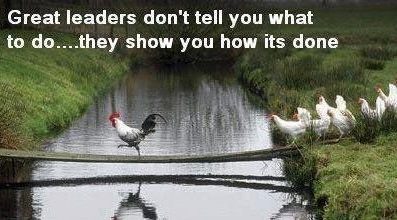
Good Leaders make Decisions

Decision making is at the core of solid leadership.

When a problem presents, a Leader must be able to make the call. A decisive leader that leads the team with strength, instils confidence and paves the path to progression.

If nothing happens then *nothing happens.

But Leaders be warned – decision making isn’t just about making the right call – it’s also about the Leader’s ability to bring people with them as well as the skills required to move on!

“Evil Prevails When Good Men Do Nothing” 

Strategic leaders gain their decision-making skill through practice, and practice requires a fair amount of action.

“Action generates action. Inaction generates nothing.” – Garret Norris | CEO KONA | HBB Group

Strong leaders make strong decisions, then take action – pushing power downward, across the business, empowering people at all levels to make decisions. Distribution of responsibility gives strategic leaders the opportunity to see what happens when they take risks. But more importantly – it increases the collective intelligence, adaptability, and resilience of the business over time, by harnessing the wisdom of those outside the traditional decision-making hierarchy.

Decisions made by good Leaders are never off the cuff, in fact they are made by keeping in mind the long term as well as the short-term plans of the business.

And there is in fact a golden rule to decision-making and leadership, and it should not be kept secret, instead shouted from roof tops for all to hear – from business leaders, to sales leaders, to health care leaders to leaders of nations – objectivity! The best results for all involved in a decision-making process is one that is made by a rational leader based on evidence and facts.

“Emotion for Home, Passion for Business” – Garret Norris.

Strategic decision-making skills in Leaders is part of the pillars of strong leadership.

“Be willing to make decisions. That’s the most important quality in a good leader. Don’t fall victim to ‘ready-aim-aim-aim-aim syndrome’. You must be willing to fire.” – T.Boone Pickens, American Financier.

Are you afraid of making decisions?

Good Leaders always need to be refining their decision-making skills to build effective and productive teams. Make a Decision Now  – sharpen your leadership skills. Contact KONA on 1300 611 288 or email info@kona.com.au or do nothing (remember what happens when we do *nothing ↑ ).