When to walk away from a sale

When should a Salesperson walk away from a sale?

I have walked away from many deals in the past and I will continue to do so if it is not the right fit, or it feels wrong. While writing this I’m taken back to the very first time I walked away from a sale, actually, I actively discouraged the person to buy.

I moved back to Ireland from Guernsey in the Channel Islands in the 1990’s and it was the height of a recession. The only thing I was qualified to do was in hospitality and I could not find any employment. So, I took a job in sales, something I thought I would never do. However, this was not any sale job, this was selling life insurance, door to door, commission only. I thought, “welcome to sales”!!!

Back then we went into the office on a Monday, took out the yellow pages and hit the phones to make appointments, 100+ calls a day to get three, maybe four appointments. On one of these appointments my BIG boss came out with me.

So, we met at Michael Mc—– house (a modest terrace home south of Dublin) and the first thing I noticed was that the outside was very unkempt. When Michael greeted us, he was so lovely, and we were given tea and biscuits. On the icebreaking part of the meeting, it transpired that he knew my father and that was the reason he agreed to meet.

The sales pitch began, and we were on fire… I presented the pack brilliantly and it was going so well, and he was “putting pen to paper”, when his son came down the stairs and asked for (I think new school shoes, I can’t remember) and the response from Michael was something along the lines of “make do as we can’t afford to buy new shoes at the moment”.

At this point I took the contract from him and said something along the lines of “Michael, on second thoughts I am not sure that this is the right policy, based on what you told us I will need to go back and do a little more research.” and we left.

I knew that he was over committing and because of the relationship he once had with my father he felt obliged to continue.

When we were outside my boss “ripped into me” with nearly every expletive you can imagine. He said, “You will never make it in sales as you clearly don’t have what it takes, the killer instinct, you have just ripped up £2,000.” At this I told him to shove it and I went back to London.

When to walk away from a sale

As a salesperson, do you know when it’s time to walk away from a sale?

Walking away can be a tough decision, particularly when you’ve invested your time and energy into building a relationship with a prospect. Having said that, there are some situations where it can be the right choice.

Here are 6 common reasons to walk away from a sale as a salesperson:

1. Ethical Concerns

Ethics in sales refers to behaviours that ensure that every customer is treated with respect, fairness, honesty and integrity.

Some common examples of ethical issues in sales include:

  • Selling a product rather than a solution
  • Telling only part of the truth  
  • Lacking accountability

If the product or service you’re selling doesn’t meet the needs of the customer or if it’s not the right fit for them, it’s best to walk away rather than push them to purchase something they don’t need.

2. Unrealistic Demands

If the customer is making demands that your company can’t fulfil or that would compromise your integrity, it’s better to walk away than to promise something you can’t deliver.

Some of the things salespeople should avoid when a customer has unrealistic expectations include: Arguing with the customer, losing your patience, not actively listening, not looking for other options for the customer.

3. Lack of Respect

Occasionally as a salesperson you may encounter a customer who is disrespectful, demanding or who comes across as rude. The old saying “The customer is always right” is not always the case.

If a customer or prospect is disrespectful or abusive toward you, it’s not worth sacrificing your dignity or well-being for a sale, and it’s time to walk away.

Remaining professional when dealing with difficult customers

4. Price Objections

If the customer is solely focused on price and unwilling to see the value in your product or service, it may not be worth your time to continue the sale.

Objections in sales are inevitable, and a tailored Sales Training Program can assist sales teams with effective objection handling techniques that they can utilise when customers raise objections. However, if your customer is only objecting on price, and you have done your best to overcome their objections, it could be in your best interest to walk away from the sale.

5. Unreasonable Expectations

As a salesperson, on occasion you may encounter customers who have unrealistic expectations. For example, they might push for an unrealistic timeline that would require you to cut corners or compromise quality. When this happens, it’s better to walk away than to risk damaging your reputation.

If there’s a significant gap between what the customer expects and what you can realistically deliver, it’s best to be upfront about it and potentially walk away rather than disappoint them later.

6. The Customer cannot see the Value of your Product or Service

It’s the salesperson’s responsibility to show their prospect the value that their product or service will have. If a prospect can’t clearly see value, they will not buy.

When you have made attempts to show your prospect the features, benefits and value of your product or service, and they still aren’t convinced, it could be time to walk away.

A good tip to ensure you are demonstrating value is to reflect on the conversations you have with prospects. This way you can learn from them and improve your value proposition.

Walking away from any sale is never a good feeling. But remember, walking away doesn’t necessarily mean entirely giving up on your customer. It could simply mean postponing the sale until a better fit or solution is found, or referring them to a colleague or competitor who may be better able to meet their needs.

Sometimes as a salesperson it's best to walk away from the sale

Contact KONA today to find out how we can help to strengthen your sales team with a tailored Sales Training Program.

Call 1300 611 288 or email
info@kona.com.au


After 30 + Years I became an Overnight Success

Grinding It Out – the Real Key to Sales Success

I’m sure some of you are sick of hearing me say this but yet again I was called “lucky” and once again I responded: “I work bloody hard to ensure my “luck” because day in and day out I “Grind it out.”

This is the same if I am practicing my Krav Maga or selling, I don’t expect to receive benefits if I have not put in the work.

Grinding it out means consistently putting in the effort day in and day out, which is a fundamental aspect of achieving success in sales. While natural talent and charisma can certainly help, it’s often the dedication to the grind that separates top performers from the rest. Here’s why:

Activity = Results

Persistence Pays Off – “Activity = Results”

The best sales trainers will tell you that sales success doesn’t happen overnight.

It’s about making countless calls, sending numerous emails, and meeting with potential clients regularly.

Each rejection is a step closer to a “yes” and grinding it out means not giving up in the face of setbacks.

Building Relationships

Sales is as much about building relationships as it is about pitching products or services. Consistently showing up, being reliable, and providing value to clients helps to build trust and rapport over time.

Some of the benefits of building strong relationships in sales include:

  • Influencing repeat purchases
  • Developing trust
  • Increased customer loyalty

Continuous Learning

The world of sales is always evolving, with new techniques, technologies, and trends emerging constantly. Those who grind it out are committed to continuously learning and adapting their approach to stay ahead of the curve.

Sales Training can help your team by giving them access to experienced sales trainers who can assist them with learning new skills and refining existing skills, as well as improving their communication and increasing productivity, ultimately leading to an improved overall customer experience.

Resilience and Consistency

Rejection is inevitable in sales, and it can take a toll on morale. Grinding it out requires resilience—the ability to bounce back from setbacks, learn from failures, and keep moving forward.

Consistency breeds success – to be successful in sales, you need consistency rather than occasional bursts of brilliance. It’s about showing up every day, doing the work, and gradually building momentum over time.

Hope is not a sales strategy.

Setting and Achieving Goals

Grinding it out in sales involves setting clear goals and relentlessly pursuing them. Consistent effort is essential for achieving success. Whether it’s:

  • A daily call quota
  • Monthly sales target, or
  • A long-term career objective

Putting in the effort to achieve your goals rather than just setting them and “hoping” for the best can go a long way to being successful in sales.

Remember, “Hope is not a sales strategy”!

Ultimately, while talent and skill certainly play a role in sales success, the real key is the willingness to put in the hard work day after day, even when it’s challenging or discouraging. That’s what separates the top performers from the rest of the pack.

Quote about success from Ray Kroc.

Contact KONA today to discuss how we can help your sales team achieve success through our tailored Sales Training Programs.

Call 1300 611 288 or email
info@kona.com.au


The “No BS” Way to Train Salespeople

For a Sales Trainer to Train salespeople in a “no BS” way, they require a straightforward and results-driven methodology, that addresses the challenges and dynamics of sales in the real world.

Out in the field, there is not always a “manual” to refer to, and every customer is different. With many “off the shelf, by the book” training programs, all of the hard work and learnings can be forgotten by your team shortly after.

So, how can your sales trainer provide your sales team with the tools they need to make it in real world selling situations?

The answer is simple – focus on Sales Training Techniques that will stick.

KONA Sales Training Workshop
A KONA Sales Training Workshop

Effective Sales Training

An effective sales training program can make a huge difference when it comes to the morale and performance of your sales team, as well as motivating salespeople and sales managers to get out of their comfort zone.

What are the benefits that come with an effective Sales Training Program?

Productivity

Increasing your sales team’s confidence can result in better productivity as well as allowing staff to make important decisions without the constant guidance of their manager.

Sales training can also offer insight into automating sales processes to free up more of your team’s time.

Teamwork

Effective sales training can bring your team together, encourage collaboration, as well as creating a more positive work environment. Improving staff morale and creating a sense of community among staff members can also improve sales performance.


Staff and Customer satisfaction

Training equips salespeople with useful skills and knowledge that can improve their interactions with customers. This can then lead to greater customer satisfaction. When more customers are satisfied with the service they receive, salespeople are more likely to feel happy and fulfilled at work.

Communication skills

Both Salespeople and Sales Managers can learn and develop new skills from an effective sales training program. Sales training can improve everyone’s ability to think on their feet and make efficient decisions.

The characteristics of a good vs. bad salesperson.

Use success stories to train and motivate

A great way to motivate salespeople, especially those who are relatively new to the field, is to use storytelling as part of your training program.

The best sales training programs will include Success stories from senior salespeople or trainers. They can be inspirational and entertaining, and they are more likely to leave a memorable, lasting impression on a sales team.

Most effective are stories and case studies that show examples of what did and didn’t work in different scenarios, and those that showcase the entire sales process, from initial enquiry to closing.

Statistics can also be a useful tool when training and motivating a sales team. 

Once you have told the success story and the outcome, you can break down the process into steps that the team can replicate and try with their own sales.

Offer Training Refreshers

An important aspect of training that is often neglected is offering training refreshers.

Even after the most successful training programs, it’s easy for teams to forget what they have learned when they are back on the front line.

The best sales trainers will create smaller snippets of the training for refreshers that can help align with our brain’s natural capability to recall and retain information.

How often employees want training vs. how often employers deliver training

Sales Coaching

Sales coaching after training can make a big impact on your sales team and will improve retention rates following the training they have received.

Some of the benefits of coaching your sales team after training include:

  • Improved performance
  • Better customer-relationships
  • Improved sales productivity
  • Increased staff-retention
  • Increased skill development

One of your sales team’s main objectives should be to learn how to apply new techniques, make changes where necessary and measure their results.

To get the most out of a Sales Training program, you need to give your salespeople the right tools, and most importantly, lead by example.

Contact KONA to discuss how we can tailor a Sales Training Program to your Sales Team!

Call 1300 611 288 or email info@kona.com.au


Sales pipeline

Pipeline or Perish

The mantra “Pipeline or Perish” takes centre stage in the realm of Sales and Business.

For companies navigating the competitive sales industry, your Sales Pipeline isn’t just a tool; it’s a lifeline, determining the fate of your business in a world where adaptability and efficiency reign supreme.

So, if you want to thrive in Sales, why is it important to leverage your Sales Pipeline? The first step is to understand the Pipeline.

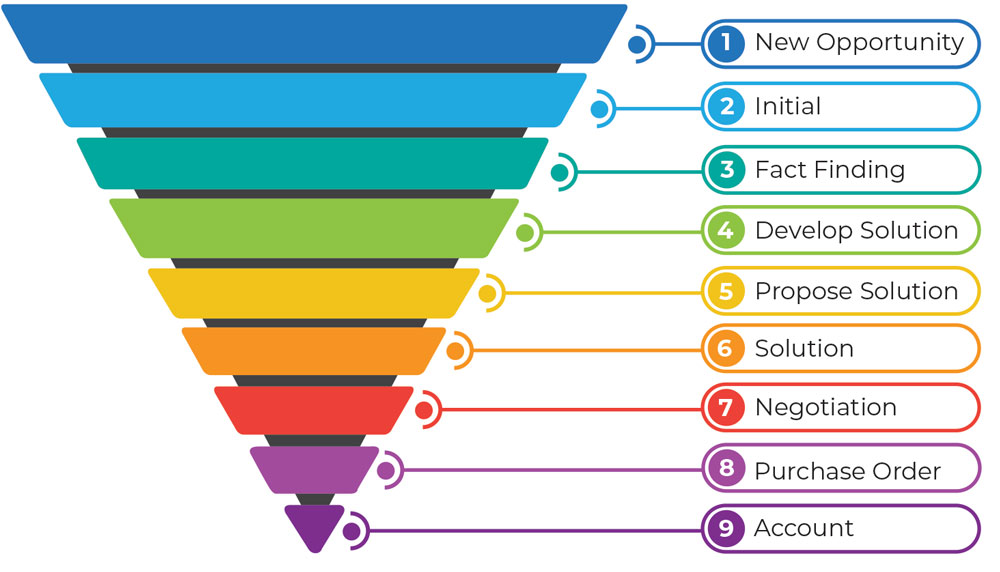
Sales Pipeline Funnel

Understanding the Sales Pipeline

A sales pipeline is an organised and visual way of keeping track of potential buyers as they progress through the purchasing process.

The sales pipeline is a strategic roadmap that guides your team from prospecting to closing deals. It’s a dynamic system that demands attention, proactive management, and a keen understanding of your customer’s journey.

The stages of a Sales Pipeline

1. Prospecting and Lead Generation

The sales journey begins with identifying potential customers.

An effective sales pipeline starts with a robust lead generation strategy, ensuring a steady influx of prospects.

Without a consistent flow of leads, your pipeline may run dry.

2. Qualification and Engagement

Once leads are in the pipeline, they need to be qualified. This involves:

  • Understanding their needs
  • Uncovering their challenges
  • Assessing their fit with your products or services

Engaging prospects at this stage is crucial for building relationships and moving them through the pipeline.

5 reasons why you should qualify your customers.

3. Proposal and Closing

The proposal stage is where you present tailored solutions to your prospects.

A well-nurtured pipeline positions your team to confidently make proposals that resonate with the prospect’s needs. Closing the deal is the culmination of a successful journey through the pipeline.

4. Post-Sale Relationship Building

The sales pipeline doesn’t end at closing. Post-sale relationship building ensures customer satisfaction, encourages repeat business, and sets the stage for referrals.

Neglecting this aspect can lead to churn and missed opportunities for growth.

Pipeline or Perish

Why use your Sales Pipeline?

Predictability

Your sales pipeline provides a clear view of potential revenue and allows for accurate forecasting. Without utilising this tool, businesses operate “in the dark”, unable to predict or plan for future success.

Resource Allocation

A well-managed pipeline enables efficient allocation of resources. It helps you identify areas of strength and weakness in your sales process, allowing for targeted improvements and optimisation of resources.

Customer-Centricity

By understanding where each prospect stands in the pipeline, you can tailor your interactions to meet their specific needs, ensuring a positive and personalised customer experience.

Meme about providing an excellent customer experience.

Competitive Edge

Typically in sales, speed and efficiency are paramount. Using your sales pipeline allows you to respond quickly to opportunities and challenges, giving you a competitive edge over those who neglect this crucial aspect.

In the relentless pursuit of success, businesses must recognise that “Pipeline or Perish” is more than a cautionary phrase—it’s a call to action.

Your sales pipeline is the key to navigating the complexities of the modern marketplace, ensuring not only survival but sustained growth and prosperity. Embrace the power of your sales pipeline, and let it be the driving force that propels your business forward in the face of challenges and uncertainties.

Contact KONA today to discuss tailored Sales Pipeline Training for your Sales Team!

Call 1300 611 288 or email
info@kona.com.au


Sales & Management Case Studies

Sales, often described as the lifeblood of business, requires more than just pitching products or services; it demands a nuanced understanding of psychology, market dynamics, and negotiation strategies.

Through a collection of compelling case studies, here are some real-world scenarios that display how the KONA Group has helped Sales Teams and Sales Managers overcome challenges and achieve exceptional results.

Read Online or click to Download


Cold Calling & Call Centre Performance Case Studies

In many organisations, telephone appointment making is the backbone of their growth and while many organisations have excellent facilities, strategies, products/services, measurement tools and processes, the one key area that is lacking is in the actual conversations people (both inbound and outbound) have with customers.

Here is a case study demonstrating how KONA has helped our Call Centre clients:

Read Online or click to Download


Some Do, Others Teach

I do both, but when I’m running a workshop for Salespeople, sometimes I get pushback. I remember once, Sales Trainer Glenn Dobson was challenged with this statement when running a workshop and his response was spot on: “How do you think I got to be here!” I remember once I received a similar challenge as a Sales Trainer when delivering a Call Centre Sales Workshop. My response was to counter challenge. I suggested that we both sit side by side and hit the phone, the person who delivered the weakest result in one hour had to buy lunch for the entire workshop of 10 people, this challenge was declined by the delegate!

In life there is a timeless saying that encapsulates a deep message: “Some do, others teach.”

This simple, thought-provoking phrase captures the intricate relationship between those who actively engage in doing and those who choose to convey their wisdom through teaching.

We will unravel the layers of this idea, examining the connection between action and instruction, and how each informs and enriches the other.

A quote about teaching and learning from Hilda Charlton.

The Doers:

“Some do” – a mantra embraced by those who plunge headfirst into action, tackling challenges, pushing boundaries, and carving their paths through experience. These individuals are the pioneers, the risk-takers, the embodiment of resilience and tenacity. The doers are the architects of progress, the catalysts of change, whose actions shape the world we know.

The Teachers:

On the flip side, there are those who find fulfilment in guiding, shaping, and enlightening others. These are the educators, mentors, and influencers who embody the spirit of “others teach.” They draw from their own experiences, both triumphs, and tribulations, to mould the minds of the next generation. Through the art of instruction, they pass on the torch of knowledge, sparking curiosity and creativity. The teachers play a pivotal role in building a foundation upon which the doers can stand, enabling them to reach even greater heights.

Quote rebutting the notion that those who can't do, teach.

The Relationship Between Doing and Teaching

The dynamic relationship between doing and teaching is not a contrast, but a partnership. The lessons learned in the field, the trenches of real-world experience, provide the substance for the narratives shared in classrooms and lecture halls. Conversely, the insights gained through teaching illuminate the blind spots of action, refining strategies, and filling them with a deeper understanding of the consequences of their choices.

Consider the artist who, through years of dedicated practice and experimentation, perfects their craft. They become both the doer and the teacher, using their mastery to inspire aspiring artists. The entrepreneur who navigates the turbulent seas of business becomes not only a doer but also a mentor, sharing the pearls of wisdom with budding business minds. In this interaction, both realms thrive, each feeding off the vitality of the other. It amuses me when sometimes we get “You charge XXX for one day!” And my response is always the same; “No, I charge XXX for 30 years’ experience and one day delivery.”

“Some do, others teach” represents the ebb and flow of knowledge, wisdom, and growth. The doers and the teachers, though seemingly distinct, are two sides of the same coin, each enriching the other in a perpetual cycle of learning and application.

It is in embracing this paradox that we unlock the true potential of human endeavour, fostering a harmonious relationship between action and instruction that propels us forward on the journey of self-discovery and collective progress.

Quote about the importance of teachers in creating all other professions.

Contact KONA today to discuss how we can help you grow your business.

Call 1300 611 288 or email
info@kona.com.au


Call Centre Case Studies

Call centres serve as vital arteries of communication for many businesses. Handling inquiries, resolving issues, and providing exceptional customer service. Behind the scenes, Call Centre agents, supervisors, and managers must adeptly navigate a myriad of factors to drive performance and meet objectives.

Here are some notable examples of how the KONA Group has improved Call Centre Performance.

Read Online or click to Download