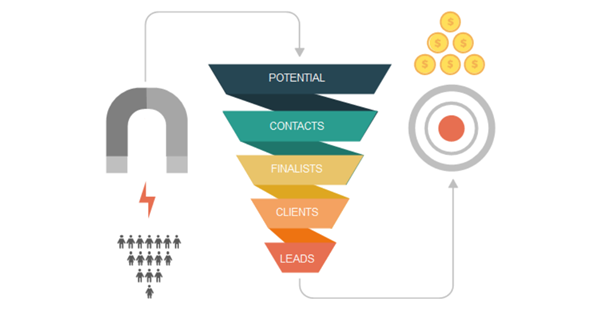
Sales Pipeline Funnel

The Importance of Sales Pipeline Management

A sales pipeline allows you to track the sales process more effectively, but it also helps you plan and evaluate activities at each stage.

Sales pipeline management can provide insight into the sales process to examine what’s working and what needs attention.

Every part of the sales pipeline should be tracked and measured. Sales pipeline training is a crucial component of sales development and can offer several benefits to both individual sales representatives and organisations as a whole.

As a sales leader, pipeline management will give you an understanding into how well your marketing is working and where prospects are not converting.  It will also help you evaluate performance by members of your sales team.

By tracking each stage, you can evaluate the impact of your marketing.  If your inbound marketing efforts are failing to convert sales from qualified leads, it may indicate you need to change strategies or train your team on how to close.  If your salespeople aren’t converting sales qualified leads at the rate you need, they may need additional support.

Pipeline management will give you insight into how well your marketing is working and where prospects are not converting.  It will help you evaluate performance of your sales team.

What should an Effective Sales Pipeline do?

  • Identify and target weak points in each stage of your pipeline
  • Pinpoint areas where additional coaching or sales training can help
  • Understand and analyse why some deals didn’t close
  • Prepare for potential sales growth or downturns

Do you want:

  • Improved Sales Performance?
  • More consistency with sales numbers?

KONA’s Pipeline Management Training is the answer you are looking for. Let us tell you why.

 Enhances Your Sales Skills

The KONA Pipeline training programs will cover a wide range of sales skills, including:

  • Prospecting
  • Qualifying leads
  • Objection handling
  • Negotiation
  • Closing techniques

Salespeople can sharpen their skills and adapt to changing market conditions.

 Better Forecasting

With a well-trained sales team, organisations can more accurately forecast future sales revenue.

This helps in budgeting, resource allocation, and overall business planning.

Reduces Sales Cycle Length

KONA Sales training will teach techniques for moving deals through the pipeline more efficiently, potentially reducing the length of the sales cycle. This means faster revenue generation.

Customer Relationship Building

KONA’s Sales pipeline training emphasises the importance of building strong customer relationships. This will lead to higher customer satisfaction, repeat business, and referrals.

A sales pipeline will improve sales performance and provide more consistency with sales numbers.

Boosts Confidence

KONA Pipeline training will boost the confidence of your salespeople, which will have a positive impact on their interactions with customers. Confident sales reps are more likely to close deals successfully.

Give your Team a Competitive Advantage

Well-trained sales teams will gain a competitive edge in the marketplace. They are better equipped to:

  • Understand customer needs
  • Position their products or services effectively
  • Outperform competitors

 Reduce Turnover

Investing in the development of your sales team will boost morale and job satisfaction, potentially reducing turnover.

A stable sales team leads to more consistent sales results.

KONA’s sales pipeline training is a valuable investment for both sales professionals and your business.

It will lead to improved sales performance, increased revenue, and a more competitive position in the market.

Get help managing your Pipeline

KONA’s Pipeline Management Training: If you want to give your sales team a competitive advantage and teach them how to effectively manage their pipelines, you can find out more about working with us here.

KONA’s Services: If you’re a business leader and you would like to know more about the services that the KONA Group can offer your business, click here.

Meet our team: We have many consultants in the KONA Group, all experts in their field. Click here to meet our team.

Call KONA on 1300 611 288 or Email info@kona.com.au


What are the traits of a Successful Salesperson?

Many salespeople make the mistake of thinking that success is a matter of luck.

Success in sales is about possessing a unique set of qualities that enable a salesperson to connect with customers, understand their needs, and close deals.

Are you an aspiring salesperson looking to improve your skills? Or maybe you’re a sales manager and want to refine your sales team. Here are ten essential traits the best Sales Trainers can help you to cultivate.

10 Traits of a Successful Salesperson

1. Exceptional Communication Skills

Effective communication is the foundation of successful sales.

A great salesperson can:

  • Articulate their ideas clearly
  • Actively listen to customers
  • Tailor their message to resonate with individual needs

They ask insightful questions and, most importantly, truly understand the power of the spoken and unspoken word.

2. Empathy

Empathy allows a salesperson to connect with customers on a deeper level.

The most successful salespeople will always be empathetic.

By understanding and sharing in the customer’s feelings, they can address concerns and offer solutions that genuinely resonate.

Empathetic salespeople build trust, which is fundamental in closing deals.

3. Resilience

Sales can be a rollercoaster ride of highs and lows. Rejection is an inevitable part of the job. A successful salesperson remains undeterred by setbacks and uses them as learning opportunities, emerging stronger and more determined with each challenge.

4. Positive Attitude

A positive outlook is contagious and can influence the entire sales process.

A good sales trainer knows that a salesperson who radiates optimism can create a more pleasant and productive atmosphere, making it easier to build rapport with customers and colleagues.

5. Adaptability

The world of sales is constantly changing.

A successful salesperson can pivot quickly to adapt to:

  • New technologies
  • Trends
  • Customer preferences  

They are open to change and view it as an opportunity for growth.

6. Strong Work Ethic

Success in sales often comes down to hard work and persistence. Top salespeople are known for their unwavering commitment to their craft.

They set clear goals, manage their time efficiently, and put in the effort needed to meet or exceed targets.

Top salespeople are known for the strong work ethic.

7. Product Knowledge

To be able to sell, you need to know your product or service inside and out.

Successful salespeople invest time in learning about their offerings, ensuring they can:

  • Confidently address customer questions
  • Demonstrate value

8. Problem-Solving Skills

Sales rarely go off without a hitch.

Successful salespeople are skilled problem solvers, capable of quickly identifying and addressing issues that arise during the sales process.

Their solutions are customer-focused and geared toward delivering the best possible outcome.

9. Respect for Integrity

Trust is the cornerstone of a successful sales relationship. Ethical salespeople prioritise honesty and integrity above all else.

They don’t make empty promises or engage in manipulative tactics to close deals, as they understand that a tarnished reputation is almost impossible to rebuild.

10. Continuous Learning

The best salespeople never stop learning. They are always:

  • Seeking out new information
  • Staying up to date on industry trends
  • Actively participating in training and development opportunities

Having a commitment to personal and professional growth ensures they remain at the forefront of their field.

Garret Norris delivering a training workshop to salespeople.

Success in sales is the result of a combination of these essential traits.

While not every salesperson is born with all these qualities, they can be developed and honed over time with dedication and effort.

Whether you’re an aspiring salesperson or managing a sales team, recognising and nurturing these traits is key to achieving lasting success in the world of sales.

With these traits as your foundation, you’ll be well on your way to becoming a highly effective salesperson.

Enhance the skills of your sales team today, to make them into the most successful salespeople they can be. Speak with a KONA Sales Trainer about the goals you have for your sales team.

Call 1300 611 288, or email
info@kona.com.au


What can a Power Hour do for your Sales Team?

The KONA Sales “Power Hour” is a focused and intensive period of time, during which your sales teams dedicate themselves to “hitting the phones” and put into action what they have learnt on the workshop. This WILL boost sales performance and drive better results.  

  • Do you want to Increase your Pipeline
  • Do you want to Increase your sales productivity? 
  • Do you want your team to have better than average sales skills? 
  • Do you want your team to manage their time better? 
  • Do you want them to be Accountable? 

A sales power hour is an effective strategy for increasing productivity, boosting sales performance, and achieving better results. During a Power Hour, your Sales Trainer will encourage focused efforts, skill development, and team collaboration, ultimately contributing to the overall success of a sales organisation. 

Some of our results across many customers:

  • Achieved $1.2M of extra sales
  • Increased overall activity by 150%
  • Increased outbound quotes by 88%
  • Increased sales by 66%
  • 140% of sales target (and growing)
  • 19% up on last financial year, Includes 3 record months
  • Increased International Business by 7%
  • Increased Domestic Business by 16%

Are your salespeople hesitant to make calls? Maybe they aren’t engaging with enough customers, prospects or decisions-makers? We can help you to turn that around.

In Sales, every minute counts, and every opportunity matters. This is where the “Power Hour” comes into play.

KONA’s Power Hour is a dedicated, highly focused period of time during which your sales team concentrates on their most important task.

What can a Power Hour can do for your Sales Team?

Enhance Focus and Productivity

The Power Hour is all about intense focus.

During this dedicated time, your sales team can eliminate distractions and concentrate on their high-priority tasks. This heightened level of concentration leads to increased productivity and the ability to accomplish more in a shorter amount of time.

With reduced interruptions, Sales Trainers can encourage team members to make more sales calls, send more emails, and engage with potential customers more effectively.

Garret Norris, KONA Group CEO during a workshop.
Garret Norris – CEO of the KONA Group during a Training Workshop

Improve Time Management

One of the biggest challenges a salesperson faces is managing their time effectively.

The Power Hour helps by encouraging your team to plan and prioritise.

By setting specific goals for each Power Hour session, your team can make better use of their time and ensure they are working on generating revenue.

Consistent Prospecting

Prospecting is a major part of the sales process, but it often gets pushed aside in favour of other tasks.

KONA’s Power Hour Program can help your team to designate a specific time each day for prospecting activities.

This consistency ensures that your sales team is continuously building their pipeline, which is crucial for long-term success.

Increased Sales Calls

Did you know that more than 50% of decision-makers prefer to be contacted over the phone than any other means of communication?

Sales calls are the centre of many sales teams. During the Power Hour, the Sales Trainer will encourage your team to make a higher number of quality sales calls within a set timeframe. This not only leads to more potential leads and conversions but also boosts the confidence and skill set of your salespeople.

Call Centre power hour.

Healthy Competition

Implementing Power Hours can encourage healthy competition among your sales team members.

When team members see their colleagues making impressive progress during these dedicated sessions, it motivates them to step up their game.

Encouraging friendly competition and recognising top performers during a power hour can help to keep momentum.

Real-time Feedback and Coaching

During KONA’s Power Hours, Managers can provide real-time feedback and coaching to their team members.

Managers can:

  • Listen in on calls
  • Review emails
  • Offer guidance on how to improve sales techniques

This immediate feedback loop can lead to rapid skill development and improved performance.

Better Work-Life Balance

A well-structured Power Hour schedule allows your sales team to maintain a healthier work-life balance.

Set clear boundaries for when intense sales activities take place. This way, team members can better allocate their time for personal life, reducing burnout and stress.

Introducing Power Hours to your sales team’s routine comes with significant benefits.

Power hours are known to encourage a competitive spirit and provide opportunities for real-time feedback and coaching.

As your team becomes more skilled and efficient, you’ll likely see a boost in sales performance, ultimately leading to increased revenue and success for your business. Empower your sales team with the transformative power of the Power Hour.

So what are you waiting for? Book in your team’s Power Hour today!

Call KONA on 1300 611 288 or Email us at info@kona.com.au


Why is my Sales Team ‘Busy’ but not Producing results?

It’s easy for salespeople to get caught up in the daily whirlwind of activities and tasks.

They might appear busy, but the critical question for sales managers and leaders is whether their sales team is truly focusing on what is important. As a sales manager, your job is to ensure targets are being hit. When they aren’t, it can be one of your hardest tasks to find out why.  

So, what does it mean to be “busy” in sales, and what are some strategies for ensuring your salespeople prioritise what truly matters?

Garret Norris and John Wright of the KONA Group, Delivering a Sales Training Workshop

The Perils of being Busy

Busyness can be deceptive. Salespeople can spend hours each day on various tasks, e.g.

  • Answering emails
  • Attending meetings
  • Completing administrative work

Yet fail to make significant progress towards their sales goals.

This phenomenon, often referred to as the “activity trap,” can cause a decrease in productivity, frustration, and missed sales opportunities, the list goes on.

Why do salespeople fall into the busyness trap?

Lack of Priorities

Without clear priorities, salespeople will tend to focus on low-impact tasks while neglecting high-impact activities like:

  • Prospecting
  • Following up on leads
  • Closing deals

Overemphasis on Routine Tasks

Mundane and routine tasks can consume a significant portion of a salesperson’s day, leaving them with little time and energy for strategic activities.

Distractions

Constant interruptions, including unnecessary meetings and non-essential emails, can divert salespeople’s attention from what truly matters. Studies have shown that an average of around 84% of people get distracted at work, and the most common distractions include:

  • Emails
  • Phone calls/texts
  • Co-workers
  • The Internet

Ineffective Time Management

Poor time management skills can result in wasted hours and a sense of busyness without accomplishment.

Did you know that 63% of sales reps don't ask for the sale at the end of a sales conversation?

Focusing on What’s Important

To be successful in sales, you need to shift the focus from busyness to activities that drive results. Here are some key areas to concentrate on:

Prospecting: Identifying and reaching out to potential customers is at the core of sales.

Ensure that your sales team allocates sufficient time for prospecting activities, such as:

  • Researching leads
  • Making initial contact

Building Relationships: Building strong relationships with prospects and clients can lead to repeat business and referrals.

Encourage your salespeople to invest time in nurturing these relationships.

Effective Communication: Train your team to communicate effectively, whether it’s through phone calls, emails, or face-to-face meetings.

Clear communication can make all the difference in closing deals.

A quote on effective communication from Garret Norris, CEO of the KONA Group.

Product Knowledge: Statistics have shown that salespeople who have specific product education can sell up to 123% more than those without.

Salespeople should have an in-depth understanding of your products or services. A well-informed salesperson will undoubtably be able to address customer questions and objections more effectively.

Time Management: Teach your team time management skills to help them to:

  • Prioritise tasks
  • Allocate time to high-impact activities

Strategies for Ensuring Focus is on What’s Important

Now that we’ve established the significance of focusing on what’s important in sales, let’s explore strategies to help your salespeople avoid the busyness trap:

Set Clear Goals: Use S.M.A.R.T Goal setting – specific, measurable, achievable, realistic and timely sales goals.

This helps salespeople understand what they should or shouldn’t prioritise.

Invest in Training and Development: Invest in ongoing training to improve your team’s:

  • Sales skills
  • Product knowledge
  • Time management skills

A well-trained sales team is more likely to focus on what matters.

Use Technology: Implementing sales tools and technology that automates routine tasks, allows your team to spend more time on high-value activities.

Regularly Review Processes: Continuously assess your sales processes to identify bottlenecks and areas for improvement.

Streamlining processes can free up time for essential tasks.

Monitor Progress:

  • Keep track of your team’s performance through regular reporting and meetings
  • Provide feedback and coaching to ensure alignment with strategic goals

Being “busy” in sales doesn’t always equate to being productive or producing results.

Salespeople need guidance and support to prioritise what really matters.

You can help your sales team focus on what’s important and drive success in your organisation. Just remember that it’s not about how busy they appear, but about the value they bring to the table and the impact they make on your bottom line.

Contact KONA to discuss how our tailored Sales Training Programs can have a positive impact on your sales team.

Call 1300 611 288 or Email info@kona.com.au


Does your Sales Team need Sales Coaching?

Sales coaching is when an experienced Sales Trainer provides guidance and support to sales professionals to help them improve their sales performance and reach their full potential.

It’s a personalised and ongoing process aimed at enhancing sales skills, addressing specific challenges, and achieving personal and team goals.

A well-trained and motivated sales team can make all the difference between success and mediocrity.

One effective way to enhance your sales team’s performance is to engage with the best sales trainers for sales coaching. We’ll explore the significance of sales coaching and how to determine if your sales team could benefit from it.

The Importance of Sales Coaching

Sales coaching is a structured process aimed at improving the overall performance of your sales team. It involves providing guidance, feedback, and support to help sales professionals reach their full potential. Here are some key reasons why at KONA, we believe sales coaching is important:

Skill Development

An effective sales trainer will help to coach your team to acquire and refine essential selling skills, such as:

  • Effective communication
  • Objection handling
  • Negotiation
Garret Norris, CEO of the KONA Group delivering a training workshop.

Performance Improvement

Regular coaching sessions can identify areas where your salespeople are struggling and provide targeted solutions to improve their performance.

Motivation and Engagement

Sales coaching boosts team morale and motivation by showing that the business invests in their growth and success.

The sales work is constantly adapting and changing. We also need to adapt to keep up with trends.

Adaptation to Change

The sales world is constantly evolving. Coaching helps salespeople adapt to:

  • New technologies
  • Market trends
  • Changing customer expectations

Consistency

Coaching ensures that all team members adhere to best practices and maintain a consistent approach to selling.

Signs Your Sales Team Needs Coaching

Now that we know the importance of sales coaching, what are some signs that indicate your sales team may benefit from coaching?

Declining Sales Performance

Have your team’s sales numbers been consistently falling? Is your team failing to meet targets? These are a clear indicator that coaching is needed.

High Turnover Rate

Having a high turnover within your sales team could suggest that they are not receiving the support and development opportunities they need to succeed.

Inconsistent Performance

Do some of your team members consistently outperform others?

Coaching can help bridge the performance gap and bring everyone up to a higher standard.

Resistance to Change

Salespeople who resist adopting new strategies, tools, or technology may require coaching to help them embrace change and stay competitive.

Lack of Confidence

If members of your team lack confidence in their abilities, it can significantly impact their sales results.

Coaching can boost their self-assurance.

The expected outcomes of Sales Coaching.

Difficulty Handling Objections

An inability to effectively handle objections from potential customers can hinder the sales process. Coaching will equip your team with better objection-handling skills.

Ineffective Communication

Poor communication skills can result in misunderstandings and missed opportunities. Coaching can enhance your team’s ability to communicate persuasively and empathetically.

Missed Sales Opportunities

If your team frequently loses deals they should have won, it may indicate the need for coaching to improve their closing techniques.

Implementing Sales Coaching

Once you’ve identified that your sales team needs coaching, it’s crucial to implement a structured coaching program

Assessment: Begin by assessing the strengths and weaknesses of each team member to tailor coaching sessions to their specific needs.

Set Clear Objectives: Define clear coaching objectives and goals to track progress effectively.

Provide Training: Invest in coaching training for managers or bring in external coaches with expertise in sales. All of KONA’s sales trainers have run businesses, led teams, built pipelines and managed accounts. We know that without sales, there is no business.

Regular Feedback: Conducting regular coaching sessions and providing constructive feedback will help your team improve continuously.

It's important to measure the results of sales coaching on your sales team.

Measure Results: Track the impact of coaching on sales performance and adjust the coaching program as needed.

Sales coaching is a powerful tool to enhance your sales team’s skills, motivation, and performance.

The first step is recognising the signs that your team may need coaching, the next step is to engage with a Sales Trainer to implement a structured Sales Coaching program.

Empower your salespeople to achieve their full potential and drive your

business to greater success.

Call 1300 611 288 or Email info@kona.com.au


What is the key to a Successful Sales Pitch?

Do you sell B2B or B2C?

Neither!!!

We sell H2H (human 2 human) – Be authentic!

Yes I’ll go on to tell you “How to suck eggs” but let’s not over complicate it!!!

If you are a salesperson, there is a good chance you will need to deliver compelling sales pitches to win over clients.

Leading up to a sales pitch, you may feel a mixture of excitement and nervousness for the “golden opportunity” to showcase your company’s product or service. However, you also know that success hinges on delivering a pitch that will captivate your potential clients.

What sets the best salespeople apart is the value they articulate in their sales pitch.

Successful sales pitch example:

The key to a successful sales pitch lies in effectively communicating the value of your product or service to your potential customer. We will walk you through some of the most essential elements to consider.

Understand Your Audience:

Before crafting your pitch, research and understand your audience’s:

  • Needs
  • Preferences
  • Pain points
  • Demographics

This will help you tailor your pitch to resonate with them.

Understand your audience so you can tailor your sales pitch to resonate with them.

Clear Value Proposition:

Clearly define the value your product or service offers. How does it solve a problem or fulfill a need for the customer? Focus on the benefits they will gain.

Engaging Storytelling:

Frame your pitch as a story that captures the customer’s attention and keeps them engaged.

Stories create emotional connections and make your pitch memorable.

Highlight Value, Not Features:

While features are important, emphasise the benefits the customer will experience.

How will their life be improved?

How will their pain points be addressed?

Address Objections:

Anticipate and address potential objections the customer might have. Be prepared to provide solutions or explanations to overcome these objections.

Use social proof to add credibility to your sales pitch.

Use Social Proof:

Share testimonials, case studies, or success stories from satisfied customers.

Social proof adds credibility and demonstrates that others have benefited from your offering.

Customisation:

Tailor your pitch to the individual customer’s needs and preferences.

Generic pitches are less effective than ones that show you’ve taken the time to understand their unique situation.

Build Rapport:

It’s important to establish a connection with the customer.

Building rapport creates a more comfortable environment and enhances the customer’s trust in you.

Create a Sense of Urgency:

Encourage the customer to take action by creating a sense of urgency.

You can use incentives to motivate people to make a decision. For example:

  • Limited-time offers
  • Exclusive deals
  • Impending benefits can motivate them to make a decision.
Optimise your sales pitch by creating a sense of urgency and including a call to action.

Call to Action:

Clearly state what you want the customer to do next.

Whether it’s making a purchase, scheduling a meeting, or requesting more information, a strong call to action is crucial.

Confidence and Enthusiasm:

Your energy can be infectious and make the customer more receptive to your message.

Confidence and enthusiasm can go a long way when presenting your pitch.

Listen and Adapt:

  • Pay attention to the customer’s responses and body language.
  • Be ready to adapt your pitch based on their reactions and any additional information they provide.

Practice and Rehearsal:

As the old adage goes, “Practice makes perfect.”

Practice your pitch multiple times to ensure you’re comfortable with the content and delivery.

Rehearsing will help you to sound more natural and less scripted.

Follow Up:

To demonstrate your commitment and willingness to assist after the pitch, follow up with the customer to answer any remaining questions and address any concerns.

Remember, a successful sales pitch isn’t just about pushing a product, but about building a relationship, solving a problem, and meeting the customer’s needs.

Flexibility and a customer-centric approach are key to achieving success.

Call 1300 611 288 or Email us at info@kona.com.au to discuss

tailored training options for your business!


Sales Techniques to identify Customer Pain Points and Needs

People buy for Pleasure or Pain, Aspiration or Need.

How do you identify the Needs and Pain Points of your Customers?

A key factor that determines the success of a company is its ability to truly understand the needs and pain points of its customers.

This understanding forms the foundation for creating products and services that address real problems and provide value. In this blog, we will explore sales techniques to identify customer needs and pain points to enhance your business strategies.

There are typically four types of customer pain points being Process, Financial, Support & Product.

Conduct Thorough Market Research

Market research is the starting point for identifying customer needs and pain points. It involves gathering information about your target audience, industry trends, and competitors.

Utilise both qualitative and quantitative research methods, such as:

  • Surveys
  • Focus groups
  • Social media analysis

This will help you to gather insights into your customers’ preferences, challenges, and desires.

Listen to Customer Feedback

Customer feedback is a goldmine of information.

Whether it’s through:

  • Customer support interactions
  • Online reviews
  • Social media comments

Paying attention to what your customers are saying can help uncover their pain points and unmet needs.

It’s important to regularly engage with customers to gather their opinions and experiences and make adjustments based on their feedback.

Create Buyer Personas

Buyer personas are fictional representations of your ideal customers.

By creating detailed personas that encompass demographic information, behaviours, goals, and pain points, you can better understand the motivations and challenges your customers face.

These personas serve as a reference point for tailoring your products and services to meet their specific needs.

Analyse Customer Journeys

Understanding the customer journey is crucial for identifying pain points.

  • Map out the various touchpoints a customer has with your brand, from initial awareness to post-purchase interactions.
  • Identify potential bottlenecks, moments of frustration, and areas where customers might be seeking additional solutions.

Addressing these pain points can lead to improved customer satisfaction.

Identify customer pain points by understanding the customer journey.

Monitor Social Media and Online Communities

Social media platforms and online communities provide valuable insights into customer discussions, complaints, and recommendations. Regularly monitor these spaces to identify emerging trends, common challenges, and areas where your target audience seeks solutions. Engaging in these conversations can also demonstrate your commitment to addressing customer needs.

Offer Exceptional Customer Support

Your customer support team is at the forefront of interacting with customers.

You can train them not only to resolve issues but also to listen to customer concerns.

By analysing the patterns of customer inquiries, you can identify recurring pain points and take steps to alleviate them.

Conduct Surveys and Questionnaires

Surveys and questionnaires provide a structured way to collect targeted feedback from your customers.

Craft questions that delve into their experiences, preferences, and challenges.

This data can help you identify trends, prioritise pain points, and make informed decisions about product development and improvements.

Monitor data analytics and usage patterns to uncover valuable insights into customer behaviour.

Monitor Analytics and Usage Patterns

Data analytics can reveal valuable insights into customer behaviour.

  • Monitor how customers interact with your website, mobile app, or products.
  • Identify drop-off points, frequently used features, and areas where customers spend the most time.

These patterns can provide insights into both needs and pain points.

Identifying customer needs and pain points is an ongoing process that requires continuous effort and adaptation.

By combining thorough research, active listening, and a commitment to delivering exceptional customer experiences, you can develop products and services that truly resonate with your target audience.

Remember, a customer-centric approach not only enhances your business’s bottom line but also fosters lasting customer loyalty.

The KONA Group specialise in Corporate Sales and Management Training Programs and Tailored Business Growth Strategies.

If you would like to find out what we can do for your business, call us on 1300 611 288 or

Email info@kona.com.au


What are the Key Elements of a Successful Negotiation?

I’m asked all the time about ego and negotiation and in a response to a delegate yesterday I said: “It seems you’re suggesting that having a strong ego or displaying an overly dominant attitude might not be effective in negotiation situations. In many cases, you’re right. Negotiation is a complex interpersonal process that often requires collaboration, active listening, and empathy.”Garret Norris, CEO of the KONA Group

The Key Elements of Effective Negotiation

A successful negotiation involves several key elements that contribute to achieving a mutually satisfactory agreement between parties. Whether you’re negotiating a business deal, a contract, a salary, or any other arrangement, let us guide you through the elements that can greatly enhance your chances of success.

Preparation

Thoroughly research and understand your own needs, goals, and priorities, as well as those of the other party.

Anticipate potential objections, concessions, and alternative solutions.

Knowledge is a powerful tool in negotiation.

Clear Objectives

Clearly define your objectives and desired outcomes for the negotiation.

Having a well-defined goal helps you stay focused and avoid unnecessary concessions.

In Negotiation it is important to have well-defined goals in order to keep you focused.

Active Listening

An effective yet simple tactic when negotiating is to pay close attention to what the other party is saying.

Listen actively to their concerns, needs, and interests.

This helps build rapport and understanding, enabling you to find common ground.

Effective communication will allow you to clearly convey your own points while acknowledging the other party's perspective.

Effective Communication

Clearly and persuasively convey your own points while acknowledging the other party’s perspective. Use concise and respectful language, and be open to asking clarifying questions.

Flexibility and Adaptability

Be prepared to adjust your approach and consider alternative solutions.

A willingness to compromise and find creative options can help break impasses.

Patience and Timing

Negotiations can take time. It’s important to stay patient and avoid rushing the process. Allow both parties to express themselves fully before moving forward.

Emotional Intelligence

Manage your emotions and be aware of the emotions of the other party.

Emotions can impact decision-making, so maintaining a calm and empathetic demeanor is crucial.

Building Relationships

Establish a positive rapport with the other party. A good working relationship can lead to more productive negotiations and future collaborations.

Trust and Credibility

Demonstrate honesty and integrity throughout the negotiation. Building trust enhances cooperation and reduces the likelihood of disputes later on.

The goal in negotiation is to find common ground where both parties feel they have gained something.

Win-Win Mindset

Remember to aim for a solution that benefits both parties. The goal is to find common ground where both sides feel they’ve gained value.

Concessions

Be strategic in making concessions. Don’t give away too much too soon, and ensure that any concessions are reciprocated.

The Importance of BATNA

BATNA in Negotiation means Best Alternative to a Negotiated Agreement.

BATNA (Best Alternative to a Negotiated Agreement):

Understand your BATNA and the other party’s BATNA. This is your fallback plan if the negotiation doesn’t result in an agreement. Knowing your BATNA gives you leverage.

Non-Verbal Communication

Pay attention to body language, tone of voice, and other non-verbal cues. These can provide insights into the other party’s thoughts and feelings.

Documentation is important in negotiation so that each party clearly understands their commitments.

Documentation

Clearly outline the terms of the agreement in writing to avoid misunderstandings later on. Both parties should have a clear understanding of their commitments.

Professionalism

Maintain a professional attitude and demeanor throughout the negotiation process. Respectful behaviour fosters a more productive atmosphere.

Timing and Deadlines

Use timing strategically. Introduce deadlines to encourage decisions and avoid unnecessary delays.

Mediation or Third Party

If negotiations reach a “deadlock”, consider involving a neutral third party or mediator to facilitate discussions and find common ground.

Remember, negotiation is a dynamic and complex process. The successful application of these elements can vary depending on the specific situation and the parties involved. Flexibility and adaptability are key in tailoring your approach to each negotiation.

Contact KONA for tailored Negotiation Training, or see what else we have to offer!

Sales TrainingSome call it an ‘unfair advantage’. To us, it’s simply learning to love sales and your customers again.

Call Centre Trainingfocuses on the delivery of customer service excellence first and foremost.

Sales Pipeline helps sales leaders to develop a customised funnel process for their organisation.

Power Hour delivers immediate ROI by teaching your sales team the disciplines and skills to turn calls into sales and hot prospects.

Customer Service Trainingthe key to every organisation’s commercial success, and the glue that holds it all together.

And so much more.


How can I Effectively handle Objections?

If you’ve found this KONA Blog article, chances are you have been in a situation where you are selling to a customer who has raised some objections about your product or service.

Seriously. Stop taking it personally

An Objection and a Rejection are Two Distinct Concepts

An objection is a concern or disagreement raised about a particular idea, proposal, statement, or situation. It doesn’t necessarily mean outright dismissal, but rather a point of contention that requires further discussion or clarification.

Objections can be valuable in decision-making processes as they provide an opportunity to address concerns and improve the quality of the outcome.

On the other hand, a rejection typically involves declining or refusing something. It indicates a clear refusal of an idea, proposal, request, or offer without further consideration. Rejections are often final and indicate that the matter is not going forward.

Objections, which often arise during negotiations, can be seen as opportunities rather than roadblocks. Effectively handling objections requires finesse, preparation, and a strategic approach.

We will delve into the art of navigating objections, providing you with actionable insights to turn objections into stepping stones toward a successful outcome.

Objections can be daunting, but remember an objection doesn't necessarily mean a dismissal, but rather a point of contention that requires further discussion or clarification.

Understanding the Nature of Objections

Objections are natural components of negotiations, stemming from differences in priorities, perspectives, and expectations between parties.

Rather than viewing objections as adversarial, it’s essential to recognise them as expressions of concerns, interests, or questions.

This perspective shift is fundamental to crafting a constructive response.

Active Listening: The Foundation of Objection Handling

When the opposing party presents an objection, resist the urge to immediately counter or defend. Instead, listen intently to grasp the underlying concerns.

A staggering 95% of buyers say that salespeople typically talk too much. 74% of buyers say that they are much more likely to buy if the salesperson would simply listen to them.

By acknowledging their viewpoint and validating their concerns, you lay the groundwork for a more collaborative and solution-oriented conversation.

Preparation: The Key to Confident Responses

Effective objection handling begins long before the negotiation table. Thorough preparation involves:

  • Anticipating potential objections
  • Understanding their motivations
  • Crafting well-reasoned responses

By immersing yourself in the other party’s perspective, you can develop compelling counterarguments that address their concerns and pave the way for productive discussions.

Display empathy when handling objections by 'bridging the gap'.

Empathy: Bridging the Gap

Empathy is a powerful tool in objection handling.

Put yourself in the other party’s shoes to understand their:

  • Emotions
  • Motivations
  • Fears

This understanding enables you to tailor your responses in a manner that resonates with their concerns, fostering a more receptive atmosphere for negotiation.

Clarification: Unearthing the Root Cause

In many cases, objections are veiled manifestations of deeper issues. By asking open-ended questions and seeking clarification, you can uncover the underlying reasons behind the objection. This not only demonstrates your genuine interest in their perspective but also helps you address the core concerns more effectively.

By asking open-ended questions and seeking clarification, you can uncover the underlying reasons behind the objection.

Value Proposition: Highlighting Mutual Benefits

When handling objections, pivot the conversation toward the value proposition of your proposal. Emphasize the benefits that align with the other party’s interests and objectives. By showcasing how your proposal addresses their needs, objections can transform into opportunities for mutual gain.

Offering Alternatives: Flexible Problem-Solving

Sometimes, objections arise due to specific elements of your proposal.

Instead of viewing these objections as deadlocks, consider them as invitations to explore alternative solutions.

Present various options that cater to both parties’ needs, demonstrating your commitment to finding a middle ground.

Data and Evidence: Fact-Based Rebuttals

Supporting your responses with relevant data, statistics, or case studies lends credibility to your position.

This approach is particularly effective when dealing with objections based on misconceptions or misinformation.

Concrete evidence can dispel doubts and reinforce the validity of your proposal.

Negotiation Techniques: The Art of Compromise

Objection handling is intricately linked to negotiation techniques. Employ strategies such as “splitting the difference,” where both parties make concessions to meet in the middle. Additionally, consider “conditional agreements,” which involve agreeing to certain terms if specific conditions are met, showcasing your flexibility while safeguarding your interests.

Seek common ground by expressing your commitment to addressing concerns and finding solutions.

Collaborative Problem-Solving: Seeking Common Ground

Position objection handling as a collaborative problem-solving exercise.

Express your commitment to jointly addressing concerns and finding innovative solutions. This approach promotes an environment of cooperation and shared responsibility, enhancing the likelihood of reaching a favourable agreement.

Maintaining Professionalism: A Lasting Impression

Throughout the objection handling process, maintaining a professional and respectful demeanor is paramount.

Regardless of the intensity of the objection, courteous behavior conveys maturity and integrity, laying the foundation for long-term relationships and potential future collaborations.

Objections are not roadblocks; they are stepping stones toward a successful resolution.

Effective objection handling involves a delicate balance of:

  • Active listening
  • Empathy
  • Strategic preparation
  • Skilled negotiation techniques

By understanding the nature of objections and embracing them as opportunities for constructive dialogue, you can transform objections into catalysts for mutually beneficial agreements.

With the right approach, objection handling becomes a nuanced art that empowers you to navigate even the most intricate negotiations with confidence.

When handling objections, don't look at an objection as a rejection.

Contact KONA for more information and objection handling strategies.


Call 1300 611 288 or Email info@kona.com.au


What is Effective Leadership?

Leadership is not just about holding a title or occupying a position of authority; it’s about inspiring and guiding others towards a shared vision.

Garret Norris, CEO of the KONA Group.

“A resilient leader navigates adversity with unwavering strength. They embody determination, inspiring others through challenges. Their clear vision and strategic mindset provide a steady compass. Such leaders embrace failures as learning opportunities, fostering growth. Their adaptability and decisiveness steer the team towards success. In times of turmoil, their calm demeanour offers reassurance. Ultimately, their ability to lead by example, staying resolute amid adversity, kindles a sense of purpose among their followers, propelling everyone forward with newfound resilience.”

Garret Norris, KONA Group CEO

An effective leader is one who can navigate challenges, motivate their team, and drive positive outcomes. We will explore key strategies that can help you become a more effective leader.

Quote from Rosalynn Carter - "A leader takes people where they want to go. A great leader takes people where they don't necessarily want to go, but ought to be."

How can I become a more Effective Leader?

One of the most fundamental aspects of effective leadership is leading by example. Your actions and behaviours set the tone for your team.

Your team members are more likely to emulate the same qualities if you demonstrate:

  • Dedication
  • Integrity
  • A strong work ethic

By modelling the behaviours you expect from your team, you create a culture of accountability and mutual respect.

Clear communication is at the heart of successful leadership.

It’s essential to articulate your vision, goals, and expectations to your team members.

Effective leaders:

  • Listen actively
  • Ask probing questions
  • Ensure that their team members feel heard

Transparent communication builds trust and reduces misunderstandings, enabling your team to work more cohesively.

Micromanaging can stifle creativity and hinder team growth.

An effective leader delegates tasks based on team members’ strengths, allowing them to take ownership and showcase their abilities.

Empowering your team not only boosts their confidence but also creates a sense of shared responsibility for achieving goals.

Emotional intelligence (EI) : The ability to understand and manage one’s own emotions and those of others.

Leaders with high EI are better equipped to:

  • Navigate conflicts
  • Build strong relationships
  • Empathise with their team members

By developing your emotional intelligence, you can create a more supportive and empathetic leadership style.

A great leader will lift others up, not tear them down.

Clarity in goal-setting

Clarity in goal-setting and expectations is crucial for a focused and motivated team.

Clearly define objectives, timelines, and success metrics.

When team members understand their roles and how their work contributes to the overall mission, they are more likely to remain engaged and strive for excellence.

Effective Leadership Mindset

It’s important as a leader to encourage a growth mindset within your team by promoting ongoing learning and development.

Provide opportunities for skill-building, offer constructive feedback, and support your team’s career aspirations.

A culture of continuous learning leads to innovation and adaptability, crucial qualities in today’s fast-paced business landscape.

Effective leaders are skilled problem-solvers who can navigate challenges and make informed decisions.

In times of uncertainty, your ability to remain composed and adaptable is essential.

Create a culture where brainstorming and creative thinking are encouraged, and demonstrate resilience in the face of adversity.

A boss will tell people what to do. A leader will give their team the tools to achieve their goals.

Celebrating Achievements

Lastly, acknowledging and celebrating achievements, both big and small, boosts morale and motivates your team.

Whether through public recognition, bonuses, or opportunities for advancement, showing appreciation reinforces a positive work environment and encourages sustained effort.

Becoming an effective leader is a continuous journey that requires self-awareness, dedication, and a commitment to personal growth. By incorporating these strategies into your leadership approach, you can inspire your team to reach new heights and achieve lasting success.

Remember, leadership is not about being perfect, but about striving for excellence and empowering those around you. 

Contact KONA today to discuss how Leadership Coaching can benefit your business.

Call 1300 611 288 or Email us at info@kona.com.au