After 30 + Years I became an Overnight Success

Grinding It Out – the Real Key to Sales Success

I’m sure some of you are sick of hearing me say this but yet again I was called “lucky” and once again I responded: “I work bloody hard to ensure my “luck” because day in and day out I “Grind it out.”

This is the same if I am practicing my Krav Maga or selling, I don’t expect to receive benefits if I have not put in the work.

Grinding it out means consistently putting in the effort day in and day out, which is a fundamental aspect of achieving success in sales. While natural talent and charisma can certainly help, it’s often the dedication to the grind that separates top performers from the rest. Here’s why:

Activity = Results

Persistence Pays Off – “Activity = Results”

The best sales trainers will tell you that sales success doesn’t happen overnight.

It’s about making countless calls, sending numerous emails, and meeting with potential clients regularly.

Each rejection is a step closer to a “yes” and grinding it out means not giving up in the face of setbacks.

Building Relationships

Sales is as much about building relationships as it is about pitching products or services. Consistently showing up, being reliable, and providing value to clients helps to build trust and rapport over time.

Some of the benefits of building strong relationships in sales include:

  • Influencing repeat purchases
  • Developing trust
  • Increased customer loyalty

Continuous Learning

The world of sales is always evolving, with new techniques, technologies, and trends emerging constantly. Those who grind it out are committed to continuously learning and adapting their approach to stay ahead of the curve.

Sales Training can help your team by giving them access to experienced sales trainers who can assist them with learning new skills and refining existing skills, as well as improving their communication and increasing productivity, ultimately leading to an improved overall customer experience.

Resilience and Consistency

Rejection is inevitable in sales, and it can take a toll on morale. Grinding it out requires resilience—the ability to bounce back from setbacks, learn from failures, and keep moving forward.

Consistency breeds success – to be successful in sales, you need consistency rather than occasional bursts of brilliance. It’s about showing up every day, doing the work, and gradually building momentum over time.

Hope is not a sales strategy.

Setting and Achieving Goals

Grinding it out in sales involves setting clear goals and relentlessly pursuing them. Consistent effort is essential for achieving success. Whether it’s:

  • A daily call quota
  • Monthly sales target, or
  • A long-term career objective

Putting in the effort to achieve your goals rather than just setting them and “hoping” for the best can go a long way to being successful in sales.

Remember, “Hope is not a sales strategy”!

Ultimately, while talent and skill certainly play a role in sales success, the real key is the willingness to put in the hard work day after day, even when it’s challenging or discouraging. That’s what separates the top performers from the rest of the pack.

Quote about success from Ray Kroc.

Contact KONA today to discuss how we can help your sales team achieve success through our tailored Sales Training Programs.

Call 1300 611 288 or email
info@kona.com.au


The “No BS” Way to Train Salespeople

For a Sales Trainer to Train salespeople in a “no BS” way, they require a straightforward and results-driven methodology, that addresses the challenges and dynamics of sales in the real world.

Out in the field, there is not always a “manual” to refer to, and every customer is different. With many “off the shelf, by the book” training programs, all of the hard work and learnings can be forgotten by your team shortly after.

So, how can your sales trainer provide your sales team with the tools they need to make it in real world selling situations?

The answer is simple – focus on Sales Training Techniques that will stick.

KONA Sales Training Workshop
A KONA Sales Training Workshop

Effective Sales Training

An effective sales training program can make a huge difference when it comes to the morale and performance of your sales team, as well as motivating salespeople and sales managers to get out of their comfort zone.

What are the benefits that come with an effective Sales Training Program?

Productivity

Increasing your sales team’s confidence can result in better productivity as well as allowing staff to make important decisions without the constant guidance of their manager.

Sales training can also offer insight into automating sales processes to free up more of your team’s time.

Teamwork

Effective sales training can bring your team together, encourage collaboration, as well as creating a more positive work environment. Improving staff morale and creating a sense of community among staff members can also improve sales performance.


Staff and Customer satisfaction

Training equips salespeople with useful skills and knowledge that can improve their interactions with customers. This can then lead to greater customer satisfaction. When more customers are satisfied with the service they receive, salespeople are more likely to feel happy and fulfilled at work.

Communication skills

Both Salespeople and Sales Managers can learn and develop new skills from an effective sales training program. Sales training can improve everyone’s ability to think on their feet and make efficient decisions.

The characteristics of a good vs. bad salesperson.

Use success stories to train and motivate

A great way to motivate salespeople, especially those who are relatively new to the field, is to use storytelling as part of your training program.

The best sales training programs will include Success stories from senior salespeople or trainers. They can be inspirational and entertaining, and they are more likely to leave a memorable, lasting impression on a sales team.

Most effective are stories and case studies that show examples of what did and didn’t work in different scenarios, and those that showcase the entire sales process, from initial enquiry to closing.

Statistics can also be a useful tool when training and motivating a sales team. 

Once you have told the success story and the outcome, you can break down the process into steps that the team can replicate and try with their own sales.

Offer Training Refreshers

An important aspect of training that is often neglected is offering training refreshers.

Even after the most successful training programs, it’s easy for teams to forget what they have learned when they are back on the front line.

The best sales trainers will create smaller snippets of the training for refreshers that can help align with our brain’s natural capability to recall and retain information.

How often employees want training vs. how often employers deliver training

Sales Coaching

Sales coaching after training can make a big impact on your sales team and will improve retention rates following the training they have received.

Some of the benefits of coaching your sales team after training include:

  • Improved performance
  • Better customer-relationships
  • Improved sales productivity
  • Increased staff-retention
  • Increased skill development

One of your sales team’s main objectives should be to learn how to apply new techniques, make changes where necessary and measure their results.

To get the most out of a Sales Training program, you need to give your salespeople the right tools, and most importantly, lead by example.

Contact KONA to discuss how we can tailor a Sales Training Program to your Sales Team!

Call 1300 611 288 or email info@kona.com.au


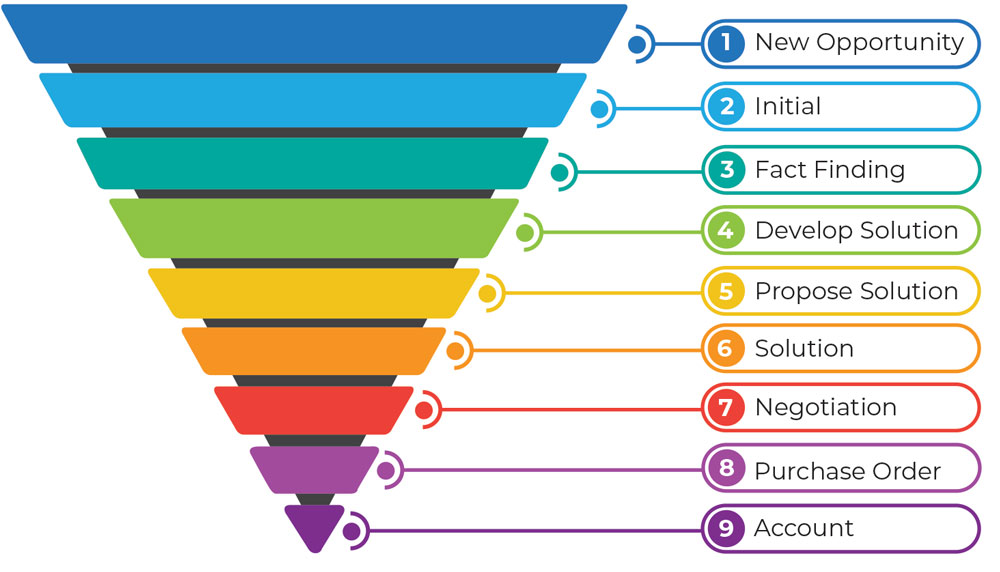
Sales pipeline

Pipeline or Perish

The mantra “Pipeline or Perish” takes centre stage in the realm of Sales and Business.

For companies navigating the competitive sales industry, your Sales Pipeline isn’t just a tool; it’s a lifeline, determining the fate of your business in a world where adaptability and efficiency reign supreme.

So, if you want to thrive in Sales, why is it important to leverage your Sales Pipeline? The first step is to understand the Pipeline.

Sales Pipeline Funnel

Understanding the Sales Pipeline

A sales pipeline is an organised and visual way of keeping track of potential buyers as they progress through the purchasing process.

The sales pipeline is a strategic roadmap that guides your team from prospecting to closing deals. It’s a dynamic system that demands attention, proactive management, and a keen understanding of your customer’s journey.

The stages of a Sales Pipeline

1. Prospecting and Lead Generation

The sales journey begins with identifying potential customers.

An effective sales pipeline starts with a robust lead generation strategy, ensuring a steady influx of prospects.

Without a consistent flow of leads, your pipeline may run dry.

2. Qualification and Engagement

Once leads are in the pipeline, they need to be qualified. This involves:

  • Understanding their needs
  • Uncovering their challenges
  • Assessing their fit with your products or services

Engaging prospects at this stage is crucial for building relationships and moving them through the pipeline.

5 reasons why you should qualify your customers.

3. Proposal and Closing

The proposal stage is where you present tailored solutions to your prospects.

A well-nurtured pipeline positions your team to confidently make proposals that resonate with the prospect’s needs. Closing the deal is the culmination of a successful journey through the pipeline.

4. Post-Sale Relationship Building

The sales pipeline doesn’t end at closing. Post-sale relationship building ensures customer satisfaction, encourages repeat business, and sets the stage for referrals.

Neglecting this aspect can lead to churn and missed opportunities for growth.

Pipeline or Perish

Why use your Sales Pipeline?

Predictability

Your sales pipeline provides a clear view of potential revenue and allows for accurate forecasting. Without utilising this tool, businesses operate “in the dark”, unable to predict or plan for future success.

Resource Allocation

A well-managed pipeline enables efficient allocation of resources. It helps you identify areas of strength and weakness in your sales process, allowing for targeted improvements and optimisation of resources.

Customer-Centricity

By understanding where each prospect stands in the pipeline, you can tailor your interactions to meet their specific needs, ensuring a positive and personalised customer experience.

Meme about providing an excellent customer experience.

Competitive Edge

Typically in sales, speed and efficiency are paramount. Using your sales pipeline allows you to respond quickly to opportunities and challenges, giving you a competitive edge over those who neglect this crucial aspect.

In the relentless pursuit of success, businesses must recognise that “Pipeline or Perish” is more than a cautionary phrase—it’s a call to action.

Your sales pipeline is the key to navigating the complexities of the modern marketplace, ensuring not only survival but sustained growth and prosperity. Embrace the power of your sales pipeline, and let it be the driving force that propels your business forward in the face of challenges and uncertainties.

Contact KONA today to discuss tailored Sales Pipeline Training for your Sales Team!

Call 1300 611 288 or email
info@kona.com.au


You can’t handle the truth, but a fortune awaits if you can

Truth – the unspoken reality where in Sales, the famous line “You can’t handle the truth” takes on a whole new meaning.

I sometimes, not often thankfully, get push back from salespeople when I challenge them for “over promising” or blatantly misleading the customer with “white lies” or even damn right mistruths.

The Sales Industry is often filled with glossy pitches, exaggerated claims, and a constant dance between what’s said and what’s unsaid. But what if, instead of shying away from the uncomfortable truths in sales, we embraced them?

"You can't handle the truth" meme

The Uncomfortable Truths in Sales

In Sales, perception often trumps reality. The pressure to meet targets, impress clients, and outshine competitors can lead salespeople and businesses to bend the truth.

However, this short-term gain can result in long-term consequences, eroding trust and damaging relationships.

The uncomfortable truth is that authenticity and transparency are rare commodities in the sales world, but they are precisely what set the stage for lasting success.

Internal Wealth – Building Credibility

The first step to embracing the truth in sales is acknowledging the uncomfortable realities. This requires:

  • Firstly, a real respect for the customer
  • Gratitude for them giving you the opportunity.
  • A deep understanding of the product or service being sold.
  • Recognising its strengths and weaknesses

Sales professionals who can honestly communicate these aspects build credibility and trust with their clients. This internal wealth, built on authenticity, becomes a foundation for success and customer loyalty.

Truthfulness is a powerful tool for salespeople. Consistently embracing the truth not only proves your credibility but also positions you as a trusted advisor, assisting with building positive and productive relationships with your clients.

Trust and credibility go hand in hand.

External Wealth – Growing Genuine Relationships

In a sea of sales pitches and polished presentations, a genuine connection with clients stands out. The fortune that awaits in sales is not just financial; it’s the wealth of authentic relationships.

Clients appreciate honesty, even when it involves admitting limitations. By being transparent about what your product or service can genuinely offer, you pave the way for trust, repeat business, and word-of-mouth referrals.

The Journey to Truthful Selling

Product Mastery: Invest time in understanding your product or service inside-out. Acknowledge its strengths and limitations to present a realistic picture to your clients.

Active Listening: Understand your clients’ needs and concerns. Actively listen to their feedback, and address any issues with transparency.

Long-Term Vision: Shift the focus from short-term gains to long-term relationships. Building trust may take time, but it forms the base of sustained success.

Constant Learning: Stay informed about industry trends and changes. Being knowledgeable allows you to provide accurate and timely information to your clients.

Telling the truth in sales.

In the competitive sales industry, the truth is a rare commodity. Yet, those who dare to confront the uncomfortable realities and embrace authenticity are on the path to a fortune that transcends mere financial gains.

Internal credibility and external relationships built on truth are the keys to sustained success in sales. So, the next time you’re tempted to embellish, remember: the fortune you seek lies in the honest truth.

Contact KONA today to discuss how we can help your Sales Team achieve success.

Call 1300 611 288 or email
info@kona.com.au


Author – Garret Norris –
 https://www.linkedin.com/in/garretnorris/

Prospecting in 2024.

How can I effectively prospect and find potential customers in 2024?

Sales Prospecting for Lead Generation

Sales prospecting is the process of searching for potential customers and making contact with those who “qualify” to purchase your product or service. Prospecting lays the foundation for the whole sales process as it is the first step of the customer journey.

Lead Contact Ratio

The chances of getting hold of a lead increases 100 times if they are contacted on the date and time with highest response rates since most recipients are active at night.

Multiple contacts and Social Media Dependency

•             Only 2% of sales are made on the first contact

•             3% of sales are made on the second contact

•             5% of sales are made on the third contact; and

•             10% of sales are made on the fourth contact.

Also, 48% of online users rely on social media presence whenever they decide to purchase a product. So, it’s best to reach out to prospects in various ways to get higher contact ratio and eventually close a sale.

Australian Content Marketing Tactic Usage graph.

Delayed buying response

Patience is a key to becoming successful in sales. Why? Around 63% of prospect who requested for information are going to buy for your products or services for the next 3 months. Others might take up to a year or two to actually purchase something.

“55% of B2B buyers search for products or vendors on social media because of word of mouth or referrals “ – Meltwater

Prospecting Techniques

‍There are many prospecting techniques that can be used. These techniques range from researching prospective leads online to cold calling and everything in between.

The choice of technique can depend on the salesperson’s strengths and circumstances. Although, typically the most effective tactics are adapted over time with practice and the right training.

Graph showing how salespeople typically spend their day.

Prospecting in 2024 – 10 effective techniques

Let’s take a look at some prospecting techniques that we think will be most effective in 2024. Keep in mind however, that prospecting in sales is different for everyone, so don’t hesitate to try different things and see what works best for you.

1. Create Buyer-Personas

In sales, it’s important to understand your ideal target customer. By creating Customer Profiles or Buyer Personas, you can increase your chances of prospecting to the right audience and ultimately closing more deals.

This process typically involves:

  • Researching demographics
  • Considering behavioural characteristics of your target audience
  • Narrowing down the details
  • Using your buyer personas in your marketing

2. Do your Research

This step of the prospecting process involves getting a detailed understanding of your potential leads.

This specific information can make your pitch more effective and personal, which will help to make you stand out from the crowd amongst a number of generic pitches.

Research will help you to understand:

  • Who is and is not buying your product or service
  • What motivates your customers
  • Whether or not they are loyal to your brand

3. Utilise Social Media

‍Social media is becoming an increasingly powerful tool when it comes to sales.

Social media allows you to engage with customers, as well as seeing what people are saying about your business.

Social media is great for advertising and running promotions.

Using social media effectively can help your business in many ways. To name a few:  

  • Attracting new customers
  • Getting your brand image out there
  • Gives customers an avenue for providing feedback and reviewing your product or service

Social platforms such as Facebook, and LinkedIn help you gain access to numerous potential leads, and allow your advertising to reach further than other marketing avenues. This makes it easier to connect with prospects in a personal and engaging way.

4. Warm Calling

‍Unlike a Cold Call, Warm Calls are when you reach out to prospects who already know of your business in some way.

Whilst ‍Cold Calling is still a valuable prospecting technique, Cold Calls usually work best when used in conjunction with other strategies.

When prospects already have an idea of what you have to offer, Warm Calls are more likely to lead to successful sales deals.

5. Personalise your approach

No matter your preferred prospecting technique, having a personalised message immediately assists in building strong relationships and beginning the emotional contract with your customer.

Email remains a powerful sales prospecting strategy. And luckily enough for salespeople, in today’s digital world, it is easier than ever to personalise emails going out to your database.

The power of LinkedIn Social Selling.

6. The Power of LinkedIn

Social media is quickly becoming the key to social-selling.

LinkedIn allows you to build your brand profile and establish a reputation with your customers as a trusted expert in your field. And as an effective lead generation platform, LinkedIn is the ideal place to connect with potential customers and build relationships.

7. Using Data and Analytics

Leveraging sales data and analytics is an important prospecting technique as it helps in making decisions, prioritising and measuring the results of sales tactics.

Sales and marketing data can give you insight into:

  • Customer trends
  • Patterns
  • The needs of your customers

Use data to your advantage to enhance your prospecting efforts.

8. Word-of-mouth Referrals

‍Referrals open you up to new opportunities when it comes to prospecting.

Did you know that studies have shown an average of 13% of all sales are due to word-of-mouth referrals.

Establishing trust and strong relationships with your customers can give you the opportunity to ask them for referrals, and reach potential leads outside of your network.

9. The importance of Planning

‍Proper planning and preparation before prospecting allows you to establish your goals and strategies.

This means you will have clarity on how you can achieve your goals and what steps you need to take.

Planning helps your sales team to:

  • Recognise their target audience
  • Establish a business strategy
  • Make prospecting efforts more effective
  • Ensure communication is professional and organised

10. Offer Incentives

‍Offering incentives can be a great way to increase your chances of making a sale.

Some examples of incentives include:

  • No-obligation consultations
  • Limited time discounts and offers
  • Exclusive access to new products or services

The main goal for most businesses is to boost revenue. By offering customers incentives, you can encourage them to buy, leading to increased sales and revenue.  

By trying out these techniques in the new year, your sales team can boost their efforts and optimise their sales strategy. Remember, sales prospecting is different for everyone, so don’t forget to try new things and find out which techniques work best for you.

Contact KONA to kick start the new year for your sales team and have a strong start to 2024!

Call 1300 611 288 or Email info@kona.com.au


How to close the sales year and have a strong start to the new year

The end of the year can be a hectic time for Salespeople. December is a time when most people are focused on doing their Christmas shopping and making plans for the new year.

However, salespeople are concerned about hitting their yearly sales targets. If your end of year sales campaigns haven’t made much of an impact this year, it can make the holiday season a particularly stressful time.

But what if we told you that the year doesn’t have to end on a negative?

That’s right, with enough focus, a strategic plan, and an effective and experienced Sales Trainer, you can end the year on a positive note, and most of all, enjoy the holiday season.

End of year for Sales Leaders

For sales leaders, closing the sales year successfully and setting the stage for a strong start to the new year requires strategic planning, effective execution, and a focus on key areas. Firstly “plan your activity year. As a sales manager you should be planning to spend 60% of your time with your team, driving and pushing results.

  • Conduct a thorough review of the current year’s performance. Analyse sales metrics, revenue figures, and key performance indicators (KPIs).
  • Identify strengths, weaknesses, opportunities, and threats. Understand what worked well and areas that need improvement.
  • Establish realistic and measurable sales goals for the upcoming year. Ensure that these goals align with overall company objectives.
  • Break down annual goals into quarterly, monthly, and weekly targets for better tracking and accountability.
  • Assess the effectiveness of current sales strategies and tactics. Identify what contributed to success and what needs adjustment.
  • Consider emerging trends, customer preferences, and changes in the market that might impact sales strategies.
  • Recognise and celebrate the achievements of the sales team during the current year. This boosts morale and motivation.
  • Conduct team-building activities to foster a positive and collaborative environment.
  • Identify areas where the sales team could benefit from additional sales training or skill development. This may include product knowledge, objection handling, or negotiation skills.
  • Invest in professional development programs to enhance the team’s capabilities.
  • Streamline and optimise sales processes to improve efficiency. This may involve updating CRM systems, revising sales scripts, or re-evaluating lead qualification criteria.
  • Seek feedback from the sales team to identify bottlenecks and areas for improvement.
  • Develop strategies to upsell or cross-sell to existing customers, increasing the lifetime value of each client.
  • Introduce incentives and rewards for achieving specific sales targets. This could include bonuses, recognition, or other perks to motivate the sales team.
  • Consider running sales contests to add excitement and foster healthy competition.
  • Develop a detailed sales plan for the upcoming year that outlines strategies, tactics, and resource requirements.
  • Communicate the plan clearly to the sales team and ensure alignment with the overall business strategy.
  • Regularly monitor sales performance against set targets. Implement a system for tracking progress and adjusting strategies as needed.
  • Stay agile and be ready to adapt to changes in the market or internal dynamics.
Don't underestimate Sales Activity in December. Wrap up loose ends to close more sales before the end of year.

Don’t underestimate Sales Activity during December

Many salespeople make the mistake of thinking that sales slow down in December.

On the contrary, the best sales trainers will know that the last few weeks of December can have some of the highest conversion rates of the year.

While many salespeople choose to take time off during the holidays, they could be missing opportunities, as many people are still around for holiday sales!

There are always sales to be made, especially when businesses typically offer markdowns during this time. A good salesperson acknowledges that they will have to work a little harder during the holiday season to see results. While your prospects are slowing down, you can take this opportunity to make extra calls when possible and strengthen that emotional contract.

This will lead you to closing more deals before the end of the year. And if not, it will at least give you a starting point to pick up from in the new year!

The importance of Pipeline Management

Deals that you know for sure aren’t going to be closed in December can be a distraction.

Do you want to:

  • Improve Sales Performance?
  • Have more consistency with Sales numbers?

Pipeline Management is the answer you are looking for.

As we move towards the end of the year, having too many deals in your pipeline can be counter productive. It can lead your focus away from the right deals, and leave you wasting time on deals that are going to be a slow burn.

Here are some tips to consider when tidying up your December Pipeline:

  • Does the prospect want or need your product or service?
  • How urgently do they need your product or service – can it wait until the new year?

If you’re still unsure, consider a quick follow up call to decide if it is a ‘dead lead’ or not. Don’t be afraid to be direct. Save everyone time and ask the prospect whether it is likely they will make a decision before the end of year, or if you should follow them up next year – This will help with setting you up for a good start to the new year.

It’s always worth taking the time to tidy up your Pipeline, to help with keeping you on track towards the end of year and beyond.

Tidy up your Sales Pipeline at the end of the year.

Appreciate your Sales Team

It’s important to acknowledge and appreciate your sales team and the hard work they put in, especially at the end of the year.

Some benefits of showing appreciation to your sales team include:

  • Increasing morale – Salespeople love to receive recognition, particularly when they meet or exceed their targets or close a big deal.
  • Motivating your team – By ensuring your team are motivated, your employees will feel inspired to work harder towards reaching their goals.
  • Boosting confidence – When a salesperson is confident, they’re more likely to win leads, and not take it personally when they don’t.
  • Making the team feel valued – Sales Teams who feel valued are typically more motivated to succeed and have increased job satisfaction rates.

It’s a good idea to celebrate each person for what made them stand-out, rather than having just one ‘Salesperson of the year’.

Some ways you can show your appreciation to your team include:

  • Offering incentives
  • Rewarding success
  • Organising a team lunch or dinner
  • Organising unique awards for each person

Prepare for the New Year

The way you end the sales year can strongly impact your start to the new year.

The habits you make will likely carry over into next year, so it’s important that you end the year on a positive, to prepare you for the next.

Investing in professional development including Sales Training, Sales Management Training, or Sales Pipeline Training can be a great way to start the new year on a positive note, and get the team motivated for a great year of sales. Training is also a good way of getting the team to break old habits that may have held them back this year, and learn new strategies and techniques to boost their sales in the new year.

Don’t make the mistake of giving up on meeting sales targets before the end of the year.

Take the time to plan out how you are going to tackle the holiday season in sales to end the year on a high note and have a strong start to 2024. Engage with one of KONA’s Sales Trainers today!

Find out how KONA can help your Sales Team have a strong start to the new year by locking in your tailored Sales Training Program today!  

Call 1300 611 288 or Email info@kona.com.au


Why Sales Coaching is more valuable now than ever

KONA Sales Coaching
Garret Norris – CEO of the KONA Group at a KONA Sales Workshop

The main objective of Sales Coaching is to provide real value to a business. A quality Sales Coach will help salespeople recognise and understand their points of weakness, and then create a structured plan to overcome them.

Sales coaching is an important element of continuous improvement and development of salespeople.

It is more important now than ever for businesses to invest in Sales Coaching for their Sales Teams. In a cost-sensitive climate, sales productivity has a direct impact on the bottom line, which then impacts business revenue. Maximizing sales productivity begins with effective sales coaching.

The difference between training and coaching.

The difference between Sales Training and Sales Coaching

Training and Coaching are actually very different and have different outcomes.

Sales Training typically teaches people specific skills, focusing on knowledge transfer and skill retention.

Coaching offers tailored advice to clients during one-on-one sessions and hones in on enhancing skillsets that are already there, rather than introducing new skills.

For example, if a company is introducing a new CRM (customer relationship management system), the employees will need to be trained to learn how to use the new system.

Once the team has learned how to use the new CRM, some employees may struggle to apply their knowledge in real-world situations. This is where coaching comes in.

Studies have shown that up to 73% of employees who have received coaching, say that coaching improved their communication skills, interpersonal skills, work performance and more.

How will you know when coaching is required?

Some signs that your team may need coaching can include:

  • Lack of productivity
  • Low morale
  • Lack of employee engagement
  • Breakdown of communication between team members
  • Conflict

Some common areas that we find coaching should be focused on include:

Sales coaching enhances the performance of individuals in your team with ongoing and personal attention to develop their strengths. It will enable the team to reach their full potential and achieve sales goals.

Return on Investment after Sales Coaching.

Return on Investment after Sales Coaching

Good indications of ROI (Return on Investment) after Sales Coaching are factors including:

  • Improvement in sales metrics
  • Increase in revenue
  • Boost in employee morale

Some ways that you can measure ROI after sales coaching can be through: employee surveys before and after the coaching, KPI’s, and Sales performance tracking. Focusing on the results before and after coaching will give you a good indication of how your team has benefited from Sales Coaching, as well as bringing to the surface other areas that may need attention in the future.

Coaching for Team Leaders and Sales Managers

KONA facilitates Team Leader and Management Sales Coaching. Performance and development plans can be incorporated to meet the development expectations of your team.

Hiring a Sales Coach for your business comes with many benefits. Sales Coaching can:

  • Bring your team together
  • Increase business revenue
  • Bring in new clients
  • Retain existing clients

KONA’s Sales Coaching is tailored to your company’s needs. We offer different programs based on who needs coaching, and what areas they need to be coached in, such as improving communication skills, refining closing techniques, or addressing particular weaknesses.

The value of Sales Coaching.

Contact KONA today to discuss how we can tailor our coaching programs to your business.

Call 1300 611 288 or Email
info@kona.com.au


How can I effectively prospect and find new customers?

Salespeople prospect to generate new leads and find customers. When done properly, prospecting can create interest in your product or service and form a foundation of trust between a prospect and a business. In sales it’s imperative to know the importance of prospecting to maximise success for your business.  

We will explore what prospecting is and why it is important. We will also discuss the difference between prospecting and selling, and some useful prospecting tips you can use to secure leads.

When you run out of leads, it's time to start prospecting.

What is prospecting and why it is important?

Prospecting is the initial phase of the sales process. Sales reps can use an array of methods to find potential clients or customers who are interested in buying their product or service.

Some widely-used prospecting strategies include:

  • Cold calling
  • Social Media
  • Email marketing
  • Text messages
  • Letter drops

Prospecting not only brings in new clients, but also allows businesses to spark interest amongst leads that may have previously enquired, but haven’t led to a sale.

The importance of prospecting:

  • Helps spread information
  • Generates interest
  • Establishes trust
  • Advertising for your brand

Prospecting vs. Selling

Selling and prospecting are equally important when it comes to the customer relationship. Prospecting is the first contact a company has with a customer. On the other hand, selling involves interaction with clients to pitch products or services and close deals.

Selling involves:

  • Research
  • Personalisation
  • Communication
  • Objection handling
  • In-depth knowledge of the product or service
Sales prospecting.

3 Key Prospecting Tips

Networking: Networking helps people meet others that they typically wouldn’t have met. Sales professionals often use networking, whether in person or online, to generate interest when prospecting.

Power Hour: The KONA Sales Power Hour is a focused and intensive period of time, during which your sales teams dedicate themselves to “hitting the phones” and put their sales skills to the test. The Power Hour teaches your sales team the disciplines and skills to turn calls into sales and hot prospects.

Email Campaigns: Salespeople often use prospecting databases and contact lists to send emails to prospective clients, focusing on advertising a specific product or service.

How to generate more leads

1. Create buyer personas

A buyer persona is a detailed description of someone who represents your target audience. Creating a buyer persona requires collecting data and documenting trends and needs. Developing buyer personas will allow you to better understand who your target audience is, leading to stronger client relationships.

2. Tailor your approach to client needs and pain points

Every customer’s needs are different, and their reason for seeking your product or service will vary. However, after creating buyer personas, you may start to notice some trends. You can use this information to customise your approach.

To tell every prospect about every product or service you offer can be overwhelming. By tailoring your presentation to their needs, you are saving everyone time and making the customer feel understood.

3. Personalise communication

Using people’s names or company name is a simple gesture that helps to form a connection between yourself and your prospect.

You can use information from client profiles or previous conversations to personalise your proposal.

4. Utilise Social Media

Social media can be used to your advantage to expand your professional network and spread information to hundreds of people. Researching social media metrics is likely to improve your reach and spark up conversations. Monitoring social media metrics can help you to gauge how well you are accomplishing your goals and where you may need to modify your campaign.

5. Follow up

Follow up is an important part of the prospecting process. If you tell a prospective customer that you plan on following up with them, then you must do so. You can do this through means such as:

  • Email
  • Phone call
  • Text

This will help to build trust, which is important for all professional relationships.

Call Calling when prospecting.

Why use KONA for your training requirements? 

We offer diverse experiences and skill sets, allowing us to match the right trainer, coach, mentor or support person to your needs.

We have real-world experience in the trenches. We truly get you, and we’ve got your back.

Would you like to find out more about how KONA can help your Sales Team reach their full potential?

Call 1300 611 288 today, or Email
info@kona.com.au


Why Activity and Accurate Calculations are Vital

What happens to a sales leader who submits bad forecasting? A POSITION I NEVER WANT TO FIND MYSELF IN!!!

The consequences for a sales leader who consistently submits inaccurate or bad forecasting can vary depending on the company, its policies, and the severity of the forecasting inaccuracies.

Performance Reviews: In many companies, sales leaders are evaluated based on their ability to meet or exceed sales targets, and accurate forecasting plays a significant role in this. Consistently submitting bad forecasts that lead to missed targets will result in negative performance reviews, which could impact bonuses, promotions, or job security.

Reprimands and Warnings: The sales leader will receive formal reprimands or warnings from higher management or HR if their forecasting inaccuracies are affecting the company’s performance and financial results.

Loss of Credibility: Repeatedly providing inaccurate forecasts WILL erode the sales leader’s credibility within the business, making it difficult to gain trust.

Coaching and Training: Some companies may offer additional coaching, training, or support to help the sales leader improve forecasting skills (if you are lucky!!!). 

Reassignment: If the forecasting inaccuracies have a significant negative impact on the company’s performance, the sales leader may be reassigned to a different role within the business, potentially with reduced responsibility (if you are lucky!!!!).

Termination: Let’s face it, persistent and severe forecasting inaccuracies that have a substantial detrimental effect on the company’s financial health and reputation most likely will lead to the termination of employment. Aside from the obvious “self-preservation” motives, accurate forecasting is vital for the business. If your sales teams forecasting is not accurate it will have negative consequences for you and your business.

Revenue Shortfalls: Inaccurate sales forecasts will lead to revenue shortfalls if the actual sales results fall significantly short of what was predicted. This will impact the company’s financial stability and profitability.

Overstock or Understock Issues: If you as the leader submit overestimated demand, it can result in overstocking of products, tying up capital in excess inventory. Conversely, underestimating demand can lead to understocking, causing missed sales opportunities and customer dissatisfaction.

Resource Misallocation: Poor sales forecasting will lead to misallocation of resources. For example, if your business invests heavily in production or marketing based on over-optimistic forecasts, it may lead to wasted resources and increased costs.

Inventory Costs: Inaccurate forecasting can result in higher carrying costs for excess inventory or increased costs for expedited orders to fill unanticipated demand.

Customer Dissatisfaction: If salespeople promise products or services that you cannot deliver due to inaccurate forecasting, it will lead to customer dissatisfaction, damaging the company’s reputation and customer relationships.

Cash Flow Issues: Revenue shortfalls due to poor forecasting can affect a company’s cash flow, making it difficult to meet financial obligations.

Strategic Missteps: Poor sales forecasting can lead to misguided strategic decisions, such as expanding into new markets or discontinuing products prematurely based on unreliable data.

Loss of Credibility: If a company consistently misses its sales forecasts, it can erode the confidence of investors, lenders, and other stakeholders, making it more challenging to secure funding or support for future initiatives.

To mitigate these consequences, businesses often invest in improving their sales forecasting processes, utilising data-driven approaches, technology, and regular communication between sales teams and other departments to ensure more accurate and reliable forecasts. Additionally, ongoing training and coaching for salespeople can help improve their forecasting skills and accuracy.

Even the slightest miscalculation or wrong activity can have a catastrophic effect

One degree of latitude equals approximately 364,000 feet (69 miles), one-minute equals 6,068 feet (1.15 miles), and one-second equals 101 feet. One-degree of longitude equals 288,200 feet (54.6 miles), one-minute equals 4,800 feet (0.91 mile), and one second equals 80 feet.

Therefore, if I got on a plane from Sydney, Australia, to London, England and the pilot was out by one degree, where would I end up? It’s 10,559.57 miles or (16,993.98 km). 

If you were one degree to the north of your intended course, you might end up in a location somewhere to the north of London, such as Scotland or another part of the United Kingdom. If you were one degree to the south of your intended course, you might end up in a location to the south of London, possibly in France or another part of Europe. 

Sydney to London Travel route.

Consequences of a slight miscalculation: 

Miscalculations can be disastrous. From bridges collapsing, buildings leaning to one side, machinery malfunctioning, and significant financial loss, the consequences of miscalculations can be catastrophic. 

Importance of accurate calculations: 

  • Essential for the safety and reliability of products
  • Fix small issues before they become major problems
  • Avoid issues arising
  • Avoid financial losses 

Some Notable Examples of Slight Miscalculations having Catastrophic Effects 

Mars Probe Lost due to simple Mathematical Error

NASA lost its $125-million Mars Climate Orbiter because spacecraft engineers did not convert from English to metric measurements when exchanging critical data before the craft was launched. 

A navigation team at the Jet Propulsion Laboratory used the ‘millimeters and meters’ in its calculations, while Lockheed Martin Astronautics, who designed and built the spacecraft, provided vital acceleration data in the English system of ‘inches, feet and pounds’.

Due to this, JPL engineers confused acceleration readings measured in English units of pound-seconds for a metric measure of force called newton-seconds. 

Mars probe lost due to mathematical error.

The Deepwater Horizon Oil Spill 

The Deepwater Horizon oil spill was a catastrophic failure that had long-lasting effects on the environment and livelihoods of thousands of people. On 20th April 2010, the oil rig exploded, killing 11 workers and causing one of the largest oil spills in history.

The cause of the disaster was traced back to faulty cement used to seal the well that was being drilled. The cement was not strong enough, and oil was able to flow through the well and into the ocean. The disaster was worsened by inadequate safety measures and equipment failure.

This disaster acts as a reminder of the importance of safety measures and high-quality materials. The use of lower quality materials, combined with insufficient safety measures, can result in catastrophic events with long-lasting consequences.

Oil spill acts as a reminder of the importance of safety measures and high-quality materials.

The NASA Challenger Explosion

The Challenger explosion was another devastating disaster in the history of space exploration. On the 28th of January, 1986, the NASA Space Shuttle Challenger exploded just 73 seconds after liftoff, killing all seven crew members.

The cause of the Challenger explosion was traced back to a rubber O-ring that failed to provide a proper seal in one of the solid rocket boosters. The design of the O-ring was flawed, and NASA had been warned about the danger of a devastating failure before the launch. Still, the launch went ahead, leading to the disaster.

The key takeaway from this disaster is the importance of proper design and thorough testing. If the O-ring was designed correctly, or had NASA listened to the warnings, the Challenger explosion could have been prevented. 

NASA

It’s important to recognise that while slight miscalculations or errors can have negative consequences, they are a part of the human experience and can often be corrected or mitigated.

It’s essential to learn from these mistakes, take corrective actions, and implement safeguards to minimise the likelihood of future errors. In some cases, attention to detail, quality control measures, and simply double-checking calculations can help prevent miscalculations and their potential consequences. 

Contact KONA today to discuss how we can help you avoid a miscalculation and keep your sales team on track! Call 1300 611 288 or Email info@kona.com.au


Common Mistakes During a Negotiation and How to Avoid Them

Why did the bad negotiator bring a ladder to the meeting?

Because they wanted to reach a “higher level” of agreement!

Don't let poor negotiation skills leave you in check.

Negotiations are complex and often challenging. The pressure in a negotiation can cause even the best negotiators to make mistakes. All successful managers and salespeople need to negotiate at some point or another, and it won’t make your job any easier if you don’t know how to negotiate effectively. For instance, you may be unable to solve problems that other negotiators can solve easily.

Negotiation Training can benefit your sales team by equipping them with the skills to secure better deals, build stronger relationships, improve profitability and avoid negotiation mistakes.

 We will look into 6 common mistakes made in negotiation and how they can be prevented.

Poor Preparation

As the old adage goes, “If you fail to plan you plan to fail.”

Just knowing what you want going into a negotiation is not enough. You need to plan and prepare. 

Going into a negotiation well prepared will make you feel more confident, and will allow you to demonstrate your knowledge of the topic.

Not to mention, you will be less likely to forget something if you are prepared.

A good rule of thumb is to include everything in the negotiation from the beginning. It’s a lot more difficult to add new conditions or demands once the negotiation has already taken place.

  • Practice your pitch
  • Clarify your reasons or arguments 
  • Think about what the other party is likely to say
  • Consider what you’re prepared to compromise on
  • Bring your notes with you

Failing to Build Rapport

Building rapport with your opponent in a negotiation is a strategic move that can significantly impact the outcome. It paves the way for more productive and cooperative negotiations.

You’re more likely to reach a mutually beneficial agreement if you establish a good relationship early in the negotiation process.

If you are unable to build rapport in a negotiation, you are less likely to be able to:

  • Establish Trust
  • Have open communication
  • Reduce Tension
  • Solve Problems
  • Overcome Deadlocks
  • Persuade

Poor Listening Skills

Poor listening skills in a negotiation can have detrimental effects on the negotiation process and its outcome.

To be a successful negotiator, you have to listen to the other person.

Avoid things like:

  • Interrupting
  • Ignoring what the other person is saying
  • Rushing or impatience
  • Being defensive

Good listening skills in negotiation can help you to learn what the other person wants and verify how far apart your positions are.

Not Establishing Your BATNA

Your “BATNA” or “Best Alternative to a Negotiated Agreement” should be established before you enter into a negotiation.

Your main goal in negotiation is to get what you want, but you also have to determine what your next-best alternative would be. This way, you can ensure you know when it’s best to walk away.

Having a BATNA means you can push harder during a negotiation, and potentially even get a better outcome than expected, because you’ve stayed open-minded.

Sellers BATNA and Buyers BATNA.

Making Assumptions

Another common mistake in negotiations is to make assumptions.

Making false assumptions in a negotiation can lead to:

  • Misunderstandings
  • Biased Decision-Making
  • Inflexibility
  • Missed Opportunities

Instead, go into a negotiation assuming that nothing is off the table – this way, you will have more options.

Focusing only on Price

Going into a negotiation focusing only on price is a negotiation mistake, because you risk backing yourself into a corner.

Of course, many negotiations, especially in business, have a monetary aspect. And price is important, but often, it is only part of a deal.

So, what else could you negotiate? Consider other factors such as:

  • Adding additional services
  • Improving contract terms
  • Timing
  • Quantity or Volume
Value vs. Price in a negotiation. Focus on value.

Successful negotiations require preparation and a clear understanding of what both parties aim to achieve.

Although you want to secure the best deal, negotiations are not just about winning. There are many other factors that come into play.

Next time you need to negotiate, consider if you could be making a negotiation mistake that may cost you your desired outcome.

How much is poor negotiation costing you? Contact KONA to discuss tailored negotiation training for your sales team.

Call 1300 611 288 or Email
info@kona.com.au