
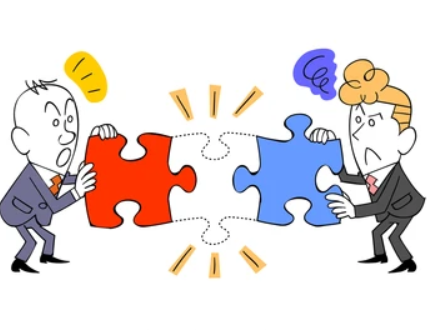
How sales training can align large teams around a consistent sales process, customer experience and commercial strategy
The sales team looked impressive on paper. There were experienced salespeople, talented account managers, capable sales leaders and a strong product portfolio. The business had invested in CRM technology, marketing campaigns and sales tools. There was no shortage of activity.
Yet something was missing.
Sales results varied dramatically between regions and individuals. Some salespeople followed the company’s preferred sales process, while others had developed their own way of working. Customers could receive completely different experiences depending on who they spoke to. Managers were coaching their teams differently, and sales forecasts were becoming increasingly difficult to rely on.
The problem wasn’t capability, the problem was alignment.

When everyone sells differently
As sales teams grow, inconsistency can creep in almost unnoticed. One salesperson may be excellent at asking questions and uncovering customer needs. Another may move quickly into presenting products and solutions. Someone else might rely heavily on relationships, while another salesperson competes primarily on price.
Individually, these approaches might produce results. Collectively, they can create a problem. A large sales team needs more than talented individuals. It needs a common understanding of what good selling looks like.
This means agreeing on the fundamentals:
• How opportunities are qualified
• How customer needs are uncovered
• Which questions should be asked
• How value is communicated
• How objections are handled
• How opportunities progress through the sales process
• How salespeople manage their pipelines
• How customer relationships are developed
• How sales activity connects to commercial objectives
Sales training can provide the framework for bringing these elements together.
A consistent sales process creates consistency in performance
A sales process should not be about forcing every salesperson to sound exactly the same. Instead, it gives the team a shared framework.
Salespeople can still bring their own personality, experience and communication style to customer conversations. What changes is the underlying approach. Everyone understands the stages of the sales journey and what needs to happen at each stage.
This is particularly important for larger sales teams where different regions, business units or managers may otherwise develop their own versions of the process. Effective sales training can turn the sales process from a document sitting in a CRM into something people actually understand and use.
KONA’s approach to sales training focuses on practical, real-world techniques that can be customised around an organisation’s industry, customers and commercial objectives. Alignment isn’t just about sales, it’s about the customer experience.
Imagine being a customer of a large organisation. You speak to one salesperson who takes the time to understand your business, asks thoughtful questions and focuses on outcomes. A few weeks later, you speak to another salesperson who immediately starts talking about products, pricing and features. Both work for the same company, which experience represents the brand?
This is where sales process and customer experience become closely connected. When sales teams are aligned around a customer-focused methodology, customers are more likely to experience consistency regardless of which salesperson they deal with.
The goal isn’t to create robotic conversations. It’s to create a consistent standard for how customers are understood, supported and progressed through the buying journey.
KONA’s Hearts and Minds™ methodology, for example, focuses on helping customers rather than coercing them into buying, with an emphasis on understanding customer ambitions and pain points.

Sales training can connect strategy to everyday behaviour
One of the biggest challenges for large sales teams is translating commercial strategy into everyday sales activity. Leadership might have a clear strategy for growing key accounts, increasing margins, entering new markets or improving customer retention. But does the sales team know what that means when they are sitting across the table from a customer? Sales training can help bridge that gap.
Instead of simply telling salespeople what the strategy is, training can demonstrate how to apply it. For example, if the organisation wants to move away from price-based selling, salespeople need the skills to uncover value, quantify customer problems and have commercial conversations.
If the strategy is focused on growing existing accounts, the team needs to know how to identify opportunities, map stakeholders and uncover broader customer needs. If the business is pursuing larger and more complex opportunities, salespeople may need stronger qualification, questioning, negotiation and stakeholder-management skills. Strategy becomes much more powerful when people know exactly how to execute it.
Managers need to reinforce the same message
Alignment doesn’t end when the training workshop finishes. For a large sales team, sales managers play a critical role in keeping the team aligned.
If managers coach different behaviours, use different terminology or measure success differently, the organisation can quickly return to inconsistency. This is why sales training should ideally be supported by ongoing coaching and reinforcement. At KONA Training, we view follow-up coaching as an important part of our approach because it helps salespeople apply new skills in the real world and prevents them from simply returning to familiar habits after training.
Managers can reinforce alignment by regularly asking questions such as:
• Are we following the agreed sales process?
• Are we uncovering the customer’s real needs?
• Are we selling value rather than simply discussing price?
• Are we using the same qualification standards?
• Are we progressing opportunities for the right reasons?
• Are we creating the customer experience the organisation wants to be known for?
When everyone is coaching toward the same standards, consistency becomes much easier to maintain.

Alignment creates leverage from your best people
There is another benefit to aligning a large sales team. It stops the organisation from relying too heavily on individual performers. Every sales team has people who seem to have figured it out. They know what to say, when to say it and how to navigate difficult customer conversations.
The challenge is that their knowledge can remain in their heads. Structured sales training helps turn individual knowledge into shared capability. The objective is not to make everyone sell like the top performer. It is to identify the behaviours, skills and processes that produce strong outcomes and make them accessible across the wider team.
That creates something far more scalable than individual talent. It creates organisational capability.
The best sales teams aren’t just talented. They’re aligned. A large sales team doesn’t necessarily need more activity. It may need more consistency. When salespeople understand the same process, use a shared language, understand the customer experience expected of them and connect their daily activity to the organisation’s commercial strategy, the entire team can move in the same direction.
And that is where sales training becomes more than a skills workshop. It becomes a way of aligning people around how you sell, how you serve customers and how you grow the business.
If you’re interested in how effective sales training can build capability and consistency across your team, read KONA’s The Ultimate Guide to Sales Training for a broader look at the role of ongoing sales development.
Ready to Align Your Sales Team?
If your sales team is growing but your sales approach isn’t consistent, it may be time to look beyond individual performance and focus on alignment.
KONA Training can work with your business to develop practical, customised sales training that aligns your people around a consistent sales process, stronger customer conversations and your broader commercial strategy.
Contact KONA Training today and start building a sales team that isn’t just talented, but truly aligned.
Call 1300 611 288 or Email info@kona.com.au
Author – Garret Norris – https://www.linkedin.com/in/garretnorris/


