
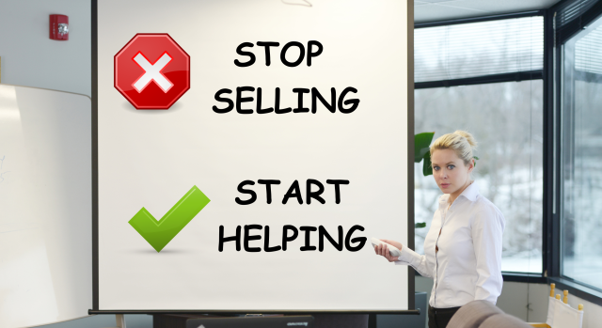
For many salespeople, the word “sell” comes with baggage. It can conjure images of pushy salespeople, awkward pitches, relentless follow-ups and conversations where the customer feels like a target rather than a person.
But what if we changed the way we think about selling? What if, instead of focusing on selling, we focused on helping? Because great salespeople don’t simply sell products or services. They help customers solve problems, overcome challenges and achieve better outcomes.

Stop Selling. Start Helping.
The best sales conversations don’t begin with, “Let me tell you about our product.” They begin with questions.
| What are you trying to achieve? |
| What’s getting in the way? |
| What’s costing you time, money or opportunities? |
| What would a better outcome look like? |
When salespeople approach a conversation with genuine curiosity, the dynamic changes. The customer isn’t being “sold to”. They’re being listened to. And when people feel heard and understood, they’re much more open to exploring whether your solution can genuinely help them.
The Customer Doesn’t Want Your Product
They want what your product or service can do for them. A business may not want a new CRM system. It wants better visibility of its pipeline. A customer may not want another piece of software. They want to save time. A manager may not want sales training. They want a sales team that is more confident, capable and consistent. This is where effective salespeople add value. They connect the dots between the customer’s situation and a potential solution. That requires more than product knowledge. It requires the ability to ask great questions, listen actively, uncover needs and communicate value. In other words, sales is less about convincing and more about understanding.

Helping Builds Trust
Trust is one of the most valuable assets in any sales relationship. Customers want to know that you understand their challenges and that your recommendation is based on their needs, not simply on your desire to hit a sales target. That doesn’t mean salespeople shouldn’t be commercially focused.
Of course they should. But there is a powerful difference between “How do I get this customer to buy?” and “How can I help this customer make the right decision?”
The second question creates a very different sales conversation. And it can lead to stronger relationships, greater customer confidence and more meaningful conversations about value.

Train Your Team to Help, Not Just Sell
Changing this mindset takes more than telling your sales team to “be more consultative”. Salespeople need practical skills they can use every day. From discovery and questioning techniques through to handling objections, communicating value and confidently asking for the business. That’s where tailored sales training can make a difference. To find out more about KONA Training’s Hearts & Minds Sales Methodology, click here.
Because your team, your customers and your sales challenges are unique. Training should be designed around the real-world situations your people face, rather than simply delivering generic sales theory.
At KONA Training, we believe sales training is about developing practical skills that help salespeople have better conversations, create genuine value and ultimately achieve better commercial outcomes. Because perhaps the most effective way to think about selling is surprisingly simple: Don’t focus on how to sell more. Focus on how to help more. And when you consistently help customers solve the right problems, the selling becomes a natural part of the conversation.
Ready to help your sales team sell differently?
Contact KONA Training today to discuss tailored Sales Training designed around your sales team, customers and business goals.
Call 1300 611 288 or Email info@kona.com.au
Author – Garret Norris – https://www.linkedin.com/in/garretnorris/


